 Vietnamnet.vn

 Podcast



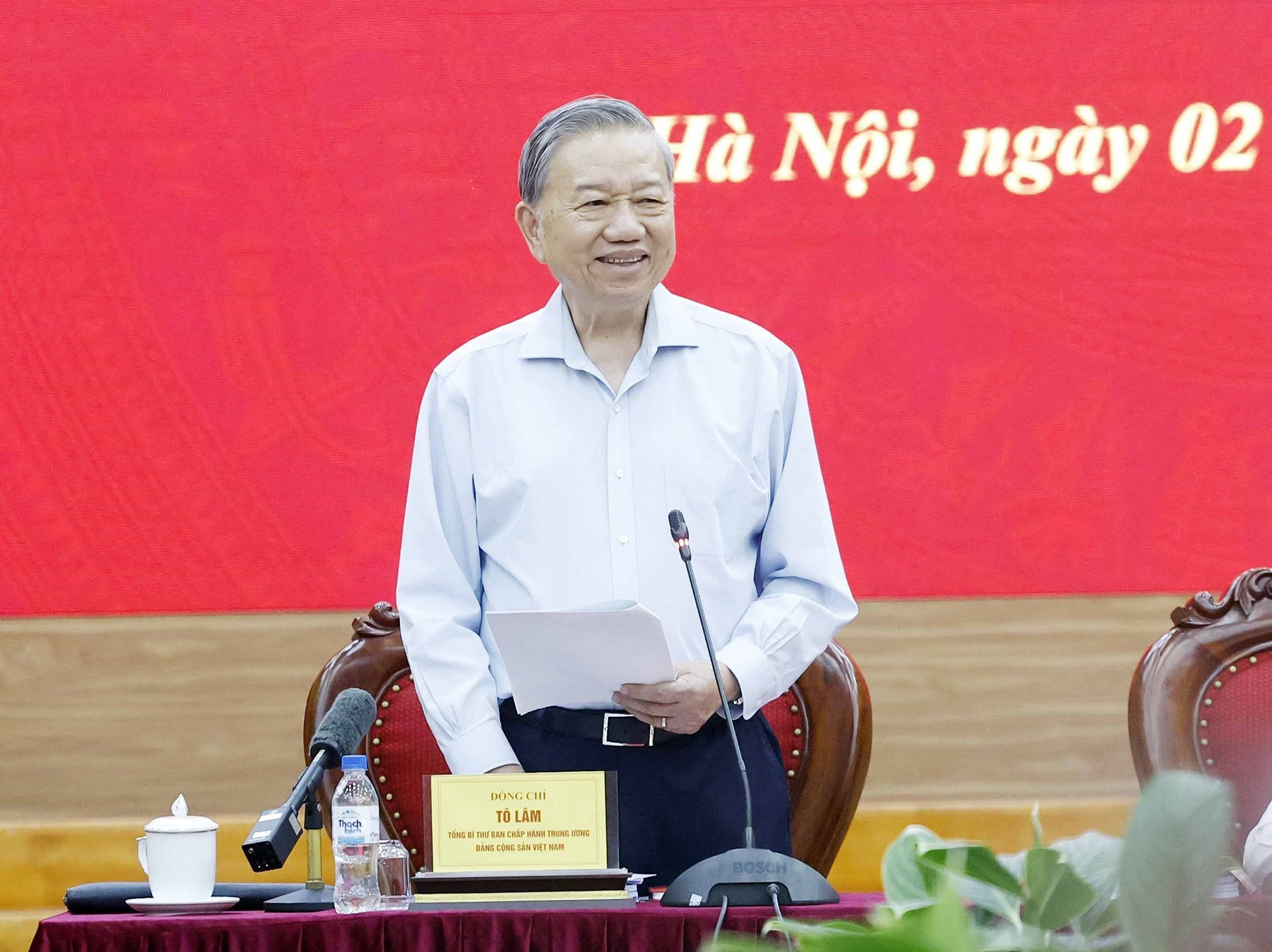
Mr. To Lam recently had a working session with the Central Policy and Strategy Board regarding the drafting of a Central Resolution on strategic solutions to promote double-digit economic growth associated with establishing a new growth model.
Under the draft, the new growth model identifies science and technology, innovation, and digital transformation as the main drivers, aiming to enhance productivity, quality, efficiency, added value, and competitiveness of the economy, creating new high-quality production methods, focusing on the data economy, digital economy, green economy, and circular economy.
The new growth model features the State economy playing a leading, pioneering, and guiding role; the private economy as the most important driver; and both export and domestic markets as vital dual drivers, operating on a foundation of a State that creates a modern development institutional regime and a culture of innovation.
Speaking at the meeting, Lam emphasized the need to properly define the scope of the resolution, framing it at a historical level and within a development mindset.
This resolution must serve as a “master blueprint” for Vietnam’s double-digit economic growth model through 2045. It represents a strategic determination and a historic choice to realize the country’s development aspirations. The growth must ensure stability, quality, inclusiveness, sustainability, and autonomy.
He clarified that this carries clear meaning across multiple aspects, conveying strong determination, steadfast goals, and no wavering in the face of challenges. At the same time, quality must be prioritized, resolutely avoiding growth at all costs or trading off macroeconomic stability, the environment, and social progress.
The Party chief stressed the need for a long-term vision, ensuring that today’s growth does not undermine tomorrow’s development foundation or deplete resources for future generations. Earlier phases must lay the groundwork for subsequent stages to secure sustained double-digit growth in the long term, thereby realizing the 2045 target.
High growth must be associated with improved living standards
Establishing a new growth model requires a fundamental transformation in the structure of growth drivers, in other words, changing the “engine” of the economy rather than merely adjusting operating policies.
The new model must not focus solely on economic aspects but also properly address sustainable development issues: growth must be accompanied by rising incomes, improved living standards, job creation, reduced unemployment, poverty alleviation, narrowing wealth gaps, environmental protection, and alignment with socio-cultural development.
“Creating an atmosphere of optimism is very important; incomes and living standards must be improved. If the growth is high, but people’s lives do not improve, that is unacceptable,” To Lam emphasized.
Emphasizing the need to clarify feasible resources to achieve the double-digit growth goal, the General Secretary said that the double-digit growth scenario is a challenge but must have a specific basis for calculation.
According to Mr. To Lam, it is necessary to continue clarifying where capital mobilization comes from, the role of domestic savings, FDI, and the capital market as well as the mechanism for market-based resource allocation, and researching and clearly defining macroeconomic safety thresholds.
High growth is only sustainable when all resources from the budget, land, natural resources, credit capital, and public assets are correctly and fully calculated, allocated according to efficiency, and subject to accountability.
He also stressed proactive risk management to ensure that growth remains both high and safe, with every growth decision considered in relation to risk levels and the economy’s resilience.
Lam called for establishing a synchronized leadership, governance, and supervision system capable of mobilizing society as a whole to achieve development goals.
He highlighted the need to eliminate the ‘safety-first’ mentality, short-term tenure thinking, and fragmented approaches, replacing them with a spirit of “daring to think, daring to act, daring to take responsibility,” alongside action with clear task assignments and close coordination among central and local authorities and enterprises.
Science and technology, innovation, and digital transformation must become the central drivers of the new growth model, supported by institutions that encourage research and development.
Institutional reform must be substantive and thorough, turning the institutional regime into a competitive advantage. Legal regulations must be clear and uphold the rule of law.
Officials, especially leaders and heads of agencies, must possess vision, capability, and above all integrity. The political system must be clean, free of corruption, and genuinely supportive of citizens and businesses.
“We do not trade growth for inflation, asset bubbles, or uncontrolled public debt. Fiscal and monetary policies must coordinate closely to achieve this requirement,” To Lam said.
Tran Thuong
.svg)
