 Vietnamnet.vn

 Podcast



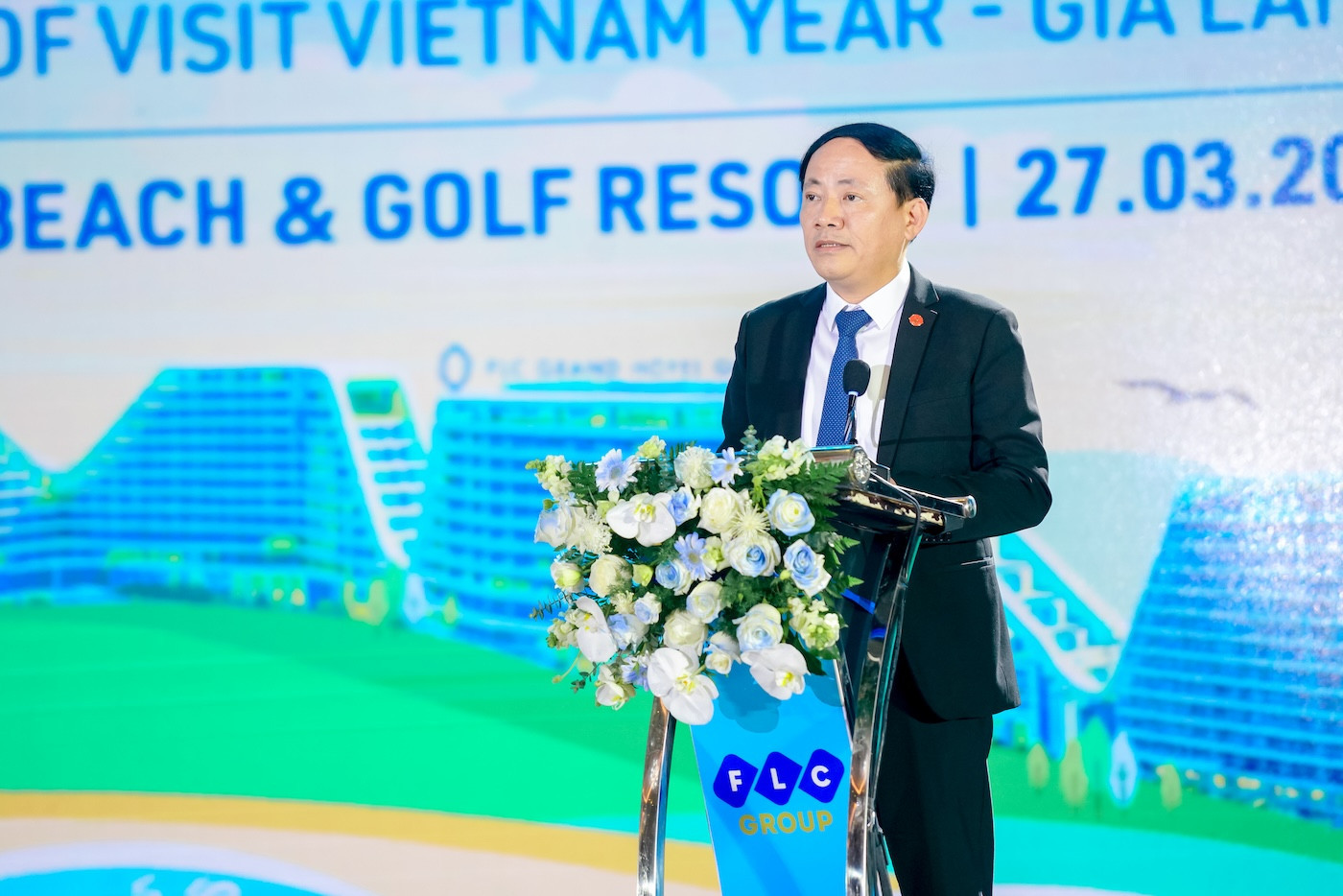
Speaking at the seminar “Gia Lai 2026: Activating the Sea - Highlands Axis” held on March 27 in Quy Nhon, Dao Xuan Hoach, Deputy Director of the Civil Aviation Authority of Vietnam, emphasized that aviation serves as a critical gateway and a driving force for socio-economic development.
However, he noted that aviation alone cannot unlock the full potential of a destination. To create real momentum, it must be integrated with synchronized infrastructure development, including airport systems and connectivity networks, particularly with tourism.
A positive signal is the planned rollout of charter flights in 2026, with regular routes expected from 2027. Additionally, the revised Civil Aviation Law, set to take effect on July 1, 2026, is expected to remove bottlenecks in infrastructure investment.
From a business perspective, Nguyen Huy Cuong, Deputy CEO of Bamboo Airways, highlighted Gia Lai’s unique advantage in connecting with Bình Định via the dual-airport system of Phu Cat and Pleiku.
He described this as a “super airport” model, with two independent runways enhancing both safety and operational capacity.
With ongoing improvements in transport infrastructure, travel time between Quy Nhon and Pleiku is expected to be reduced to just 1.5 to 2 hours, effectively equivalent to moving between two airport terminals. This opens up flexible connections between domestic and international aviation networks, creating a competitive edge for both the Central Highlands and the South Central Coast.
Still, experts stressed that infrastructure alone is not enough. Supporting services must also be upgraded, such as dedicated areas for large tourist vehicles at airports, to enhance visitor experience from the very first touchpoint.
Sharing at the seminar, Trinh Van Quyet, Chairman of FLC Group, said resort urban development and aviation must be “as inseparable as lovers” to grow sustainably.
“As an investor, wherever I go, I always think about how to bring visitors there faster, more conveniently and make them stay longer. To extend visitor stays and increase local spending, destinations must know how to truly serve their guests,” he said.
Unlocking cultural depth for global appeal
Beyond infrastructure, many experts believe Gia Lai must reposition its tourism products by tapping deeper into cultural values.
Nguyen Thien Tong, an aviation expert, suggested that alongside infrastructure development, greater attention should be paid to historical and cultural assets. Cultural figures could be honored through museums and experiential spaces, turning them into distinctive tourism products.
Figures such as Han Mac Tu and Trinh Cong Son, for instance, could inspire themed music and poetry nights, creating unique cultural experiences.
Importantly, tourism should not rely solely on domestic visitors but aim for international markets. With Trinh Cong Son’s works already translated into multiple languages, there is an opportunity to develop globally resonant cultural products.
Echoing this view, provincial leaders stressed the need to clearly define target markets. Nguyen Huu Que, Vice Chairman of Gia Lai People’s Committee, said the province is actively promoting tourism to South Korea, a market with strong potential.
Golf, one of the most popular leisure activities among Korean tourists, is being positioned as a key offering. Gia Lai is preparing to launch additional golf courses in Pleiku to attract this segment.
At the same time, the province aims to introduce iconic figures of the Central Highlands such as Anh hung Nup and Xuan Man into its tourism narrative, creating distinctive cultural storytelling.
Looking ahead, Gia Lai plans to host the National Tourism Year after 2026, using it as a catalyst to activate a broader tourism ecosystem and develop compelling destinations.
According to Pham Anh Tuan, Chairman of the provincial People’s Committee, Gia Lai is building a tourism strategy centered on differentiated products, with a standout initiative being the organization of large-scale music festivals on a quarterly basis.
A major highlight is a planned cultural, sports and entertainment complex integrated with commercial and tourism services. At its core will be a world-class mega concert center, envisioned as a foundation for developing a cultural industry in Gia Lai.
Once operational, the project is expected to significantly elevate the province’s profile. It is also anticipated to drive rapid development in Cat Tien commune, an area that currently faces economic challenges.
The province expects that by late 2026 or early 2027, it will be able to host large-scale music festivals, laying the groundwork for a dynamic entertainment ecosystem with a global imprint.
Luong Bang
.svg)
