 Vietnamnet.vn

 Podcast



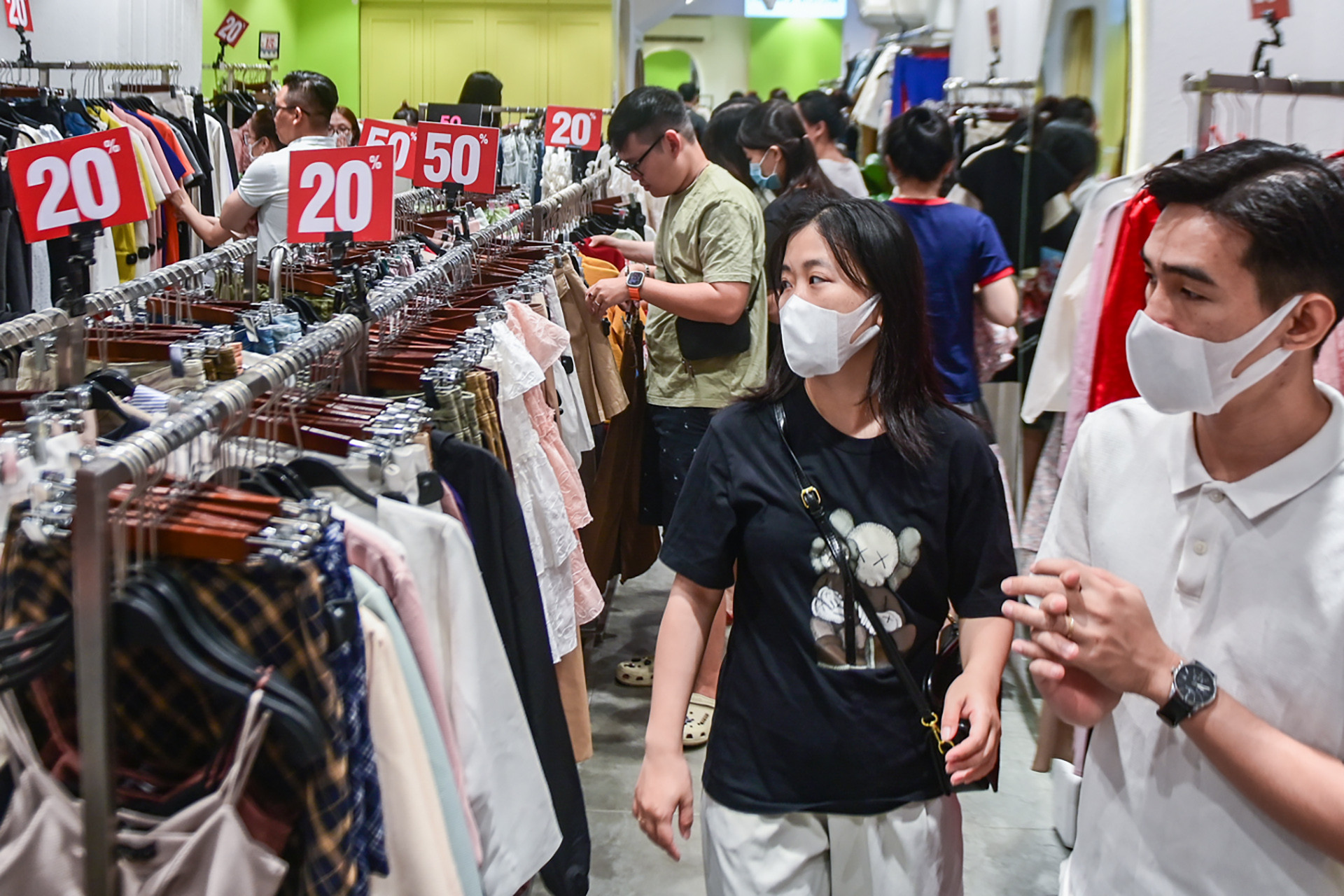
Difficulties have grown even larger as capital costs remain at high levels. Some business loans have had to bear interest rates of 14-15 percent per year. At such interest rates, few ordinary production and business operations can earn sufficiently attractive profits after paying interest and covering other expenses.
Immediate tax cuts
At the regular Government meeting on August 3, the Prime Minister assigned the Ministry of Finance (MOF) to propose tax measures to stimulate production and business, especially for SMEs, individuals, and business households, aimed at immediate application in 2026.
He requested the ministry to urgently complete the dossier for submission to the National Assembly during the ongoing session, rather than waiting until October.
MOF proposed a 30 percent reduction in personal income tax payable for two years, 2026 and 2027, for business households and individuals with annual revenue of up to VND10 billion. Enterprises with annual revenue of up to VND10 billion were also proposed to receive a 30 percent reduction in corporate income tax payable.
For those currently doing business, tax-reduced funds are entirely different from bank loans because it is their own money, requiring no interest payments and adding no additional debt burden.
As long as a shop remains open, it continues to import goods, hire employees, pay for electricity and water, handle transportation, and use many other services. As long as one person continues doing business, another maintains an income, goods continue to be bought and sold, money continues to circulate, and ultimately the State has a source from which to collect taxes. The economy operates through countless linkages of this kind.
Budget revenue remains plentiful
The Prime Minister directed tax reductions amid highly favorable state budget collection conditions. In 2025, state budget revenue reached a record high of VND2.65 quadrillion, exceeding the estimate by nearly 35 percent and rising more than 30 percent compared to the previous year.
In the first months of 2026, revenue numbers continued to increase strongly, reaching VND1,834.6 trillion in the first seven months alone, up 16 percent over the same period last year. The non-state business sector alone contributed VND381.4 trillion in the first six months of this year, representing an increase of up to 47.1 percent.
The data shows that the room to reduce and defer taxes for businesses is very clear because tax collection, especially from the non-state business sector itself, is proceeding very favorably.
Collecting correctly and fully, and combating revenue loss, is necessary, but collection policies must always be placed within the context of nurturing revenue sources so that businesses and citizens have additional capital to expand production and business.
Only in this way can revenue sources become sustainable.
Is VND6.7 trillion tax reduction too high?
MOF estimates that the 30 percent tax reduction policy will reduce revenue by VND6,701 billion in 2026-2027. The figure equals about 0.25 percent of the budget revenue in 2025 alone.
If it is left with enterprises and business households, that VND6.701 trillion could be used to pay wages, purchase goods and raw materials, or reduce loan interest or reinvest in operations. The State giving up one VND in tax revenue today does not necessarily mean losing one VND in future revenue.
If the money businesses retain helps keep a store from closing or allows a company to avoid scaling back production, future tax revenue could actually be greater.
That is precisely what nurturing the tax base means.
Don't underestimate small businesses
Vietnam is pursuing a double-digit growth target. When this goal is discussed, people often think of major projects, multibillion-dollar infrastructure developments or large corporations. That is understandable, but GDP is not generated only in those places.
It also comes from millions of stores, business households and small companies that open their doors every morning, buy and sell goods, hire workers and pay taxes.
One store closing is insignificant in terms of national GDP. But if tens of thousands of stores scale back their operations, it is no longer a small matter.
Conversely, one store reopening may barely move GDP, but if tens of thousands of business owners regain confidence to invest, reopen and continue operating, the impact can be very different. To achieve large-scale growth, the health of millions of small businesses cannot be overlooked.
Tu Giang
.svg)
