 Vietnamnet.vn

 Podcast



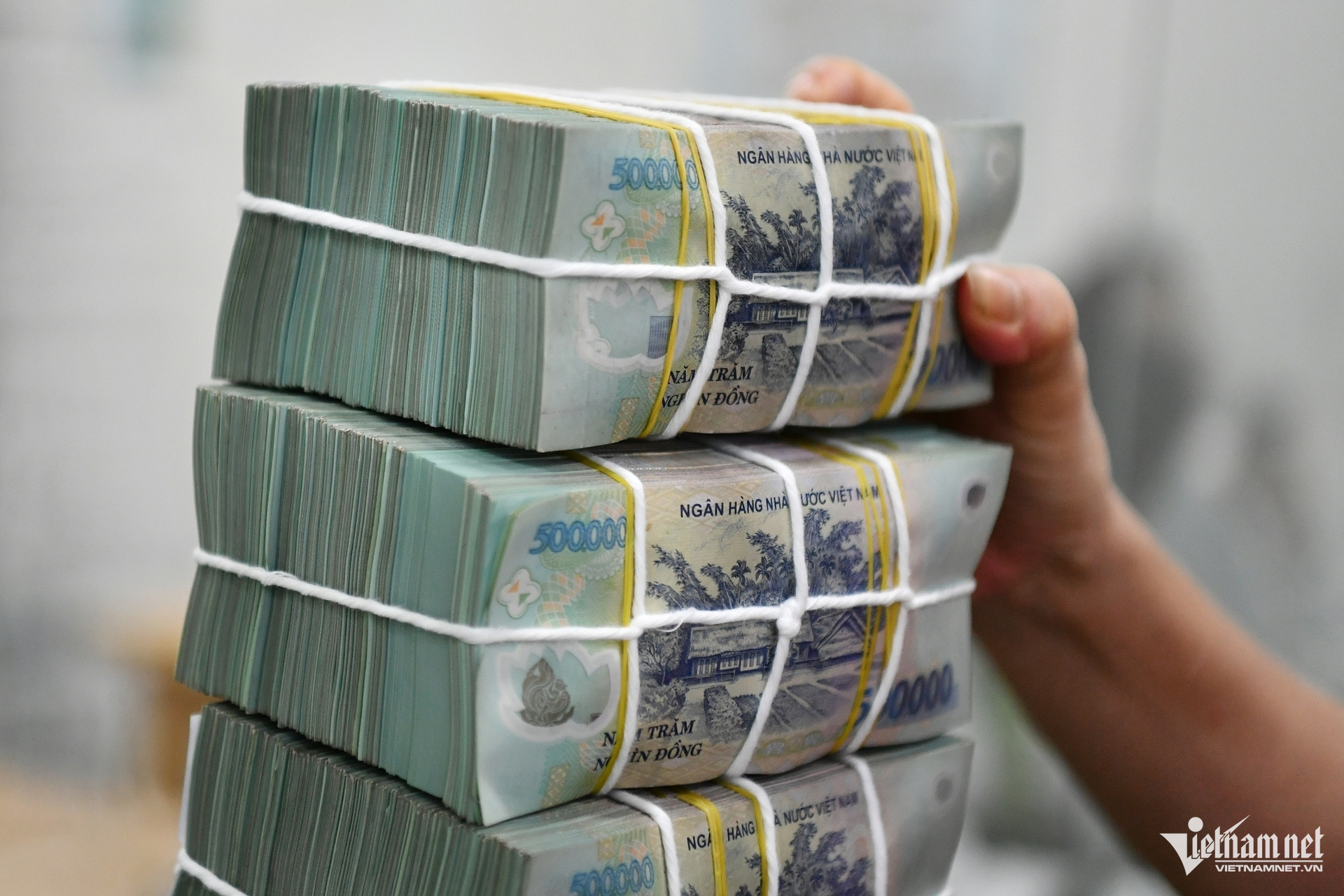
The Ministry of Finance (MOF) has proposed a 30 percent reduction in personal income tax (PIT) and corporate income tax (CIT) payable in 2026 and 2027 for household businesses, individual traders, and enterprises with annual revenues of up to VND10 billion.
Quang Huy from Nguyen Trai University (NTU) noted that the MOF’s proposal sends a positive signal, boosting business confidence to make bold investments and expand operations.
According to Huy, cutting payable taxes by 30 percent will help improve cash flow, increase capital accumulation capacity, and relieve financial pressures, particularly for small enterprises and household businesses.
This policy also provides additional resources for businesses to invest in technology, expand production, hire employees, and strengthen resilience against market fluctuations.
Huy considers the proposed VND10-billion revenue threshold appropriate as it targets small-scale enterprises and household businesses with limited capital accumulation capacity, which nevertheless contribute significantly to employment creation and economic vitality.
Le Van Tuan, Director of Keytas Tax Accounting, emphasized that reducing payable taxes serves as direct financial support, enabling state policies to take effect rapidly as businesses, household enterprises, and individual traders navigate rising input costs.
Tuan said that while alternative relief solutions require time for implementation and real-world impact assessments, direct tax reductions immediately benefit taxpayers.
Under the draft proposal, the policy could take effect starting from the third quarter 2026 tax calculation period, allowing taxpayers to enjoy a 30 percent tax reduction immediately rather than waiting until the end of 2026.
The policy is estimated to reduce state budget revenues by VND3.191 trillion in 2026 and VND3.510 trillion in 2027, corresponding to the tax relief provided to eligible entities.
Tuan noted that while the policy focuses on supporting lower-revenue taxpayers, the annual revenue reduction of over VND3 trillion may yield limited direct macro-level economic growth impacts if restricted strictly to entities with less than VND10-billion in revenue.
The projected VND3.191-trillion revenue reduction in 2026 represents roughly 0.12 percent of total state budget collections in 2025, which reached VND2.65 quadrillion.
He added that a 30 percent reduction in payable taxes provides eligible businesses with vital resources to sustain and scale up operations.
More support suggested
To achieve economic growth objectives, Le Van Tuan argued that relief measures must be sufficiently large to produce tangible impacts. He proposed raising the applicable annual revenue ceiling to VND50 billion instead of the VND10-billion limit put forward by MOF.
"With a revenue threshold of up to VND50 billion per year, the policy will cover household businesses and individual traders earning over VND3 billion to VND50 billion annually (Group 3), a segment that faces significant compliance costs and needs more time to adapt," he said.
For household businesses and individual traders, the primary concern remains easing compliance cost burdens. What this segment needs is a substantial reduction in compliance costs down to levels matching actual operational capabilities.
However, he noted that drastically reducing compliance costs cannot occur overnight; it requires thorough research and learning from practical implementation experiences of current tax policies. Reducing payable taxes serves as an effective indirect remedy for compliance costs facing businesses and individual traders.
The director maintained that the 30 percent tax reduction proposal can be deployed immediately and deliver rapid support in practice.
Over the long term, reducing compliance costs to match business capabilities while fostering a more transparent and stable legal environment remains essential.
“This ensures steady, sustainable development for business operators while supporting sustainable state revenue growth," Tuan said.
Nguyen Quang Huy observed that tax cuts represent one helpful element but remain insufficient to guarantee sustainable development. The State must continue reforming administrative procedures, reducing compliance costs, and assisting enterprises with supply-demand matchmaking, trade promotion, market expansion, governance enhancement, and digital transformation.
As enterprises secure more orders, expand market reach, and bolster competitiveness, their revenues and profits will rise, creating sustainable state budget revenues.
If tax reduction policies are implemented in tandem with institutional reforms, administrative streamlining and competitiveness enhancement programs, total benefits will far exceed the monetary value of tax exemptions and reductions.
"When businesses develop healthily, the economy gains growth momentum, job creation expands, and medium- to long-term state budget revenues become significantly more sustainable," Huy said.
Nguyen Le
.svg)
