 Vietnamnet.vn

 Podcast



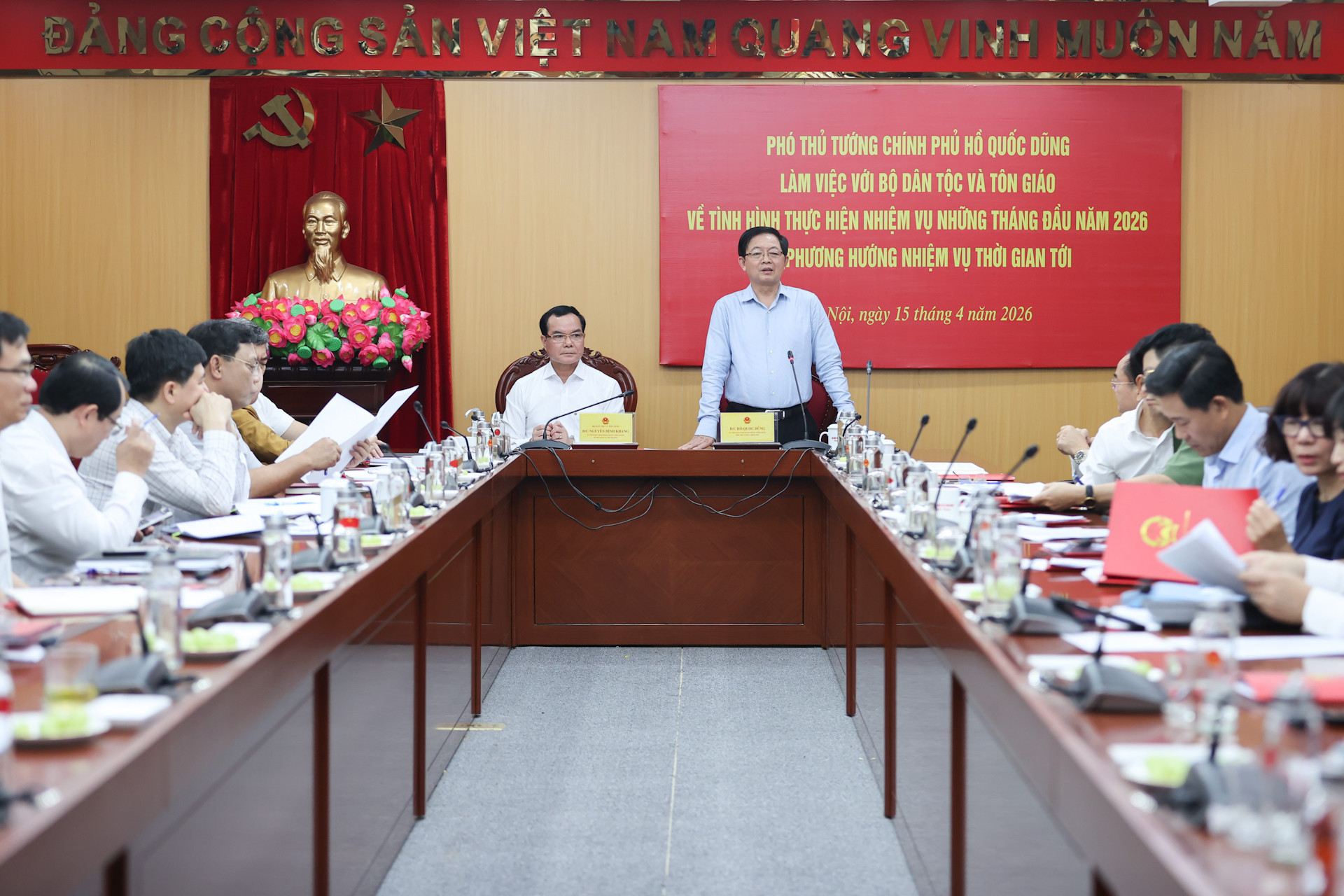
The notice stated that from the beginning of 2026, the ministry has acted proactively and decisively in implementing its assigned tasks and work plans to carry out the Party’s resolutions and the Government’s action programs, achieving a number of positive results.
On behalf of the Government and the Prime Minister, the Deputy Prime Minister acknowledged and highly appreciated the ministry’s efforts in fulfilling its duties, contributing significantly to socio-economic development, strengthening the great national unity bloc, fostering religious harmony, and reinforcing the trust of ethnic minorities and religious communities in the Party and the State.
Alongside these achievements, several shortcomings remain. The rate of decentralization of administrative procedures has yet to meet the requirements set out in Conclusion No. 18-KL/TW of the Party Central Committee. Databases on ethnic and religious affairs have not been completed.
Monitoring of ethnic minority regions and religious developments has at times been untimely, and the capacity of local officials working in these fields remains limited.
The Deputy Prime Minister requested that in the coming period, the Ministry of Ethnic and Religious Affairs focus on implementing several key tasks and solutions.
Urgently complete the legal framework for ethnic and religious affairs
In terms of law-making, the ministry is to continue institutionalizing and concretizing the Party’s strategic thinking by thoroughly grasping and effectively implementing the Resolution of the 14th National Party Congress, along with directives, resolutions, and conclusions issued by the Party, the National Assembly, and the Government, as well as relevant directives of the Prime Minister.
In the immediate term, it is required to promptly absorb feedback from National Assembly deputies and coordinate with relevant appraisal agencies to finalize the draft amended Law on Belief and Religion.
At the same time, the ministry must urgently work with other ministries and agencies to develop and complete a draft decree detailing the implementation of the law, to be submitted for promulgation as soon as the law takes effect on January 1, 2027.
Regarding two decrees included in the 2026 work program - one on criteria for selecting and recognizing reputable individuals and policies for them, and another on ethnic affairs - the ministry is tasked with closely coordinating with the National Assembly’s Ethnic Council and relevant agencies to prepare and submit dossiers to the Government on schedule.
The ministry is also required to promptly issue circulars guiding the implementation of Component 2 of the National Target Program on new rural development, sustainable poverty reduction, and socio-economic development in ethnic minority and mountainous areas for the 2026–2035 period, Phase I from 2026 to 2030.
In addition, it must vigorously and effectively implement tasks concluded by General Secretary To Lam at the meeting with outstanding ethnic minority students and youth in 2025.
This includes coordinating with the Ministry of Education and Training to finalize policies for ethnic minority students and youth, and researching the development of a project to create jobs, expand services, and establish sustainable labor connections in ethnic minority areas for the 2026–2031 period.
Cut administrative procedures during the drafting process
On reducing and simplifying administrative procedures, the Deputy Prime Minister emphasized the need to strictly implement reforms during the drafting of legal documents. Procedures must be regulated within proper authority, ensuring necessity, rationality, and feasibility. The ministry should focus on reviewing and proposing plans to cut and simplify procedures within its assigned areas.
It must urgently finalize proposals to ensure that ministerial-level authorities handle no more than 30 percent of the total administrative procedures under their management, in line with Conclusion No. 18-KL/TW of the 14th Party Central Committee. At the same time, it must quickly complete and operationalize databases on ethnic and religious affairs, ensuring connectivity with the national population database.
The Deputy Prime Minister also required the ministry to closely monitor developments, maintain a firm grasp of the situation, and respond in a timely, appropriate, and effective manner, avoiding passivity or unexpected disruptions. Any difficulties or obstacles arising during the leadership, direction, and implementation of ethnic, belief, and religious policies must be promptly addressed at the grassroots level.
Promote consensus in policy implementation
The ministry is tasked with effectively implementing the National Target Program on new rural development, sustainable poverty reduction, and socio-economic development in ethnic minority and mountainous areas for the 2026–2035 period, ensuring that resources are used for their intended purposes without loss or waste.
It is also required to continue promoting decentralization and delegation of authority, linked with the accountability and responsibility of leaders. Greater attention must be paid to training and improving the theoretical, professional, and practical capacities of officials, civil servants, and public employees, thereby enhancing the quality of policy formulation and implementation in ethnic, belief, and religious affairs.
Efforts must be strengthened in communication, dissemination, and explanation of policies and laws. The ministry should proactively provide official, complete, timely, public, and transparent information on governance and management solutions so that the public can understand, share, and build consensus in the implementation of policies and laws on ethnic and religious affairs.
VGP
.svg)
