 Vietnamnet.vn

 Podcast



The world is entering a period of profound transition. While the past three decades were the time of globalization, where efficiency and low cost were priorities, a new order is now taking shape: fragmentation, strategic competition, and higher costs are becoming the “new normal.”
At the core of this shift is rivalry between major powers, especially the US and China. This is no longer just about trade but a comprehensive competition in technology, supply chains, and geopolitical influence. As a result, trade is increasingly politicized, supply chains are being restructured, and global costs are rising.
A fundamental change lies in how the world views supply chains: shifting from "maximum efficiency" to "safety and resilience". Optimization is giving way to redundancy, leading to higher costs and prolonged inflationary pressure.
In this context, Vietnam experiences both positive impacts and direct exposure as a frontline economy. Success stories have emerged: South Korean Samsung has brought hundreds of Vietnamese firms into its supply chain; Viettel (technology firm) has expanded its investment into more than 10 markets; VinFast and Thaco (both are automobile manufacturers) are striving to move deeper into the value chain.
However, the other side of the picture is equally thought-provoking.
In 2022–2024, Vietnam’s real estate and corporate bond markets went through a sharp correction. Large corporations such as Novaland and Phat Dat (both are real estate developers) faced major liquidity challenges as capital flows tightened. Growth models based on high leverage and short-term cash flow revealed clear risks when market conditions reversed.
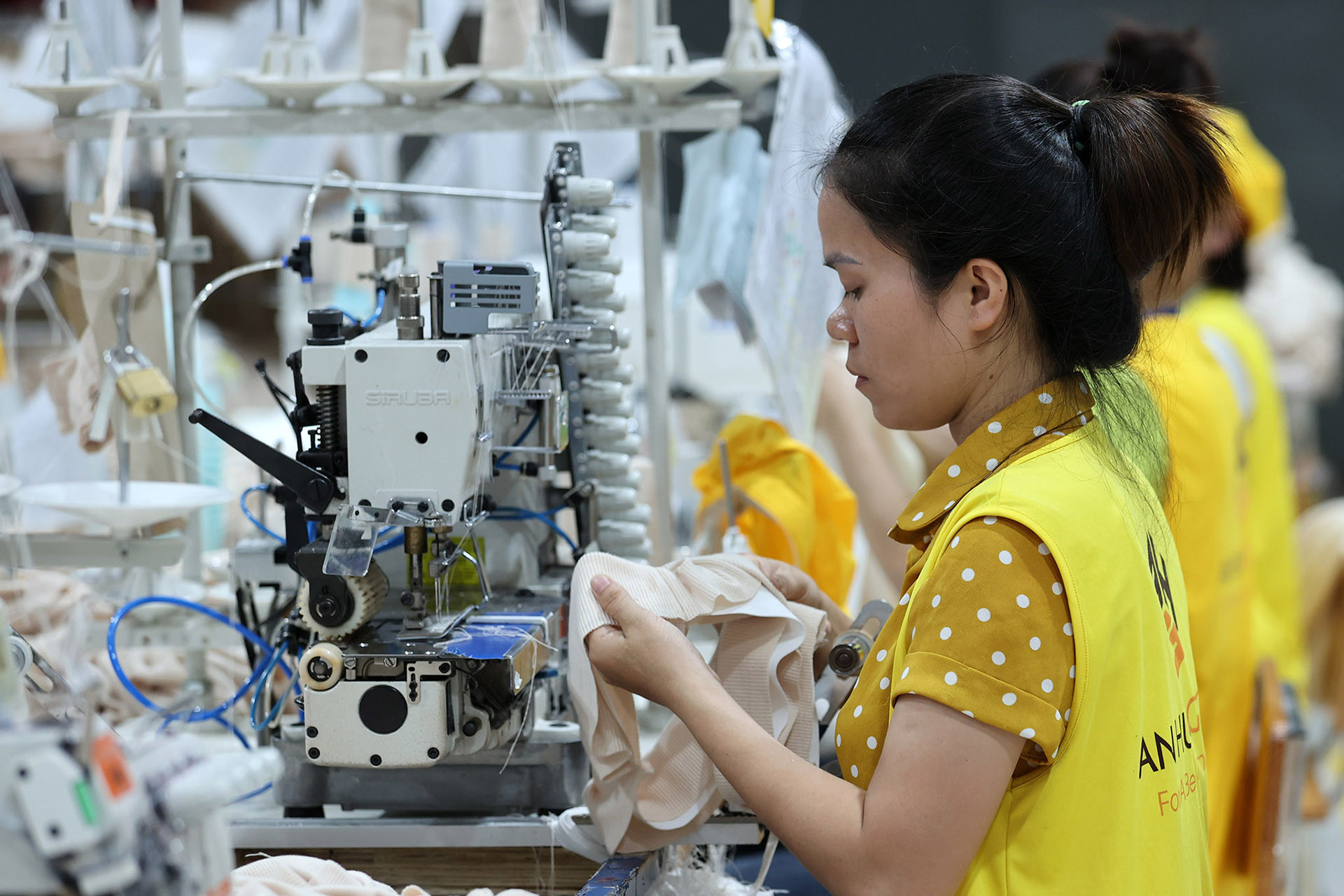
In manufacturing, textile firms such as Vinatex (The Vietnam National Textile and Garment Group) and many wood exporters had to cut working hours or even scale down production in 2023 as orders from the US and Europe dropped sharply. Dependence on a few major markets made businesses vulnerable when global demand contracted.
Even more dynamic retail players like The Gioi Di Dong (Mobile World) had to undergo significant restructuring during this period, closing stores and optimizing costs to protect cash flow amid weakening consumer demand.
These cases are not isolated failures. They reflect a structural issue: growth models based on low cost, high leverage, and open markets are becoming less viable.
In the new context, the question is no longer “how to grow fast” but “how to survive and go further.” There are many things that need to be done immediately to maintain competitiveness.
First, businesses must place cash flow at the center. In an environment of high capital costs and volatility, cash flow determines survival.
Second, they must build flexibility, diversifying markets, partners, and supply chains, avoiding dependence on a single market or customer.
Third, they must invest seriously in internal capabilities: governance, technology, and human capital. These are decisive factors for moving up in the value chain.
Fourth, there needs to be a shift from a “contract manufacturing” mindset to “value creation,” participating more deeply in design, branding, and distribution, where the greatest value is generated.
Finally, and most importantly, Vietnamese businesses must understand the rules of the game. The world no longer operates under the old logic. Companies that continue to chase growth at all costs will face rising risks. In contrast, those that adjust strategies, invest for the long term, and upgrade capabilities will have opportunities to leapfrog.
Global instability is no longer an exception, it is becoming the norm. In such a world, advantage does not belong to the largest companies, but to those that understand and adapt fastest to the new game.
Tran Sy Chuong, Economist
.svg)
