 Vietnamnet.vn

 Podcast



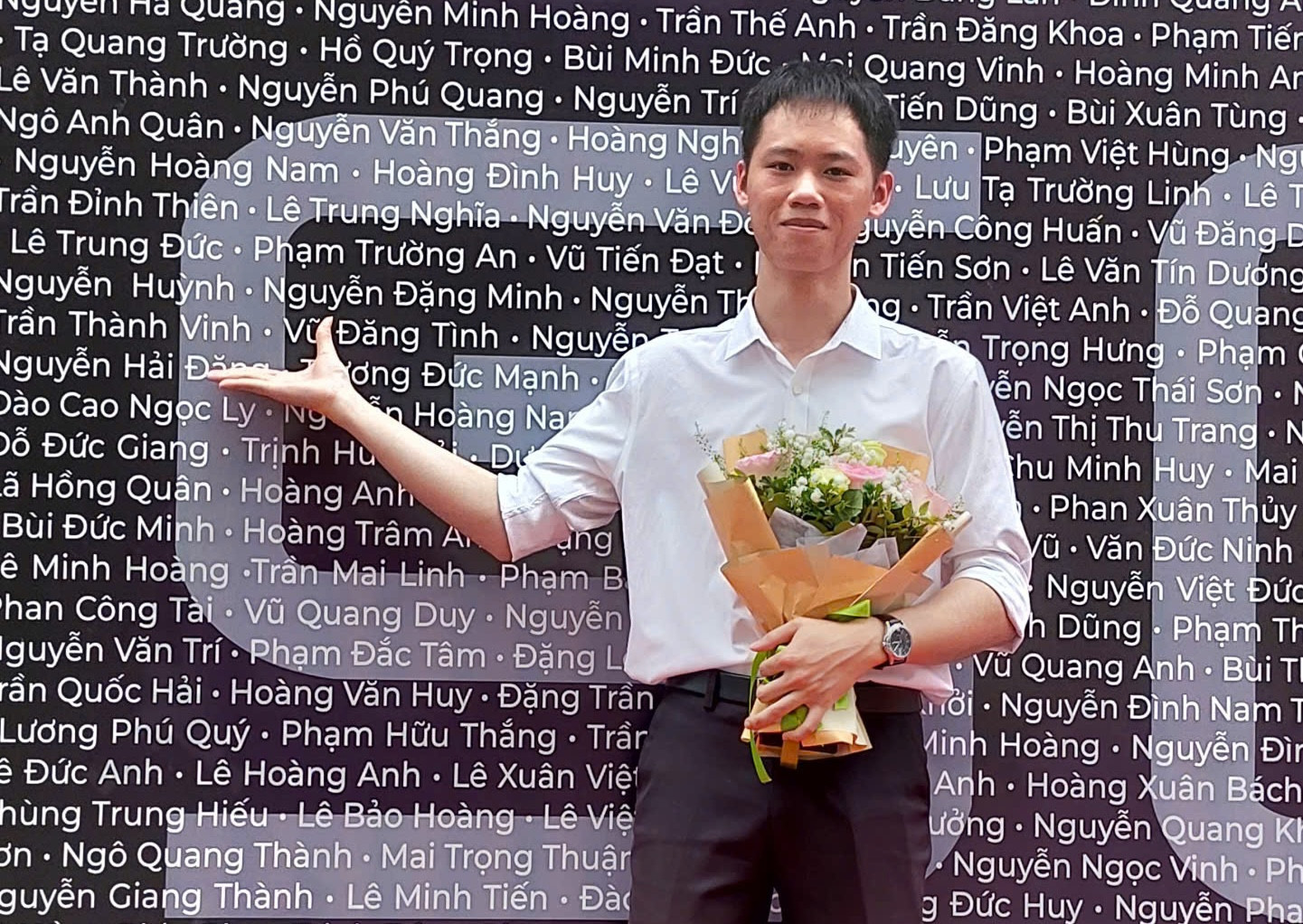
Tran Thanh Vinh (born 2004), from Vinh Bao, Haiphong, is a student majoring in Control Engineering and Automation at the School of Electrical and Electronic Engineering, a member school of HUST. He has graduated one semester early with a cumulative GPA of 3.98/4.0, the highest in this graduation cohort.
Fascinated by battery-powered toys
“I only thought my GPA would be among the top, I didn’t expect it to be the highest,” Vinh said.
The former student of Vinh Bao High School was known as the runner-up of the A00 (math, physics, chemistry) exam group in Hai Phong, ranking among the top nationwide in the 2022 national high school finals. He scored 29.35 points, including a perfect 10 in Physics. With this result, he chose to apply to HUST, the most prestigious polytechnic school in the country.
His passion for engineering emerged early. As a child, he often dismantled battery-powered toys to observe the electronic circuit boards inside. “I found it fascinating; everything looked like a miniature city,” Vinh recalled.
At university, he was able to further pursue this passion. However, he also realized that the academic environment was challenging and demanding, so he set a serious study plan early on.
From the first semester with general courses, Vinh maintained the habit of preparing lessons before class. Whenever he had questions, he did not hesitate to ask lecturers. After each class, he reviewed and systematized knowledge, completed assignments, and sought additional materials to deepen his understanding.
After getting through the first semester, Vinh felt “somewhat advantaged” and set a higher goal of graduating with Excellent distinction. Graduating one semester early was also part of a plan he had set from the beginning.
Instead of “cramming day and night,” Vinh said his approach over 4.5 years was to maintain a steady and consistent pace. “I usually studied about 2–3 hours a day but with high focus, rather than waiting until exams to review,” he said.
He also maintained a small study group of 2–3 people to exchange ideas, find materials, and solve problems together.
“I don’t think I’m exceptionally outstanding compared to others, but I make up for it with diligence and time management,” Vinh said.
Aiming to create practical products
Despite academic success, Vinh said he once felt lost as he had not clearly defined his career path. In his second year, he joined research labs to “discover himself.”
Initially, he joined a control system lab but realized after about two months that it did not suit him. “At that time, I doubted myself and thought I wasn’t capable of adapting.”
After several attempts and changes, he applied to a “notoriously difficult” lab in power electronics, a field of engineering that focuses on the research and application of semiconductor devices to convert and control electrical energy.
This shift helped him find the right fit and gradually overcome self-doubt. His research experience also helped him define his future direction. He plans to pursue applied research, focusing on developing products that can be used in real life rather than only academic publications.
“I want to do research linked with businesses, creating tangible products for everyday life,” he said.
Currently, he is applying for several research engineer positions in the field of power electronics. At the same time, he plans to pursue a master’s degree.
“In the near term, I want to work to gain practical experience while continuing my studies to strengthen my expertise,” said the valedictorian of his graduating cohort at Hanoi University of Science and Technology.
Hanoi University of Science and Technology was established in 1956 and trains about 38,000 undergraduate, graduate, and doctoral students. The university offers 160 programs, including 65 bachelor/engineering programs, 63 master’s programs, and 32 doctoral programs, and cooperates with more than 200 universities, research centers, and educational organizations across 32 countries.
Thuy Nga
.svg)
