As Apple turns 50, its story unfolds through defining innovations that reshaped personal computing, mobile technology and the modern digital experience.
Apple marks its 50th anniversary on April 1, 2026. Over half a century, the company has continuously reshaped the technology landscape through defining milestones - from Apple II and Macintosh to iPhone and its own custom-designed chips.
Founded on April 1, 1976, Apple’s journey is best understood through the breakthroughs that defined each decade, offering a glimpse into how the company evolved into a global technology powerhouse.
The 1970s
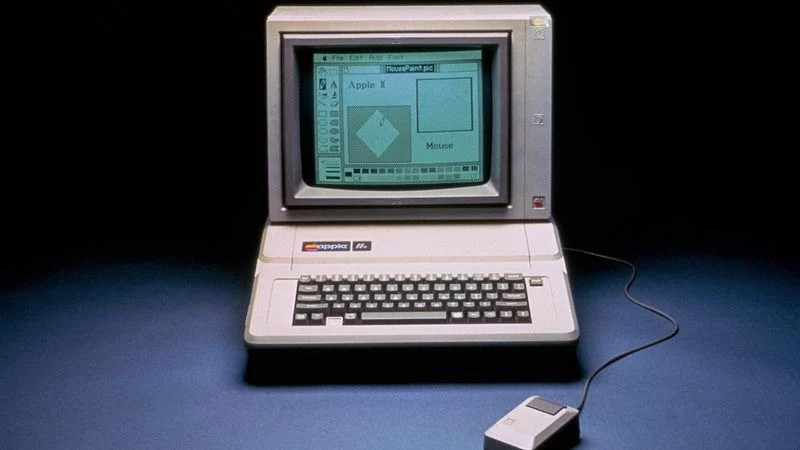
Although the Apple-1 debuted in 1976, it was the Apple II in 1977 that became the company’s first successful mass-market personal computer.
Unlike its predecessor, the Apple II came fully assembled in a plastic case with an integrated keyboard. It sold millions of units over several years, providing Apple with the financial foundation to grow into a major enterprise.
The 1980s
In 1984, co-founder Steve Jobs introduced the Macintosh, the first widely successful computer with a graphical user interface.
The original Macintosh popularized the computer mouse, allowing users to control a cursor on screen. This point-and-click navigation was revolutionary at a time when most personal computers relied on text-based command lines and keyboard input.
Apple famously claimed users could learn the Macintosh in just “a few hours.” Features that are now standard - such as desktop icons, multitasking windows, dropdown menus and copy-paste - were once groundbreaking innovations.
The Macintosh launched at US$2,495 (equivalent to nearly US$8,000 today), equipped with an 8 MHz processor, 128 KB of RAM and a 400 KB floppy disk drive.
The 1990s
By the 1990s, Apple had largely lost its direction. The turning point came in 1997 when Steve Jobs returned following Apple’s acquisition of NeXT, the computer company he founded after leaving Apple in the mid-1980s.
While Apple experimented with products like the Newton personal digital assistant, the Pippin gaming console and the QuickTake digital camera, Jobs’ return proved decisive. He streamlined the product lineup and reignited the company’s identity, beginning with the colorful iMac in 1998.
The 2000s
Apple’s renaissance accelerated with the launch of the iPod in 2001. The portable music player became a massive success, transforming Apple from a computer maker into a consumer electronics powerhouse.
Six years later, Apple combined the iPod with a mobile phone to create the iPhone.
During its now-iconic unveiling at Macworld San Francisco, Steve Jobs described the original iPhone as three separate devices: a widescreen iPod with touch controls, a revolutionary mobile phone and a breakthrough Internet communicator.
The audience erupted when it became clear he was referring to a single device. If the iPod was a major success, the iPhone became a global phenomenon, evolving into one of the best-selling products in history. Last year, Apple announced it had shipped its three billionth iPhone.
The 2010s
Three major product lines defined this decade: the iPad (2010), Apple Watch (2015) and AirPods (2016).
Initially seen as a larger iPhone, the iPad evolved into a versatile computing device with features such as trackpad support, redefining the concept of personal computing.
Millions of users now rely on the Apple Watch, making it one of the most widely used health-monitoring devices in the world. With features such as ECG monitoring, crash detection, fall detection and emergency SOS, the device has saved lives - an achievement frequently highlighted by CEO Tim Cook.
As for AirPods, Apple maintains they are the most popular wireless earbuds globally.
The 2020s
In 2020, Apple began transitioning the Mac lineup from Intel processors to its own custom-designed chips, delivering industry-leading performance per watt.
After years of speculation, the company officially announced the transition at WWDC in June 2020.
Later that year, the first Macs powered by Apple silicon were released, including the MacBook Pro 13-inch, MacBook Air and Mac mini. The transition was completed in 2023 with the introduction of the Mac Pro featuring the M2 Ultra chip.
Apple has stated that macOS Tahoe will be the final version of its operating system to support Intel-based Macs.
From early personal computers to cutting-edge silicon, Apple’s 50-year journey reflects a pattern of continuous reinvention. Each decade has brought a defining shift - one that not only reshaped the company, but also transformed how the world engages with technology.
 Vietnamnet.vn

 Podcast





.svg)
