 Vietnamnet.vn

 Podcast



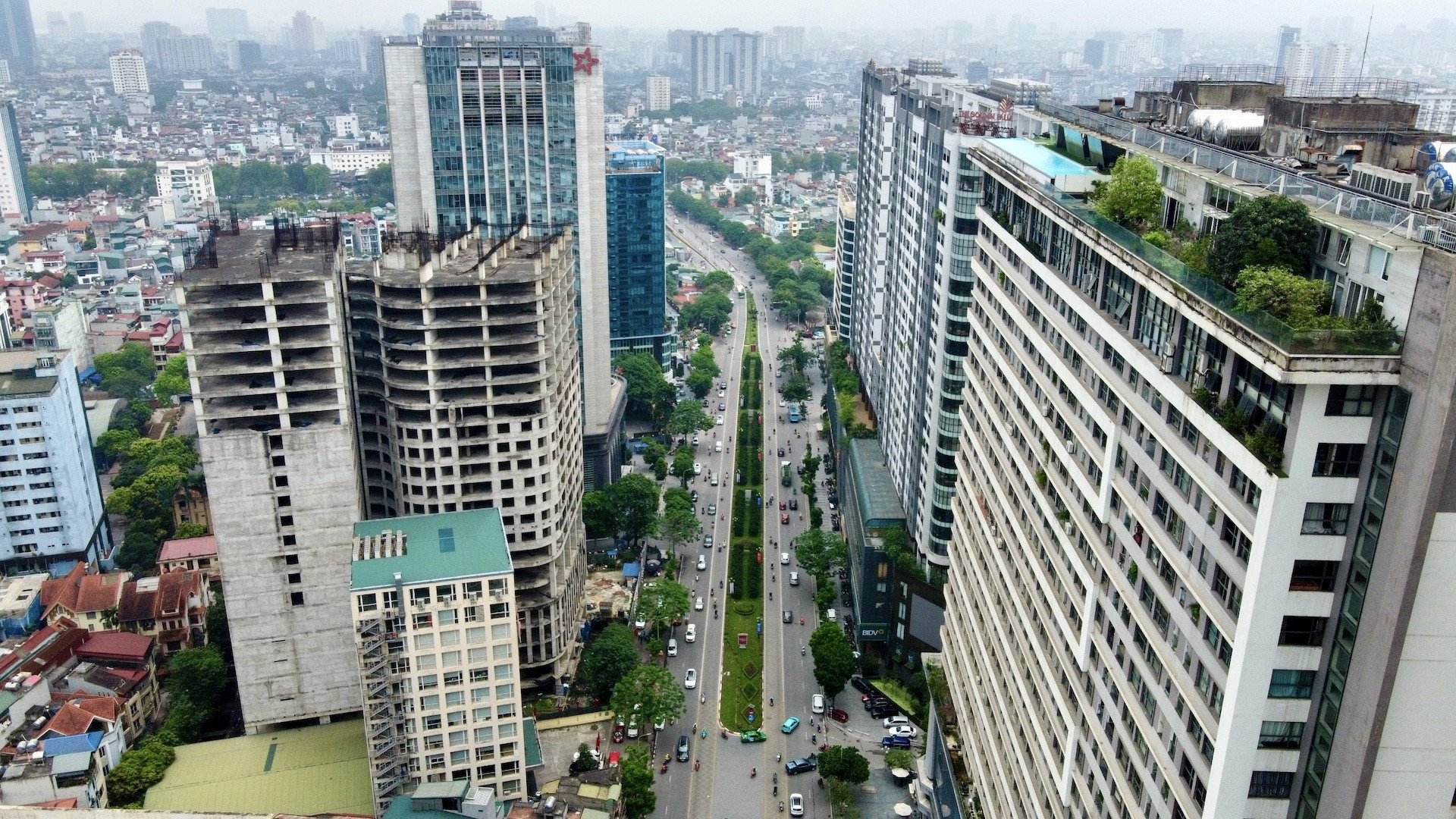
The report on the housing market released by the ministry said apartment prices in the 4th quarter in Hanoi, HCMC, and major urban areas were basically stable and continued to maintain high levels compared to the previous quarter.
For the whole of 2025, apartment prices nationwide increased by 20-30 percent compared to 2024, with higher increases in some areas, especially in the mid-range and high-end segments.
In Hanoi, the average primary selling price of apartments in 2025 reached VND100 million per sqm, up 40 percent from 2024.
Market surveys show several projects listing at high prices, such as Green Diamond at VND130–170 million per sqm; Richland Southern at VND90–102 million per sqm; and Golden Park Tower at VND110–124 million per sqm.
In HCMC, the average primary apartment price in 2025 reached VND111 million per sqm, up 23 percent from the previous year. Midtown Phu My Hung was offered at VND118–150 million per sqm, while the new phase of Riverpark Premier averaged VND130–153 million per sqm.
In other localities, apartment prices were generally stable, with some areas posting slight quarter-on-quarter increases. For the full year 2025, prices in these markets rose by 10–15 percent compared with 2024.
Not only apartments, other segments also recorded price gains. Villas and townhouses rose by 10–20 percent in 2025, mostly in areas with good infrastructure and central locations.
In Hanoi, prices in this segment continued to rise by about 10–15 percent year on year, with some areas increasing by 20–30 percent.
Land prices showed a similar upward trend, particularly in locations with good connectivity, central positions, and clear planning information. For the full year 2025, land plot prices increased by 20–25 percent compared with 2024.
Regarding the transactions of apartments, individual houses, and land plots, the 4th quarter saw 151,382 successful transactions nationwide, equivalent to roughly 110 percent of the previous quarter and 135 percent year on year.
Apartment inventory
According to the MOC, the real estate inventory for apartments, private houses, and land plots, tended to increase compared to Q3/2025.
According to reports from 24/34 localities, the real estate inventory in projects in Q4/2025 was 32,894 units/plots. Of these, there were more than 10,950 apartments; 9,810 private houses; and the rest were land plots.
Compared to Q3/2025, the inventory of apartments and private houses was 123.7 percent; the land plot 121.6 percent.
Notably, for the apartment segment, inventory in the first 6 months of 2025 decreased, but in the last six months, it increased again. Conversely, land plots recorded a downward inventory trend in the second half of the year, while private house inventory increased steadily through each quarter.
Data from the Vietnam Association of Realtors Market Research Institute (VARS IRE) shows that housing price levels continued to escalate and set new price levels in most areas. In particular, the apartment segment continued to be a "hot spot" as new asking prices in major cities increased sharply.
VARS IRE stated that real housing needs still played an important role, but the main driver of the market still came from investment demand. It was estimated that more than 75 percent of transactions came from the group of customers buying a second or subsequent home, with about 10 percent using short-term financial leverage.
However, by the end of 2025, the growth momentum of the apartment market tended to slow down. A segment of investors who bought according to FOMO (fears of missing out) sentiment began to offer sales to stop losses, while price levels in central areas remained stable.
These developments were also seen by many other research units. One Mount Group stated that in November 2025, the Hanoi market had about 6,100 real estate transfer transactions, down 18 percent from the previous month. The strongest decrease was in the apartment segment with about 3,100 secondary transactions, dropping 22 percent monthly.
According to this unit, many home loans disbursed in late 2023 or early 2024 began to have the principal grace period expire, causing principal and interest repayment obligations to surge. Interest rate pressure that increased in October, along with the stagnation of transfer prices, directly affected investor sentiment.
Hong Khanh
.svg)
