 Vietnamnet.vn

 Podcast


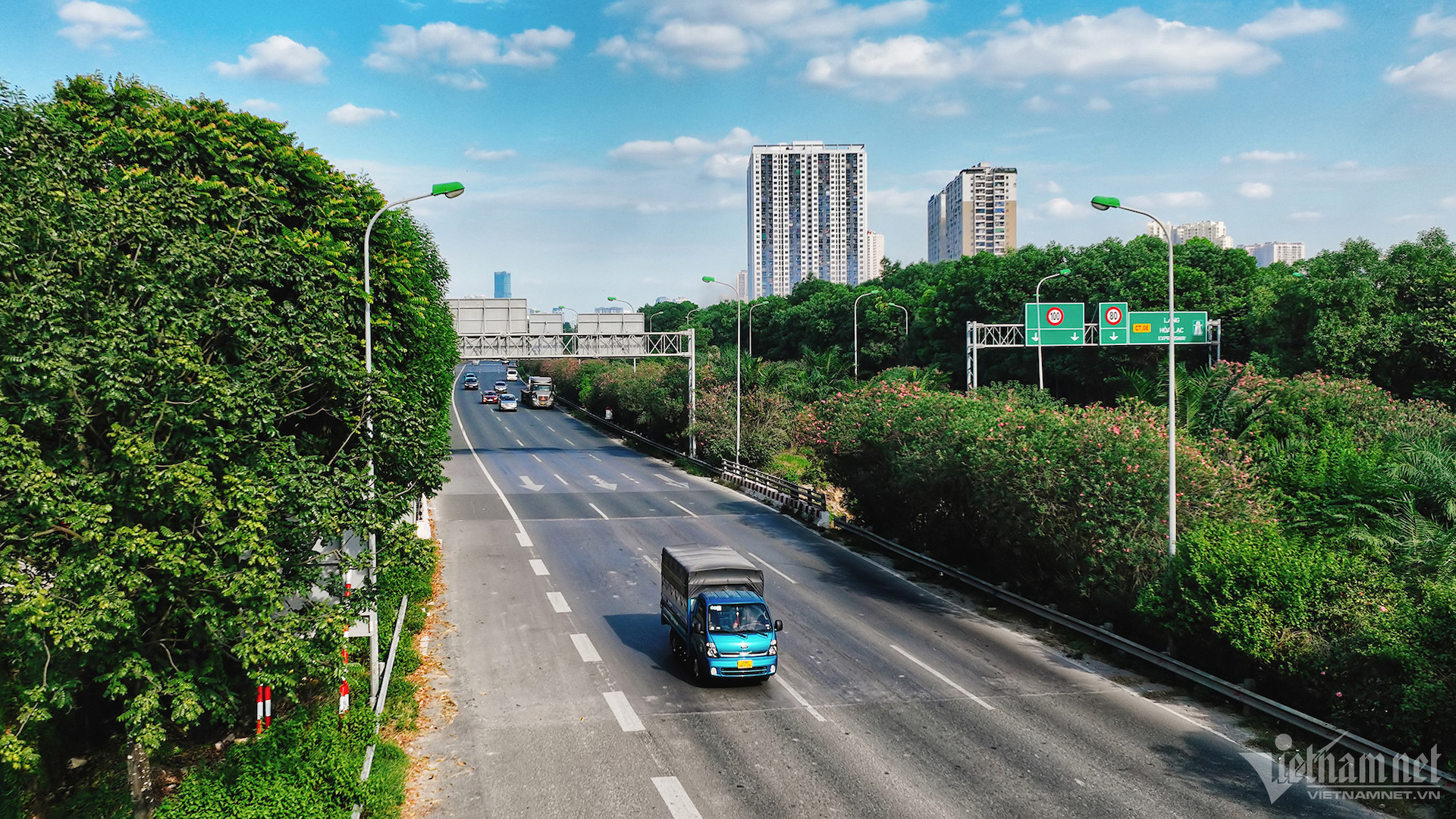
The Hanoi People's Committee has issued Decision No. 143 on the management of parks, urban greenery and water bodies, effective from October 22, replacing the city's 2023 regulations on urban trees.
The prohibited list includes several familiar species, such as oleander, yellow oleander, soapberry, honey locust, Jamaican cherry and Burmese grape. The reasons vary by species, ranging from poisonous properties and public safety risks to environmental and sanitation concerns.
For trees already growing in urban areas and rural residential communities that fall under the prohibited list or are unsuitable for their locations, responsible agencies must develop plans for their gradual removal and replacement, while maintaining public safety and the surrounding landscape.
Any felling or relocation must comply with permit requirements and technical procedures, ensuring the safety of people, property and traffic. The decision does not set a blanket deadline for removing existing trees on the prohibited list.
Hanoi has also specified a range of prohibited activities involving parks, flower gardens, trees and water bodies. These include planting banned species and planting trees without authorisation on pavements, road medians, at intersections or in other public areas.
Unauthorised tree felling, relocation, pruning, root cutting or excavation is prohibited, as are drilling holes into trees, driving nails into trunks, stripping bark, dumping rubbish, toxic substances or construction materials around tree bases, and using these areas for urination, cooking, burning or building platforms and raised structures.
Attaching advertisements, signs or other objects to trees is also banned. Decorative lights and cables may not be strung through trees without approval from the relevant authorities, particularly where they could interfere with tree growth and development.
Failure to properly fulfil responsibilities for managing, maintaining and protecting trees, parks, gardens and water bodies is also classified as a prohibited act.
Milkwood trees absent from approved roadside planting list
Alongside the prohibited species, Hanoi has introduced a list of 33 tree species suitable for planting along streets and in public areas, with recommended locations determined by pavement and median widths.
These include dracontomelon, Hopea odorata, crape myrtle, freshwater mangrove, Chinese bishopwood, white champaca, royal poinciana, white and purple orchid trees, golden shower trees, yellow trumpet trees and mango trees.
Notably, milkwood trees, known locally as hoa sua and famous for their distinctive autumn fragrance in Hanoi, are absent from the list of 33 approved roadside and public-area species.
However, milkwood is not among the 18 prohibited species either. Its exclusion from the recommended planting list does not mean existing milkwood trees must be removed.
Under the new regulations, street trees must be able to withstand storms and harsh weather conditions. They should have balanced canopies, straight trunks, sufficiently high branching points, healthy growth and deep root systems without exposed surface roots.
Evergreen species that retain their foliage throughout the year are preferred.
For parks, flower gardens, green corridors and green wedges, the choice of species is generally unrestricted, except for those on the prohibited list. The aim is to encourage biodiversity and develop multilayered vegetation with canopies at different heights.
The decision also identifies 18 species suitable for submerged, semi-submerged and floating environments, including bald cypress, white cheesewood, cajuput, water-loving Syzygium species, banyan, weeping fig, crape myrtle, freshwater mangrove, holly mangrove, red ixora, spike rush, sedge, reeds, umbrella papyrus, gardenia, water hyacinth, water lily and lotus.
Organisations and individuals seeking to plant or replace public trees on pavements must obtain approval for the selected species from the competent authorities before proceeding.
New trees must not obstruct the only entrance or exit to offices, organisations or homes, or block traffic signs and signals.
Hanoi seeks to preserve green spaces and limit land conversion
According to the Hanoi Department of Construction, the city's most common urban trees include approximately 26,400 dracontomelon trees, 17,500 crape myrtles, 16,000 royal poincianas, 14,400 milkwood trees, 12,500 Cassia trees, 10,400 African mahogany trees and 1,800 Hopea odorata trees.
Hanoi now considers urban greenery a fundamental component of its ecological infrastructure.
Trees, parks, gardens and water bodies are expected to form an interconnected network linking forests, rivers, lakes, public parks and roadside greenery.
This network is intended to regulate local microclimates, improve environmental quality, manage rainwater, reduce flooding and strengthen the city's resilience to climate change.
According to Hanoi's plan for managing and developing its network of trees, parks, flower gardens and water bodies, the city currently has around 3,500 trees belonging to groups including Burmese grape, coral trees, paper mulberry and Jamaican cherry.
These species are considered relatively vulnerable to adverse conditions or have biological characteristics that no longer meet urban safety requirements.
The plan calls for a shift in priorities, moving away from simply expanding the number of trees and the area of green spaces towards improving their quality, usability, public benefits and ecological value.
The effectiveness of green spaces, residents' satisfaction and their contribution to communities will become important measures of success.
Public green spaces should be accessible, welcoming and safe, serving people of different ages and needs.
Hanoi will prioritise preserving existing trees and maintaining the city's distinctive landscape identity.
The authorities aim to protect and improve existing greenery, parks and gardens while minimising the conversion of green land to other uses.
Special attention will also be given to conserving heritage trees, trees of historical and cultural significance, and distinctive tree-lined streets and clusters of vegetation that contribute to Hanoi's character.
Thanh Hue

