 Vietnamnet.vn

 Podcast



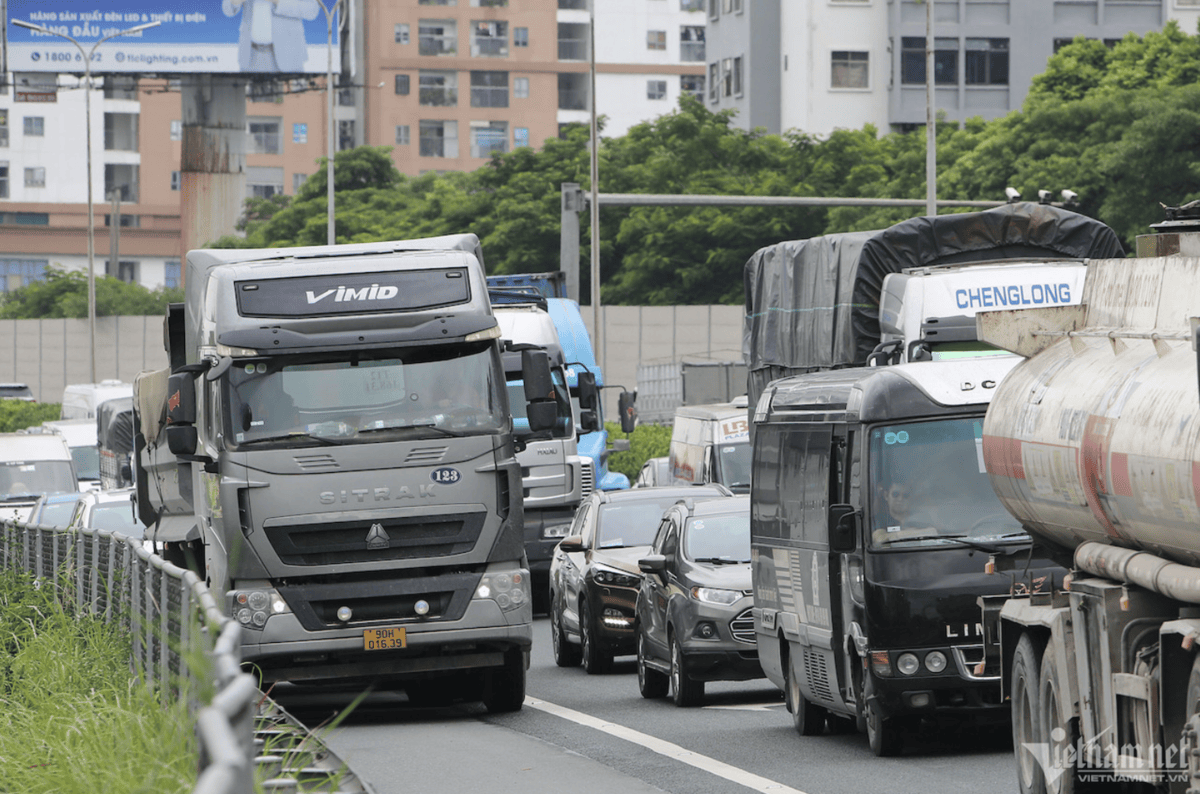
The rule beginning on January 12 has sparked concern from drivers, transport companies, and experts.
Under the decision, the inner-city boundary is expanded to Ring Road 3.5 (previously Ring Road 3). Peak hours are defined as 6:00–9:00 and 16:00–19:30 daily. Trucks weighing 2 tons or more are only allowed to circulate between 9pm and 6am the following morning.
Immediately after the regulation was announced, many drivers, transport businesses, and traffic experts voiced concerns about its feasibility and potential domino effects.
Having driven trucks for many years, Van Khang, a Hanoi-based driver, said the daytime ban is like a “double-edged sword.”
“It may reduce congestion during the day, but drivers are forced to work overtime at night, lose sleep, and load/unload goods, increasing the risk of accidents. Not to mention higher transshipment costs will push up freight rates and goods prices, with consumers and small traders ultimately bearing the burden.”
Phan Tam, another truck driver in Hanoi, argued that the threshold of “gross weight from 2 tons” is too low. “In reality, most trucks today have a gross weight above 2 tons when both the vehicle and cargo are counted. That means almost all trucks are banned from entering the inner city during the day,” Tam said.
He said deliveries during office hours will face difficulties, as most businesses and shops close around 5pm and cannot wait until 9 pm to receive goods. This forces companies to hire transshipment vehicles, driving up logistics costs and pushing prices higher.
Nguyen Phuong, owner of Tuan Phuong Transport Company in Hanoi, said that as the Lunar New Year approaches and freight demand surges, the new regulation could slow deliveries and create additional challenges for businesses and drivers.
“Labor costs will rise for both transport companies and receivers, because not all workers are willing to work overtime until 9-10pm to wait for deliveries,” Phuong said.
Experts weigh in
Khuong Kim Tao, former Deputy Chief of the National Traffic Safety Committee Office, agreed that restricting heavy vehicles during peak hours aligns with global urban trends. However, he said a blanket daytime ban on all trucks over 2 tons lacks practical nuance.
"Traffic regulations should ensure equality and flexibility. We should primarily restrict heavy-duty trucks, those over 10 tons, as they place significant pressure on infrastructure and pose higher safety risks. A 2-ton threshold is simply too broad," Tao said.
He cited an example: if a conference requires a 4-ton truck to transport water and equipment, the ban would force the organizer to use three smaller trucks under 2 tons instead.
"This approach doesn't reduce congestion; it actually increases the number of vehicles on the road while inflating transport costs," he warned.
Nguyen Cong Hung, Vice Chair of the Vietnam Automobile Transport Association, said the regulation stems from the urgent need to control pollution and congestion as vehicle density in Hanoi continues to climb. On a positive note, the policy could reduce conflicts between commercial trucks and private vehicles during rush hours.
However, Hung acknowledged the significant impact on transport businesses. Limited operational windows force companies to overhaul their logistics plans, increasing labor and warehousing costs, and potentially disrupting supply chains for essential goods.
"For this regulation to be effective, there needs to be a flexible assessment based on cargo types and time slots, alongside a priority mechanism for essential goods. Only then can we achieve traffic management goals without placing an undue burden on businesses and the market," Hung said.
The challenge for Hanoi goes beyond merely reducing traffic jams; it lies in ensuring the seamless flow of goods, maintaining stable logistics costs, and protecting the livelihoods of its citizens.
Many stakeholders agree that the policy requires further review and adjustment during its implementation to find a sustainable balance between urban order and economic vitality.
In related news, the 15th National Assembly has passed a law amending and supplementing several provisions of 10 laws related to security and public order, removing the regulation that capped driving time at no more than 10 hours per day and 48 hours per week.
Under the new rules, a driver’s continuous driving time must not exceed four hours, except in force majeure circumstances. A driver’s working hours per day and per week are implemented in accordance with the Labor Code. Previously, the 48-hour-per-week cap forced transport operators to increase the number of drivers amid a labor shortage, driving costs significantly higher.
Vu Diep
.svg)
