 Vietnamnet.vn

 Podcast



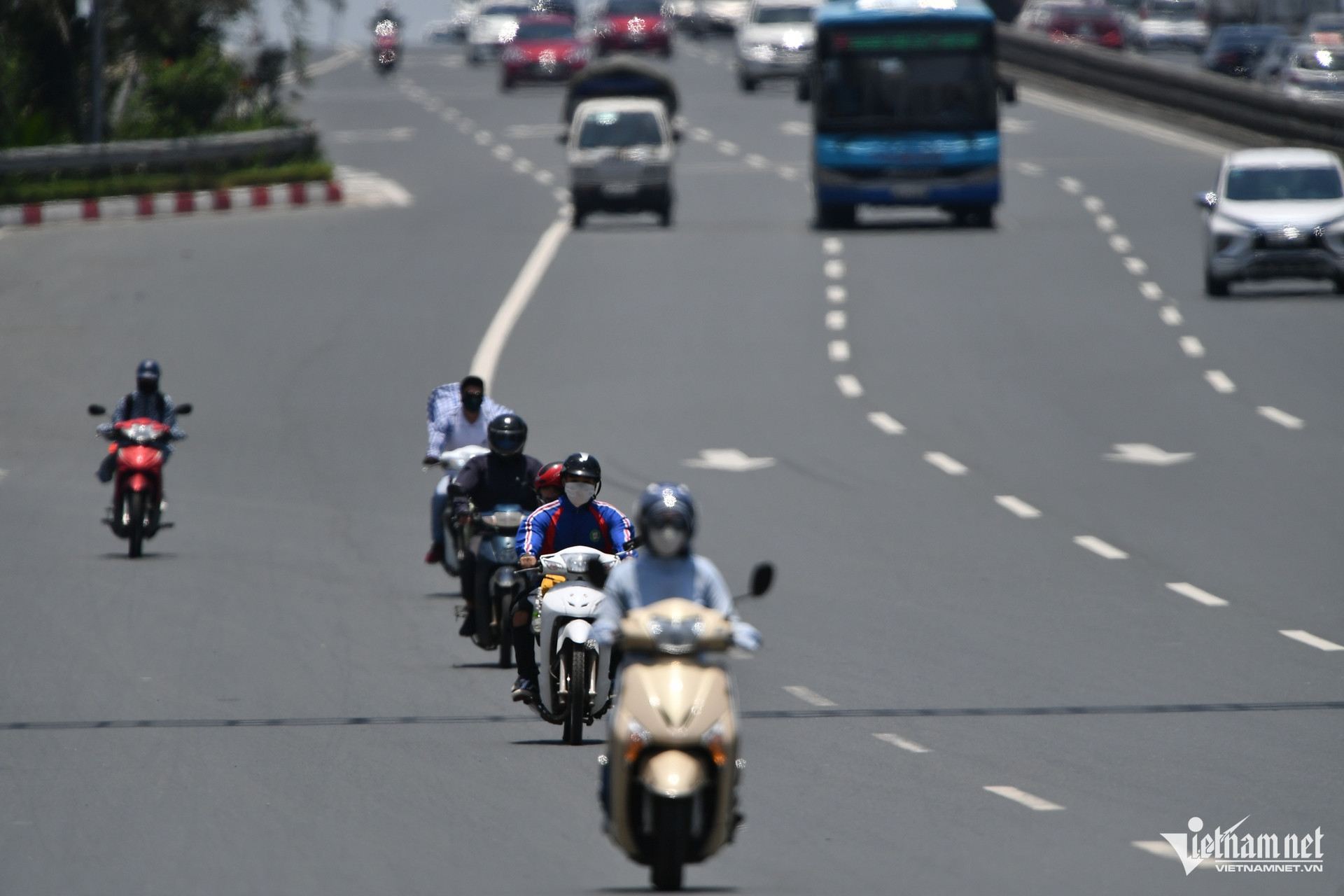
The prolonged and “abnormal” heatwave has engulfed northern and central Vietnam for days, driven by the western low-pressure system combined with strong foehn winds. From May 22 to 27, widespread extreme heat spread across the northern region and central provinces, with particularly dangerous conditions developing from May 24 onward.
According to the National Center for Hydro-Meteorological Forecasting, the northern midlands, Red River Delta - including Hanoi - and central provinces from Thanh Hoa to Hue experienced severe and exceptionally severe heat, with temperatures commonly ranging from 38 to 40 degrees Celsius and some locations exceeding 40 degrees.
Several localities broke long-standing May temperature records. Uong Bi in Quang Ninh recorded 38 degrees Celsius on May 25, surpassing its previous May record of 37.5 degrees set in 2013. Hiep Hoa in Bac Ninh reached 39.7 degrees, exceeding the previous record of 39 degrees recorded in 2019. Bac Giang climbed to 39.4 degrees, higher than its former May record of 39.1 degrees set in 2020.
Meanwhile, Bac Ninh station recorded 40.5 degrees, matching its all-time May record, while Hai Duong reached 39.6 degrees, also tying its historic high.
Hanoi emerges as the heatwave’s ground zero
Hanoi has suffered some of the harshest conditions during this heatwave, with daytime temperatures consistently hovering between 39 and 40 degrees Celsius.
At the Ha Dong monitoring station, Hanoi recorded 41.1 degrees Celsius on May 26, ranking as the second-highest May temperature in the city’s recorded history. The all-time May record remains 41.3 degrees, set in 2019.
At the Lang station, Hanoi’s highest temperature ever recorded was 41.8 degrees on June 4, 2017. The city’s absolute annual temperature record, measured at Ha Dong, stands at 42.5 degrees, also recorded on June 4, 2017.
According to climate experts, Hanoi’s brutal conditions are being intensified not only by the western low-pressure system and foehn winds but also by the urban heat island effect. Dense concrete infrastructure and tightly packed high-rise buildings cause the capital to trap and radiate heat more intensely than surrounding areas, often making temperatures 1-2 degrees higher than nearby provinces.
Dr. Nguyen Ngoc Huy, a climate change and disaster risk reduction expert, said this year’s weather pattern bears similarities to 2015, when El Niño conditions intensified and contributed to severe drought through late 2015 and 2016.
“The last time Hanoi experienced historic May temperatures was more than 10 years ago. The current atmospheric pattern resembles that period in several ways,” Huy said.
Nights remain unbearably hot
Experts said the capital’s oppressive heat is being amplified by a low-pressure system around 998hPa forming between 2 p.m. and 6 p.m., trapping enormous amounts of heat over the city for prolonged periods.
As a result, Hanoi feels even more suffocating than many of Vietnam’s traditional central “heat hotspots,” despite some provinces technically recording similar temperatures.
Unlike previous heatwaves that peaked mainly between late morning and afternoon, this event creates unbearable conditions from as early as 8 or 9 a.m. and continues into the evening and overnight hours. Even after sunset, roads and concrete buildings continue radiating stored heat back into the air.
Electricity demand has surged sharply as residents rely heavily on air conditioning, raising concerns about overloaded power systems, electrical fires and sudden outages.
Meteorological authorities also warned that temperatures measured outdoors can be 2-4 degrees Celsius higher than official forecasts - and potentially even higher in heavily urbanized areas due to asphalt roads and concrete surfaces.
Residents have been advised to avoid outdoor activities between 9 a.m. and 5 p.m., when heat intensity is most dangerous.
Thunderstorms expected as heat begins easing
Although northern Vietnam remains under extreme heat through May 27, forecasters say scattered thunderstorms will begin appearing from the evening onward.
According to the National Center for Hydro-Meteorological Forecasting, thunderstorms are expected to develop first across mountainous and midland areas before gradually expanding across the north between May 28 and 30, mainly during late afternoon and nighttime hours.
Before storms arrive, residents may experience an especially oppressive and unstable atmosphere associated with pre-storm heat buildup - known locally as “tuc giong.”
Experts also warned that Hanoi’s urban heat island effect could intensify thunderstorm activity, increasing the risk of violent winds, lightning, hail and localized extreme weather.
From May 28, a weak cool air mass moving south from China is forecast to weaken the western low-pressure system, allowing temperatures across northern Vietnam to gradually ease.
Heat in the northern midlands and Red River Delta is expected to decline to around 35-37 degrees Celsius, though some areas could still exceed 37 degrees.
By May 29, widespread heat across northern Vietnam is forecast to largely end.
However, central provinces from Thanh Hoa to Hue are expected to remain under severe heat, with temperatures between 37 and 39 degrees Celsius and some locations surpassing 39 degrees.
Meteorologists also warned that this may not be the last extreme heatwave of the summer. With El Niño conditions forecast to strengthen later in 2026, more widespread heat events could return between June and August.
Weather outlook for May 27
According to the latest forecast, Hanoi remains the hottest major city in Vietnam on May 27, with temperatures forecast between 39 and 40 degrees Celsius and some areas potentially exceeding 40 degrees. Scattered thunderstorms may develop toward evening.
Across northern Vietnam and central provinces from Thanh Hoa to Hue, temperatures are expected to remain between 38 and 40 degrees Celsius, with low humidity levels ranging from 40-45 percent.
Other northern areas and the south-central coast are forecast to see temperatures between 37 and 39 degrees Celsius, with isolated areas above 40 degrees.
The Central Highlands and southern Vietnam are expected to remain hot during the day, followed by scattered showers and thunderstorms in the afternoon and evening.
Bao Anh
.svg)
