 Vietnamnet.vn

 Podcast



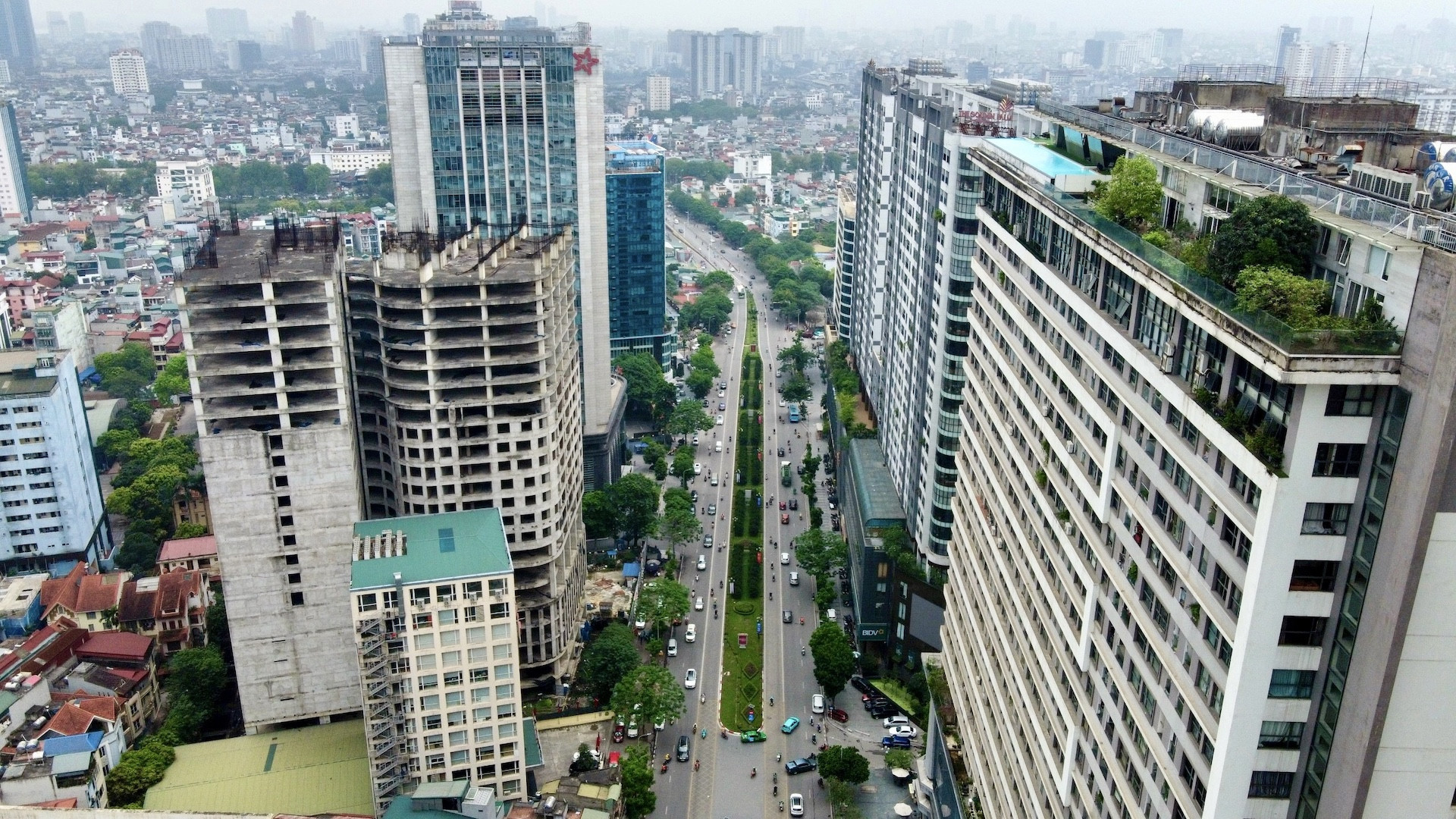
Hanoi's preparation to construct seven bridges across the Red River carries strategic significance, not only improving traffic capacity but also restructuring the entire development space of the Capital city. When these new bridges are formed, the Red River will no longer be a natural boundary dividing the city but will become a connecting axis, a landscape axis, and a new growth engine.
It is noteworthy that these projects are being "strung together" into a connection network consisting of ring roads, radial axes, metros, and the Red River bridge system. Under the same legal framework, results differ when responsibilities are clearly assigned and determination is pushed to the highest level. When "land bottlenecks" are removed, infrastructure not only paves the way but also opens up space for economic restructuring.
In the long-term vision, these movements lie within a very ambitious directional framework. Hanoi has just approved the task for the Capital Master Plan with a 100-year vision, applied to all 126 communal-level administrative units over a space of about 3,360 square kilometers.
The city is organized according to a "multi-polar – multi-center, multi-tier – multi-layer" model, developing in depth toward a green, smart, and identity-rich city closely linked with satellite urban areas; in which the Red River plays the role of a green axis and a new development driving axis.
To concretize this planning, the Hanoi People's Council has passed a list of strategic projects for the 2026–2035 period, notably the plan to form 5 large-scale new mega-urban areas with a total area of about 49,700 hectares and an estimated total investment of nearly VND4 quadrillion.
These urban areas are distributed along Ring Road 4 and the Capital's strategic development directions, aiming to disperse the density of the core area, increase green space and social infrastructure, create new development space, and reduce pressure on the historic inner city.
It can be said that Hanoi is entering a new development cycle, where the capacity for implementation organization and the ability to open up space become the most important measures of growth.
Great aspirations and difficult problem
Hanoi sets a goal of average GRDP growth of over 11 percent/year during the 2026–2045 period; average GRDP per capita is expected to reach $17,000 by 2035, $45,000 by 2045, and about $100,000 by 2065. Specifically for 2026, the growth target is set at 11 percent or higher.
Dr. Nguyen Dinh Cung, former Director of the Central Institute for Economic Management (CIEM), said Hanoi's biggest challenge lies in the long-term trend of gradually decreasing growth.
In 2011-2015, the City's GRDP increased by an average of 7.35 percent/year; in 2016–2020 7 percent; and 2021–2025 only 6.6 percent.
For the entire 2021–2030 period to reach an average growth rate of 8.5 percent as planned, in the remaining five years, Hanoi is forced to grow by about 10 percent each year.
The problem lies not only in the pace but also in the growth structure. Hanoi formed a "post-industrial" economic structure quite early, with the service sector accounting for 66 percent of GRDP, while industry and construction only accounting for about 21 percent, with the processing and manufacturing industry at 15 percent.
Hanoi has mobilized a very high amount of investment capital, equivalent to nearly 39 percent of GRDP, but investment efficiency is low, as reflected by a high ICOR. State investment still accounts for a large proportion; the private sector accounts for about 56 percent, while FDI is only about 6.5 percent and has tended to decrease since 2020.
Notably, real estate, a field that does not contribute significantly to GRDP growth, attracts up to about 13 percent of total investment capital, while fundamental fields for long-term growth such as science and technology, healthcare, and education have not been adequately invested in.
Accelerating but changing direction
From that perspective, the greatest significance of the current period lies not only in the scale of projects or investment figures but in whether Hanoi can utilize the "infrastructure window" to change its development model. Hanoi cannot and does not need to become an "industrial province" in the pure sense.
The Capital city’s challenge is to build a growth model based on productivity, knowledge services, high-tech industry, logistics, and the creative economy, commensurate with its role as the country's political, administrative, scientific, and educational center.
The opening of Ring Road 1 does more than just reduce traffic jams. It shows something more important: When the machinery operates at the right rhythm, things that seemed impossible can still be done.
Lan Anh
.svg)
