 Vietnamnet.vn

 Podcast



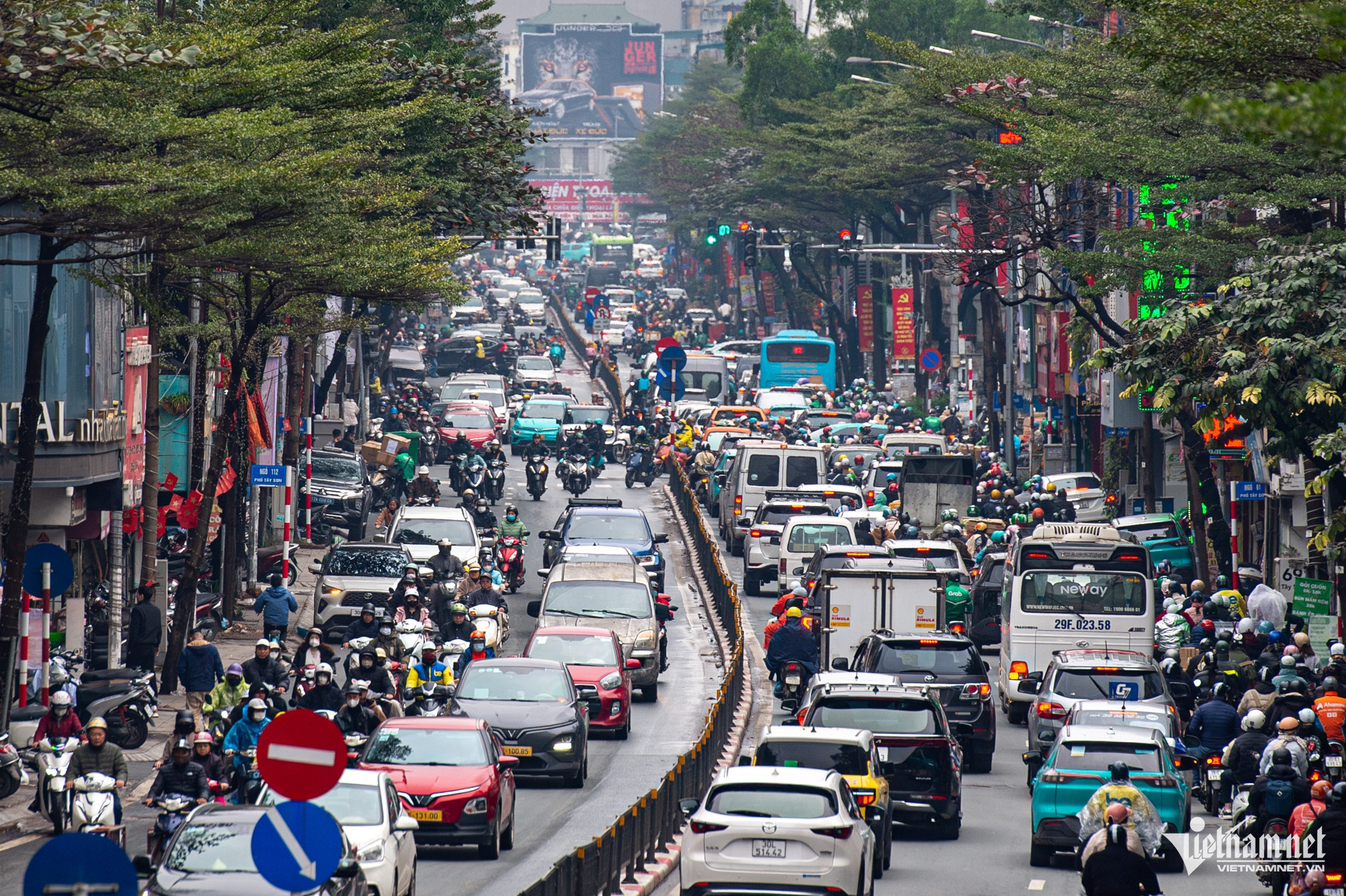
Experts say this initiative requires thorough research and evaluation.
According to the draft resolution being circulated for public feedback by the Hanoi People's Committee, the toll collection for motor vehicles entering the inner city will follow a phased roadmap: within Ring Road 1 starting from 2028, expanding to Ring Road 2 from 2030, and extending to Ring Road 3 from 2032.
The drafting agency believes this is an economic solution to regulate the demand for personal vehicles, alleviate traffic pressure in the central area, and encourage citizens to switch to public transit.
Nguyen Van Quyen, chair of the Vietnam Automobile Transport Association, noted that it is essential to study the matter very thoroughly before applying this solution in Hanoi.
The goals of reducing traffic congestion and environmental pollution are laudatory but what needs to be clarified is whether the policy will truly prove effective in reality, he said, adding that the issue must be thoroughly researched and assessed.
He said if the toll is implemented under the exact same infrastructure conditions as today, high-income earners can easily pay the fee to enter the city center, whereas individuals with limited economic means will be more severely impacted.
"That can easily lead to debates over the fairness of the policy," Quyen said.
He noted that if the city determines a need to restrict personal vehicles in certain specific areas, it should prioritize clear management regulations rather than a "pay a fee to enter" mechanism. The option of "whoever has money gets to enter" will create a sense of social inequality.
When asked about how much the fee should be, Quyen stated that if the toll is low, many people will still be willing to pay and continue utilizing personal vehicles, making the goal of congestion reduction difficult to achieve. Conversely, if the fee is too high, the policy may face backlash from citizens and businesses.
"This is a very difficult puzzle. Charging a low fee is ineffective, whereas charging a high fee could trigger a major impact on social life. Therefore, a meticulous impact assessment is required before making a decision," Quyen said.
International experience
Quyen said personal vehicle restriction measures can only succeed when the public transit system is capable of meeting the commuting needs of citizens.
International experience indicates that metropolises successfully applying inner-city tolls generally already have highly developed public transport networks ranging from metros and buses to transit parking lots and traffic connection systems.
Meanwhile, in Vietnam, given the current development pace of the urban railway system, the metro will still not be able to become a popular mode of transport capable of replacing personal vehicles in major cities over the next five to six years.
"The prerequisite is that we must systematically develop the metro, buses, transit parking lots, and traffic connection points. Only when citizens have convenient alternatives will restriction measures receive public consensus," Quyen said.
He pointed out that the roadmap proposed by Hanoi is quite rushed for a major transformation involving millions of vehicles. The city needs to carefully evaluate the responsiveness of public transport infrastructure and services before applying restrictive measures via administrative or economic tools.
Hanoi currently has around 8.1 million road motor vehicles, including 1.1 million cars and nearly 7 million motorbikes. With such a large vehicle volume, inner-city toll collection is not merely about traffic but the impact on livelihoods, commuting habits, and public consensus.
“Hanoi needs to carefully study international experience, fully evaluate the socio-economic impacts, and particularly place it within the real-world conditions of Vietnam before making a final decision," Quyen recommended.
International experience shows that many countries only roll out personal vehicle tolls into central areas when their public transit systems have developed to a relatively complete stage.
Singapore has implemented the Electronic Road Pricing (ERP) system since 1998 to regulate traffic, while investing heavily in mass rapid transit networks and buses, and strictly controlling car ownership.
In Japan, despite not implementing widespread inner-city tolls, major metropolises like Tokyo still restrict personal cars through regulations requiring a legal parking space and commanding very high parking costs.
Vu Diep
.svg)
