 Vietnamnet.vn

 Podcast



Hanoi will not impose a blanket ban on petrol-powered cars and motorbikes across the entire Ring Road 1 area starting July 1, according to city officials, who emphasized a phased and targeted approach to emissions control.
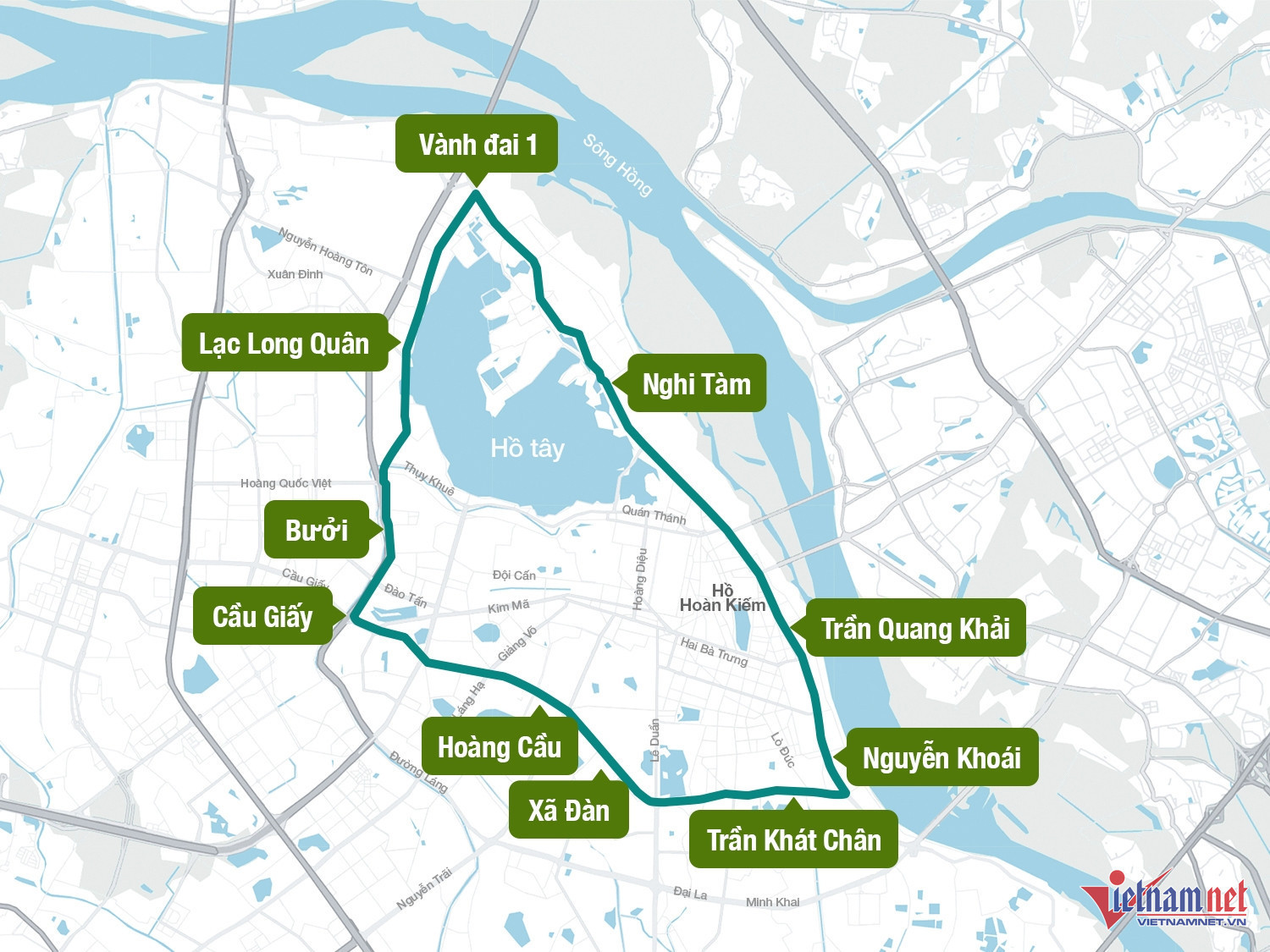
Under Resolution 57, the capital will begin piloting low-emission zones in central areas from July 1, introducing measures to limit vehicles using fossil fuels.
Speaking on the sidelines of a Hanoi People’s Committee press briefing on April 6, Deputy Director of the Department of Construction Dao Viet Long said the city would not implement low-emission zones simultaneously across the entire Ring Road 1. Instead, the rollout will be conducted by specific zones, with emission controls applied to cars and motorbikes based on a defined roadmap, scope, timing and target groups.
Dao Viet Long added that the city has tasked the Department of Agriculture and Environment with leading the development of the low-emission zone proposal, in coordination with the Department of Construction and city police. The plan will define applicable areas, target groups, implementation timelines, as well as technical and management solutions tailored to Hanoi’s conditions.
Measures may include restricting vehicles by area, time or emission standards, depending on practical conditions and approved traffic organization plans.
He stressed that the implementation of low-emission zones is not merely an administrative measure, but part of a broader transition toward restructuring urban transport. All policies, he noted, must ensure the interests of residents are safeguarded at each stage.
“The Hanoi People’s Committee will continue to direct departments and agencies to conduct periodic assessments, making timely adjustments to ensure residents have sufficient time to prepare and adapt before each expansion phase,” Long said.
Boosting public transport capacity
Regarding public transport capacity, city authorities said preparations have been underway to meet travel demand once low-emission zones are introduced.
Currently, the Ring Road 1 area is served by two urban railway lines (Line 2A and Line 3.1), with a combined capacity of around 462,000 passengers per day. In addition, 45 subsidized bus routes provide capacity for more than 903,000 passengers daily.
Officials highlighted ongoing efforts to “green” public transport, aiming to maximize the share of eco-friendly buses operating within Ring Road 1 before the pilot begins, particularly on routes running directly through the area.
In the second quarter, Hanoi plans to add more public bicycle stations to address last-mile connectivity. The city is also studying the introduction of smaller electric bus routes suited to narrow inner-city streets.
For park-and-ride facilities, authorities are developing plans to establish parking areas at gateway locations bordering the pilot zones, enabling residents to switch from private vehicles to public transport.
More than 210 potential sites within Ring Road 1 have been identified, with further data still being finalized.
Regarding charging infrastructure and battery-swapping stations, Dao Viet Long said relevant regulations - particularly fire safety standards for installations in older apartment buildings - are being finalized by competent authorities.
An inter-agency task force has also developed plans to deploy compact battery-swapping stations in suitable public spaces, allowing users to exchange batteries within two to three minutes.
At the same time, the Department of Construction is coordinating with relevant agencies to finalize a draft resolution on policies supporting the transition to clean-energy vehicles, which will be submitted to the Hanoi People’s Council for consideration.
Thanh Hue
.svg)
