 Vietnamnet.vn

 Podcast



Since he was 20, Vuong Dinh Que has traveled through Hanoi’s alleys and surrounding villages in search of beautiful old wooden objects.
Among the narrow lanes of Tu Hoang village, also known as Nhon village, in Hanoi’s Xuan Phuong ward stands a distinctive house with a large wooden gate intricately decorated with ceramic plates.
Beyond the gate is a garden covering more than 400 square meters, shaded by trees and carrying the gentle fragrance of orange jasmine.
Carefully tended pots of desert rose, yellow apricot blossom, Ochna serrulata and camellia are shaped and arranged among miniature rock formations and landscaped garden scenes.
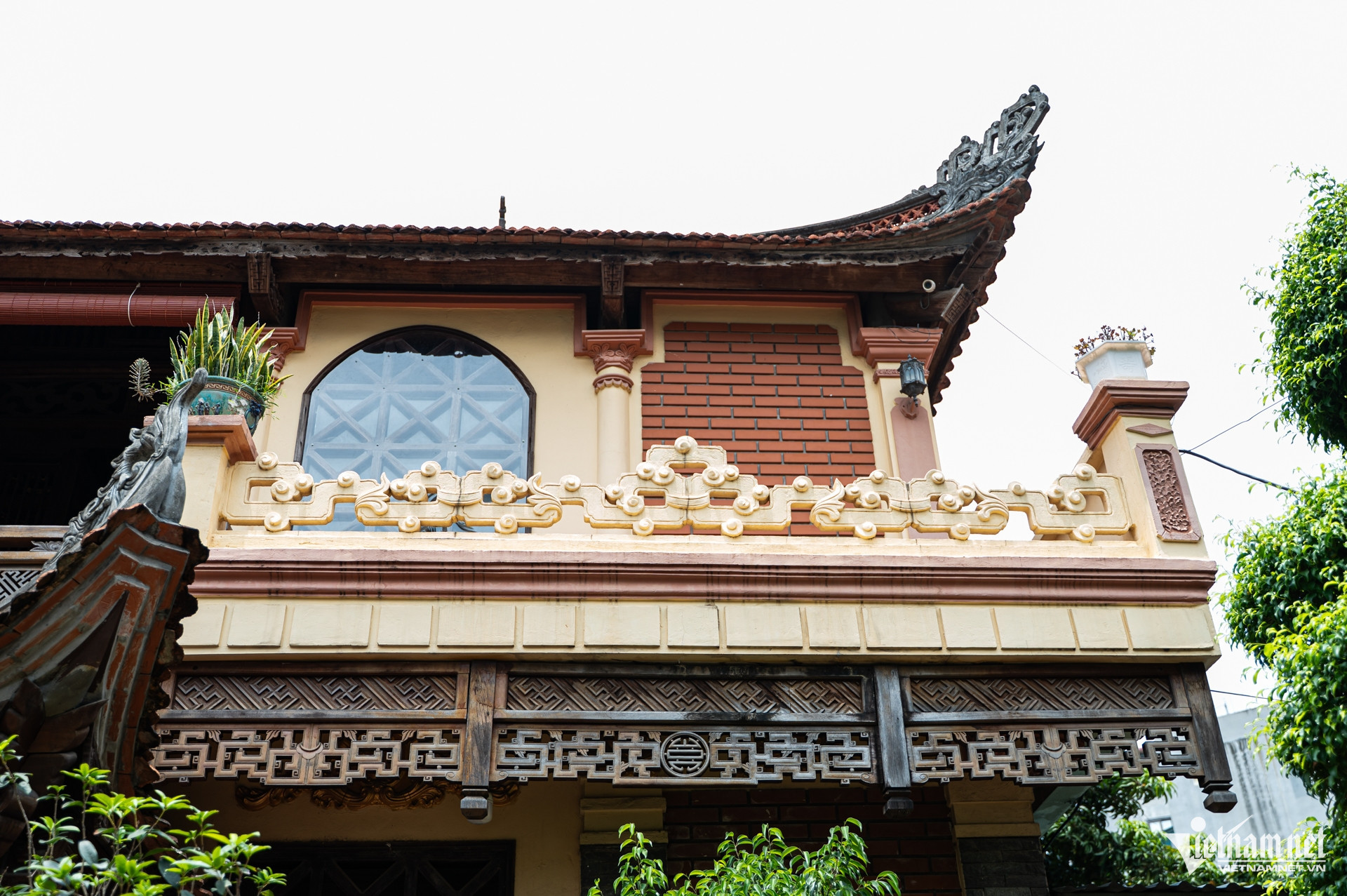
At the far end of the garden stands a two-story wooden house combining architectural features of traditional homes from northern Vietnam with elements inspired by the historic architecture of Hue in central Vietnam.
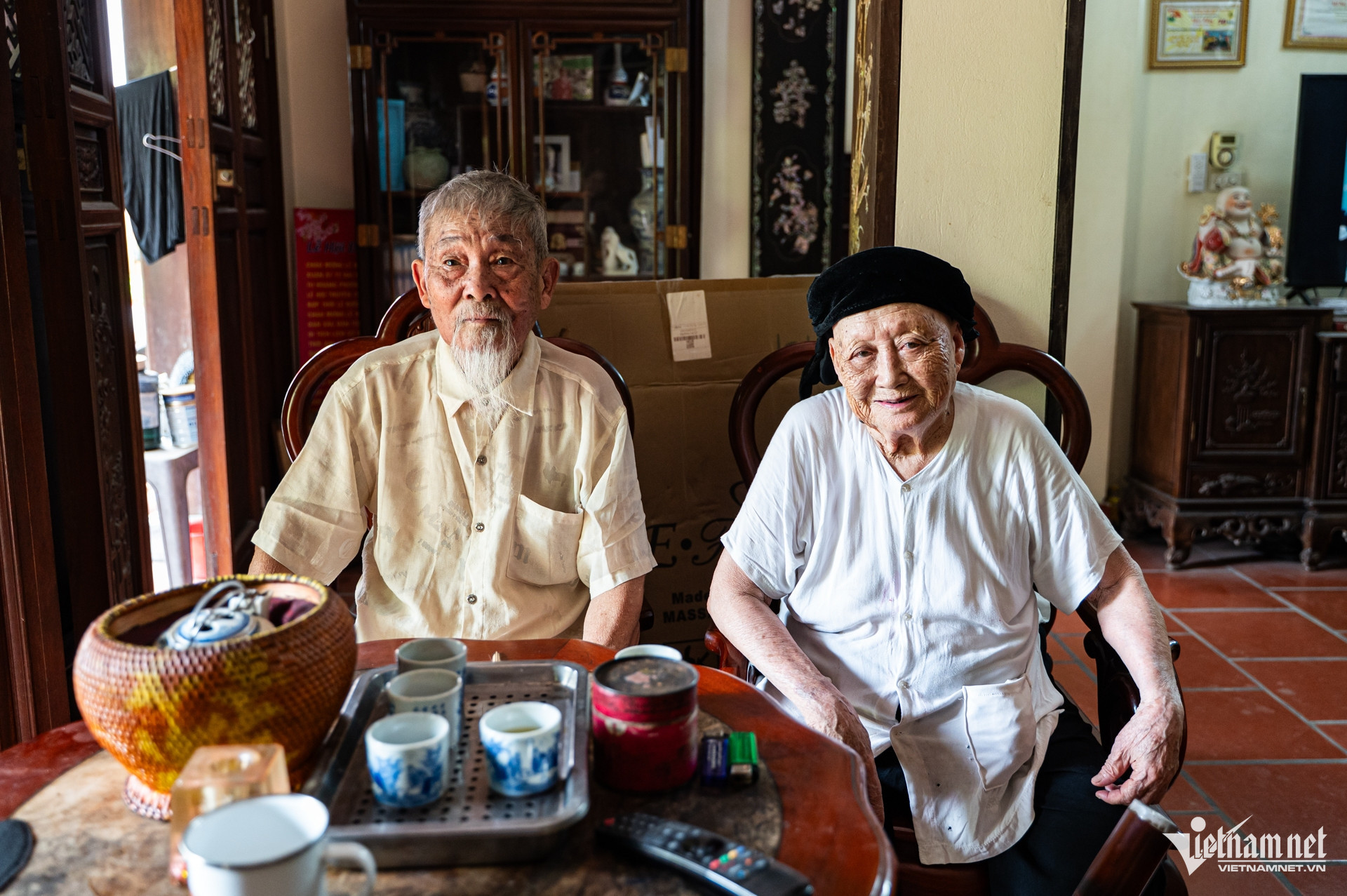
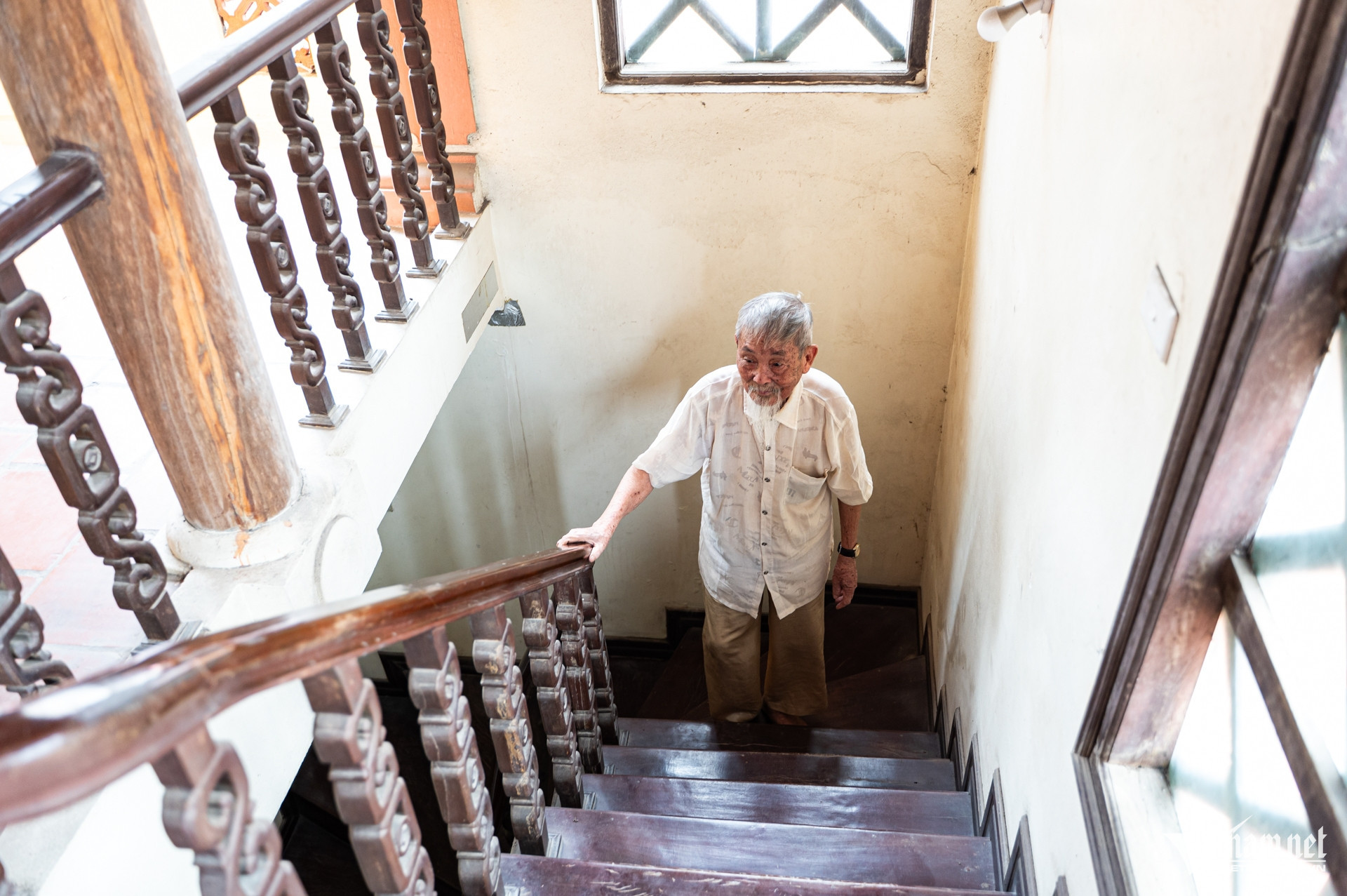
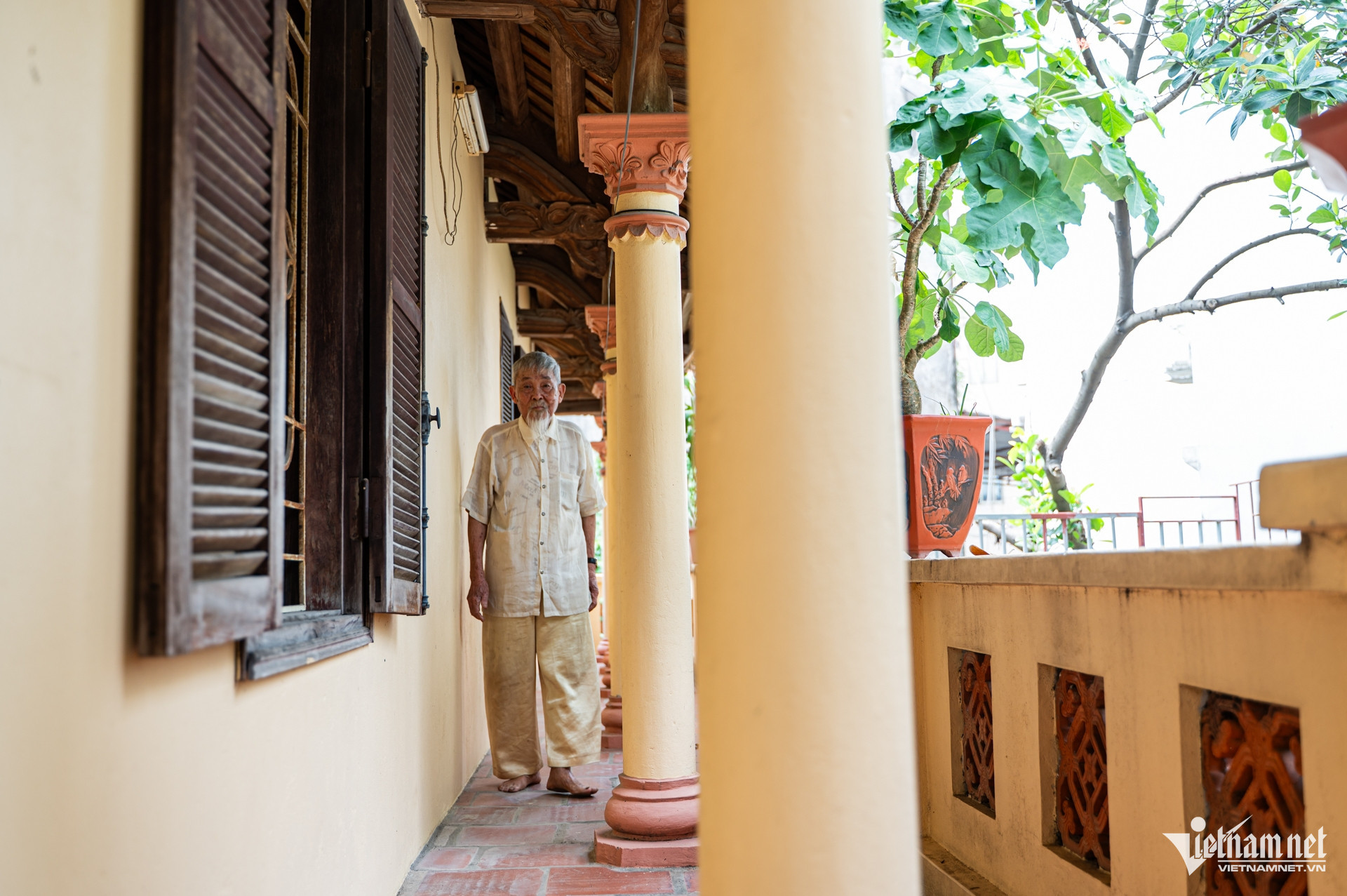
It is home to 92-year-old Vuong Dinh Que, known in the family as Bon, and his wife, Nguyen Thi Canh.
The couple also share the house with what Que considers his “treasures” - century-old objects collected over seven decades.
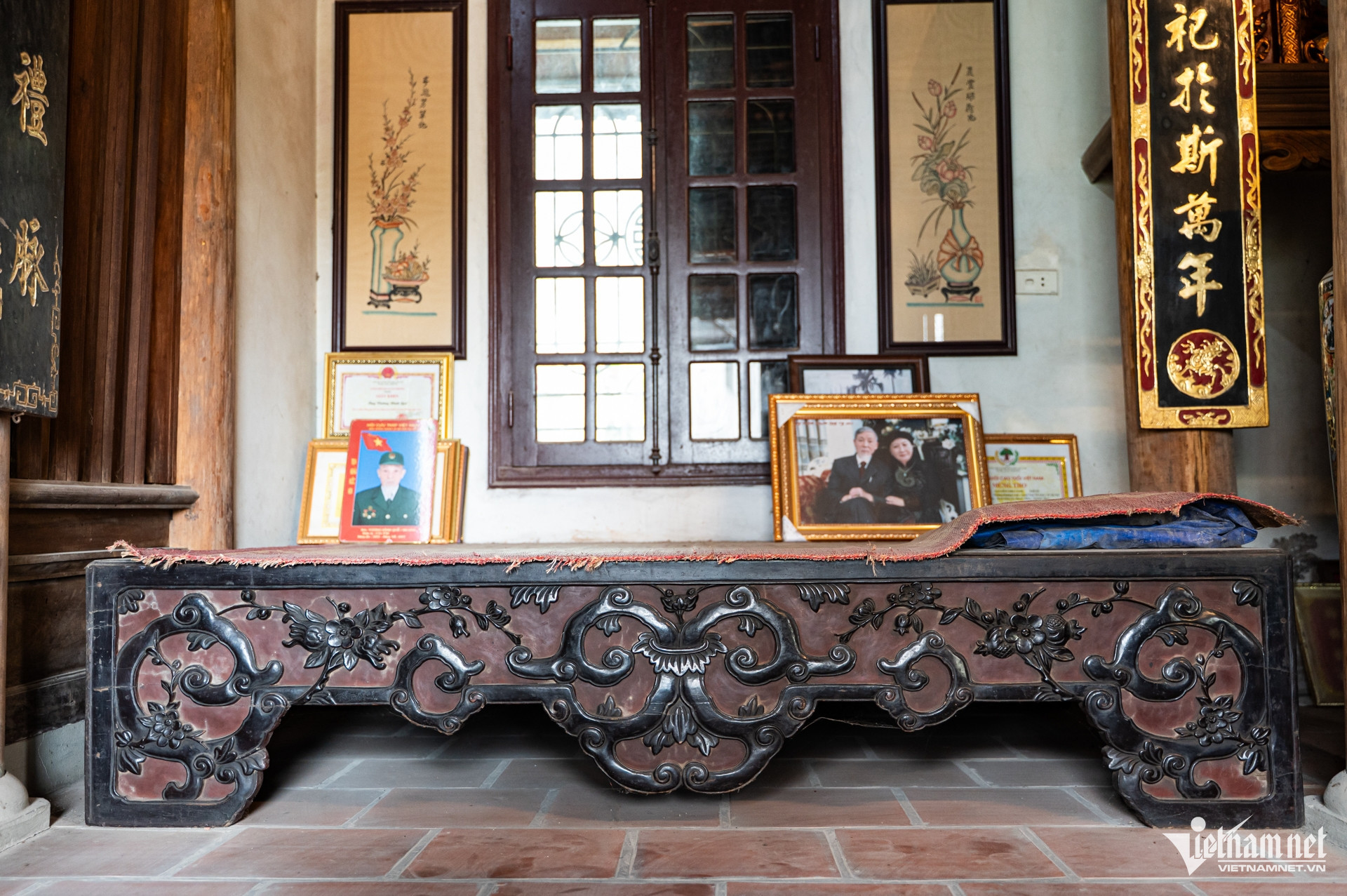
Covering about 110 square meters, the house is filled with traditional wooden platforms, benches, horizontal lacquered boards, parallel calligraphy panels, ceramics and other wooden objects, many around a century old.
For Que, each carries its own story about history, culture and art.
A passion for antiques that began at 20
Que said his fascination with old furniture, including traditional display cabinets and large wooden platforms, began when he was 20.
At the time, he spent years working as a bicycle freight carrier, traveling through Hanoi’s streets and alleys and into villages in neighboring provinces.
“Whenever I saw a family with an old house, I would usually ask to come in, have a look and talk with them,” Que recalled.
“If the owners had a beautiful piece of wooden furniture they no longer needed, I would ask to buy it and bring it home to use and preserve. The pieces were not necessarily expensive. Some were even things the owners wanted to throw away because they were taking up space.”
Sometimes an acquaintance would tell him about a beautiful wooden cabinet or platform 80 or 90 kilometers away, and Que would cycle there to see it for himself.
“At first, I only bought small, inexpensive things. Later, when my business improved, I could afford to collect more valuable pieces,” he said.
“But for me, collecting antiques isn’t simply about their appearance or monetary value. The most important and interesting part is learning about their origins, materials and designs, and discovering the meaning and individual story behind each one.”
In 2005, Que’s family demolished their old home and began building the house that stands today.
Que said the idea took shape after a trip to Hue, where he visited a beautiful traditional house and photographed it for inspiration.
His own house, however, is not a direct copy of Hue architecture.
The exterior incorporates influences from traditional Hue homes, while the second floor and many interior details draw on the architectural style of traditional houses in the Red River Delta of northern Vietnam.
The house has two floors. The upper level follows a traditional five-bay layout with two additional side spaces and incorporates structural elements characteristic of northern Vietnamese wooden houses.
The building predominantly uses traditional hardwoods including lim, doi and trac.
The ground floor, containing the living room and bedroom, is where Que and his wife spend most of their daily lives.
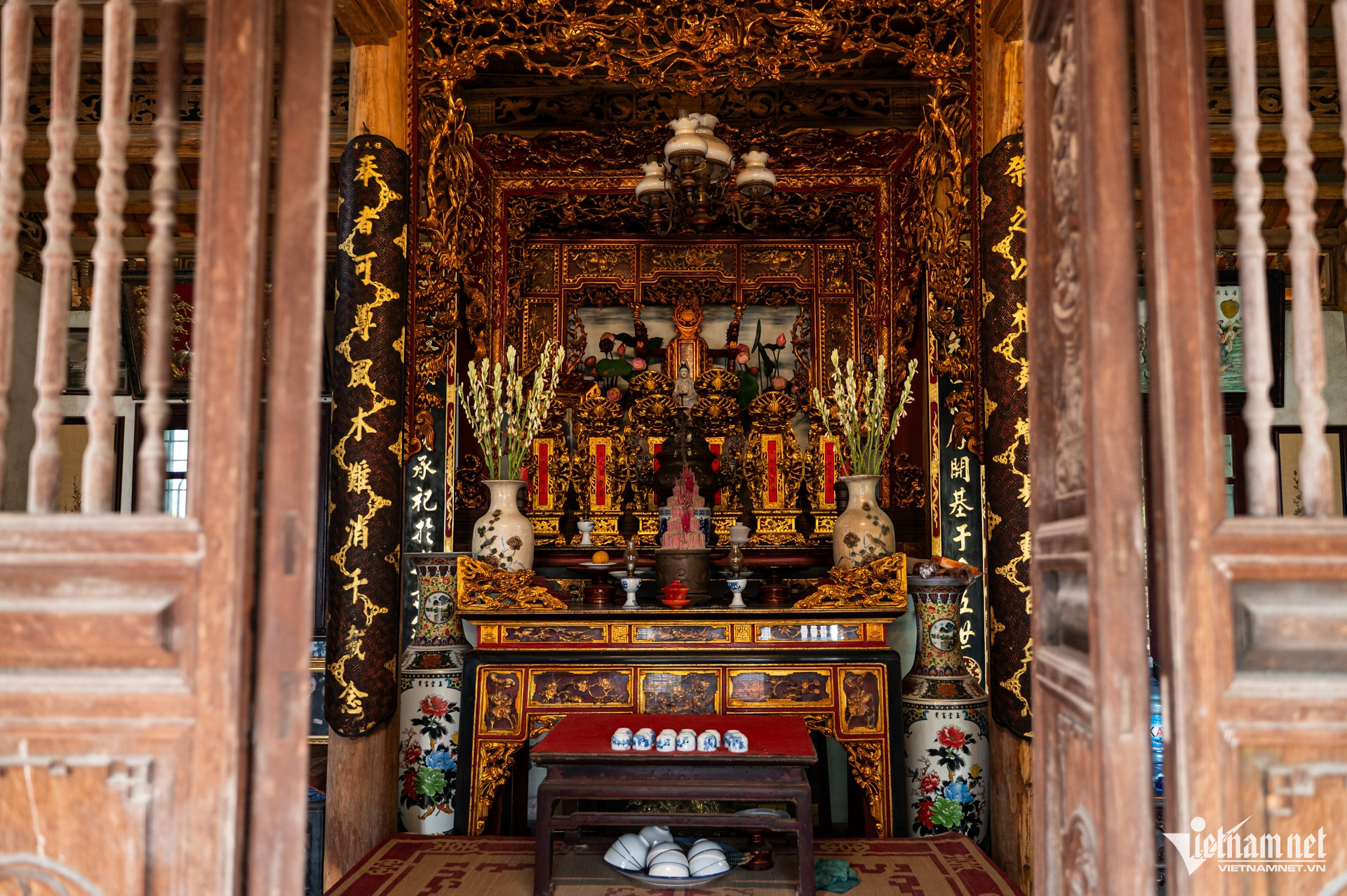
Upstairs is a formal ancestral worship area, with rooms on either side used to preserve the century-old objects in Que’s collection.
During major holidays, Lunar New Year and family death anniversaries, the house becomes a gathering place for the couple’s six children and their families.
“When I built the house, I also hoped that when my grandchildren and great-grandchildren came here, they could learn about traditional architecture and have somewhere to relax and enjoy the flowers and trees,” Que said.
Every object has a story
Antique wooden objects occupy almost every part of Que’s home.
He said the family owns seven large traditional wooden platforms, along with wooden bench sets, display cabinets, sofas, decorative vases, horizontal calligraphy boards and numerous pairs of parallel calligraphy panels.
Among his favorites is a turned-spindle bench set made from trac hardwood.
Que estimates that the set is around 155 years old. He bought it from what had once been a well-to-do family for only a few hundred dong at the time.
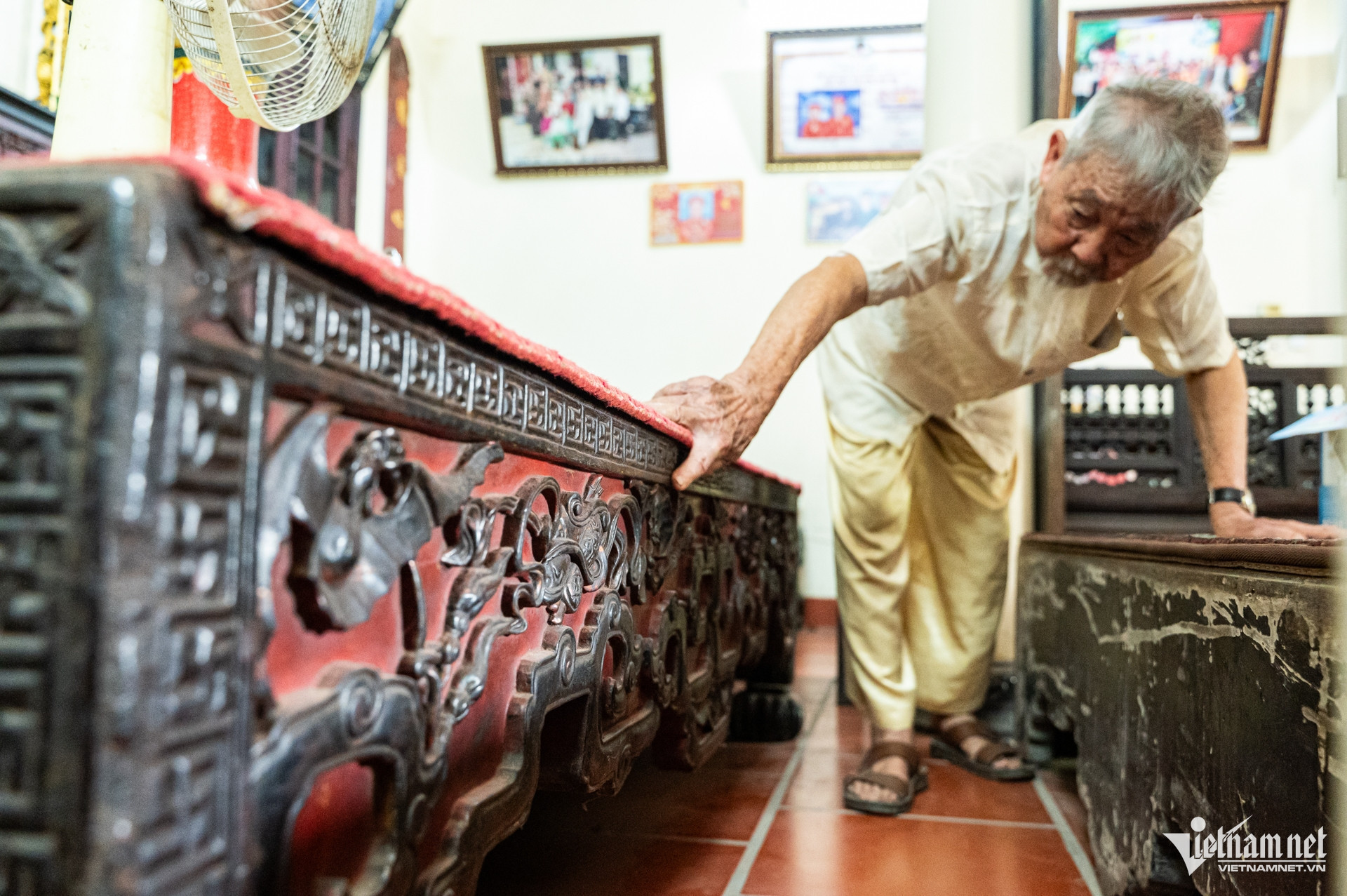
Another treasured object is a traditional Ngu Phuc wooden platform made from doi wood and finished in red lacquer and gold leaf.
Its surrounding panels are carved with five bats, representing the “five blessings” in East Asian tradition: good fortune, prosperity, longevity, health and peace.
The Chinese characters representing good fortune and longevity appear repeatedly on objects throughout the house.
Que said they express hopes for blessings, long life, healthy descendants and a happy family.
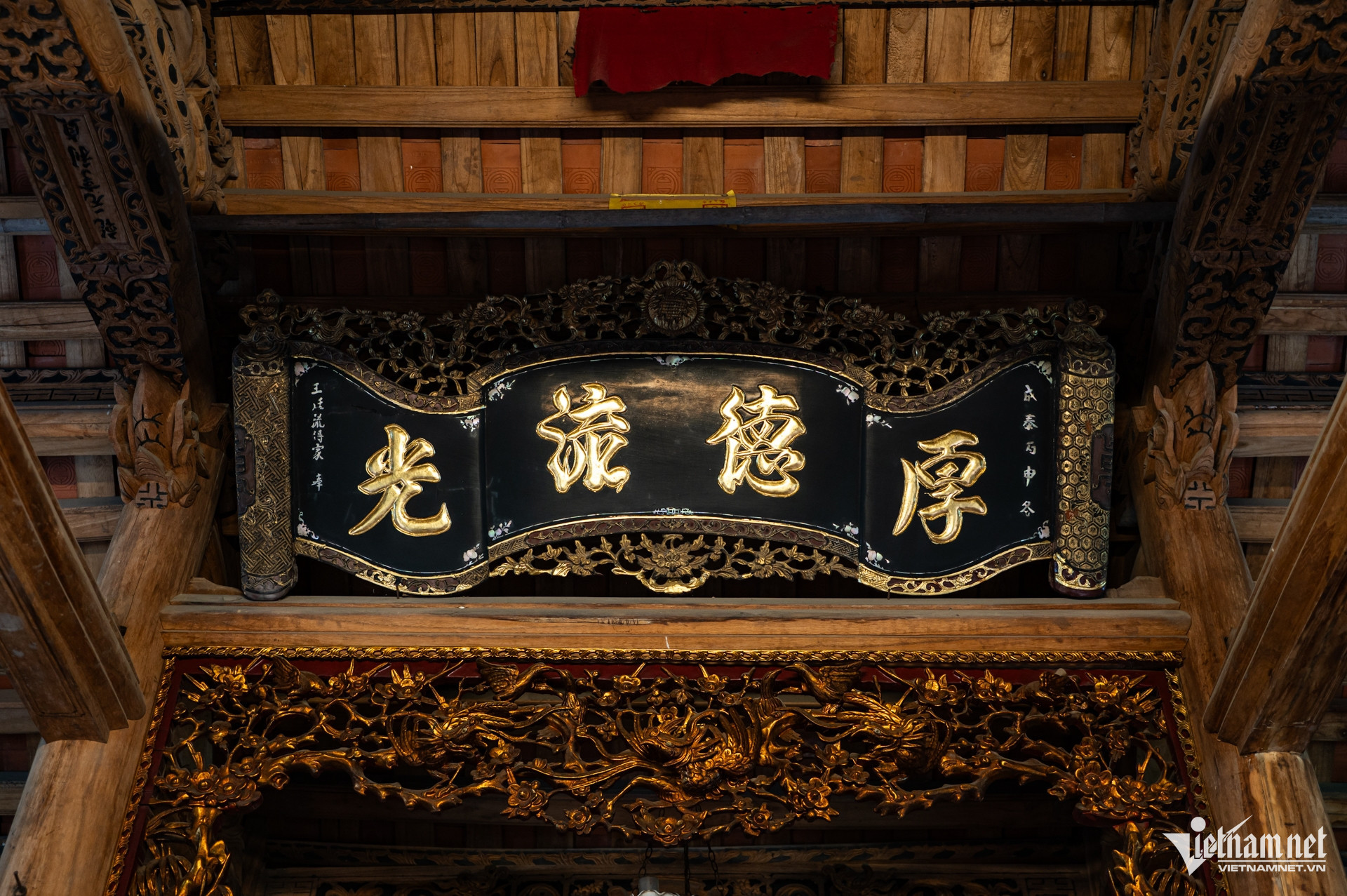
Upstairs, he has placed a calligraphy panel reading “Duc Hau Luu Quang” in a prominent position, a reminder to preserve and pass down the family’s moral values to future generations.
The house also contains around a dozen pairs of parallel calligraphy panels carrying lessons Que hopes his descendants will remember: do good so the mind can be at peace, think carefully before speaking and continually cultivate one’s character.
“Collecting these old objects has taught me many valuable things,” Que said.
“Above all, I have learned that setting an example is the most important thing when it comes to children and grandchildren. Even now, I maintain good habits such as exercising, keeping things tidy, reading and working.”
Every morning, Que wakes at 5:30 a.m. and goes for a walk. After breakfast, he cleans the house and tends the garden.
He still plays chess and writes poetry to keep his mind active.
“When my children and grandchildren come to visit, I still want to tell them about the objects in the house so they can better understand history and culture,” he said.



Linh Trang - Nguyen Huy
.svg)
