 Vietnamnet.vn

 Podcast



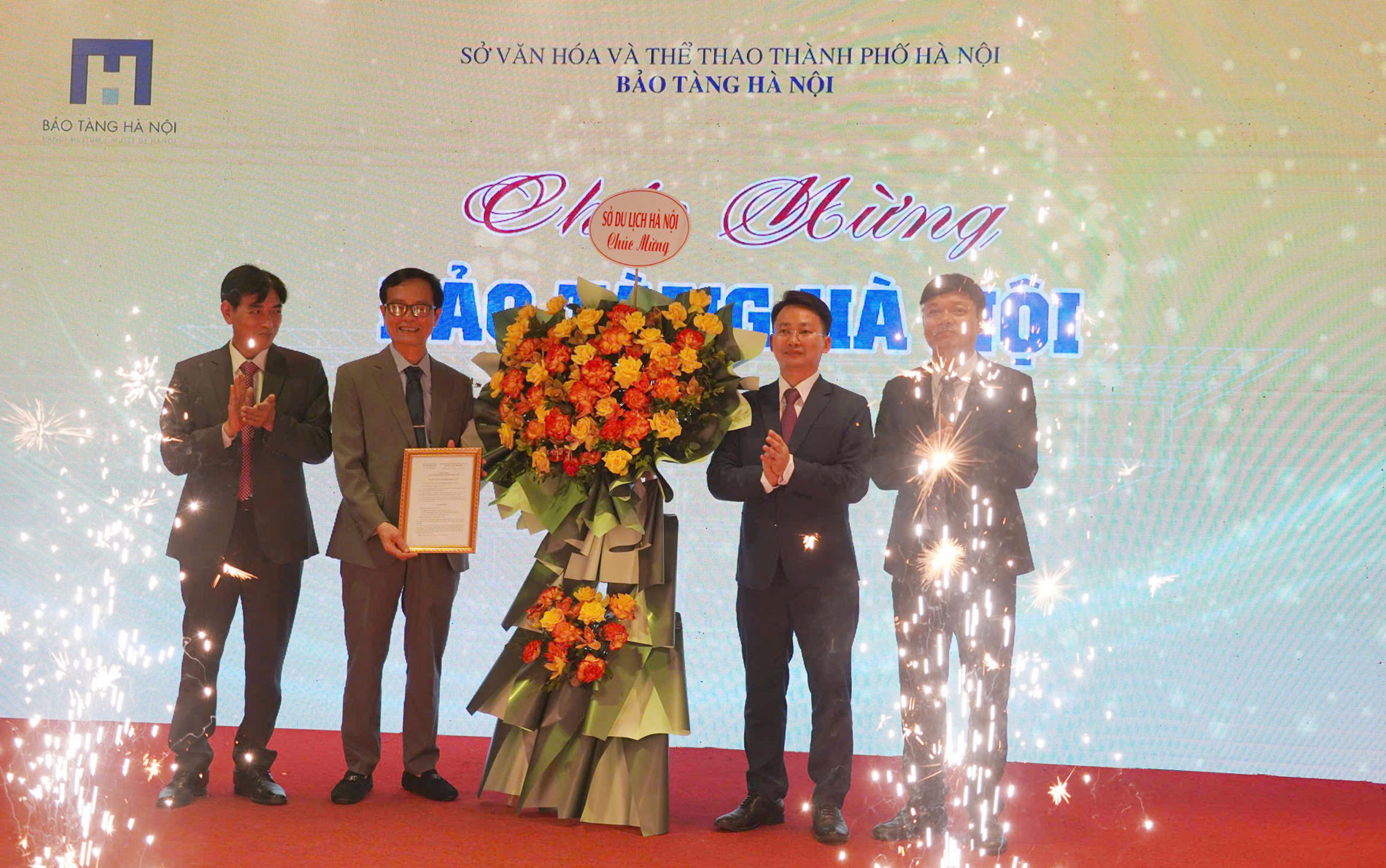
The announcement was made on April 15 during a ceremony held at the museum, which also included meetings with travel businesses, the signing of heritage education partnerships, and the presentation of free admission cards to scientists, administrators and individuals who have contributed artifacts and documents.
Speaking at the event, Tran Trung Hieu, Deputy Director of the Hanoi Department of Tourism, emphasized that the recognition acknowledges the museum’s sustained efforts in preserving and promoting heritage. It also confirms that the institution meets key criteria in terms of resources, infrastructure, services and visitor environment.
According to Hieu, adding Hanoi Museum to the city’s tourism network will enrich cultural offerings, enhance connectivity with existing tour routes, and improve visitor experiences. It is also expected to contribute to shaping Hanoi’s image as a modern yet culturally rooted destination.
Nguyen Tien Da, Director of the museum, noted that in recent years the institution has continuously renewed its exhibitions and formats, launching thematic displays and experiential education programs for students while gradually applying technology to increase public interaction.
In the coming period, the museum plans to strengthen partnerships with travel companies to develop new tour products, including guided exploration of exhibition spaces and access to artifact storage areas. It will also host a range of ticketed cultural and artistic events aimed at attracting a broader audience.
Currently, the museum houses more than 70,000 artifacts and documents, including six groups classified as national treasures. Its exhibition system is organized into seven major themes, presenting a comprehensive narrative of Thang Long - Hanoi’s history, from natural origins and early state formation to feudal eras, the modern period, wartime struggles, and contemporary development.
Beyond indoor galleries, the museum features outdoor installations, experiential zones, cultural and culinary services, and event spaces. Together, these elements create a multifaceted destination catering to visitors’ needs for learning, exploration and leisure.
As part of the program, the museum also signed memoranda of understanding with educational institutions to promote heritage education across the city. The collaboration focuses on organizing extracurricular activities, developing research topics, providing internship opportunities for students, and jointly promoting the museum’s image.
This partnership is seen as a concrete step toward integrating museums with education and tourism, aiming to build an open learning environment where students can engage with history and culture in vivid, tangible ways.
The connection between Hanoi Museum and academic institutions is expected not only to expand its audience but also to contribute to improving human resources in cultural, tourism and social science fields.
The recognition, granted under Decision No. 1423/QD-UBND dated March 30, 2026 by the Hanoi People’s Committee, marks an important transition for Hanoi Museum - from a repository of heritage to a dynamic destination for tourism, education and creative community experiences, especially for younger generations.
Tinh Le
.svg)
