 Vietnamnet.vn

 Podcast



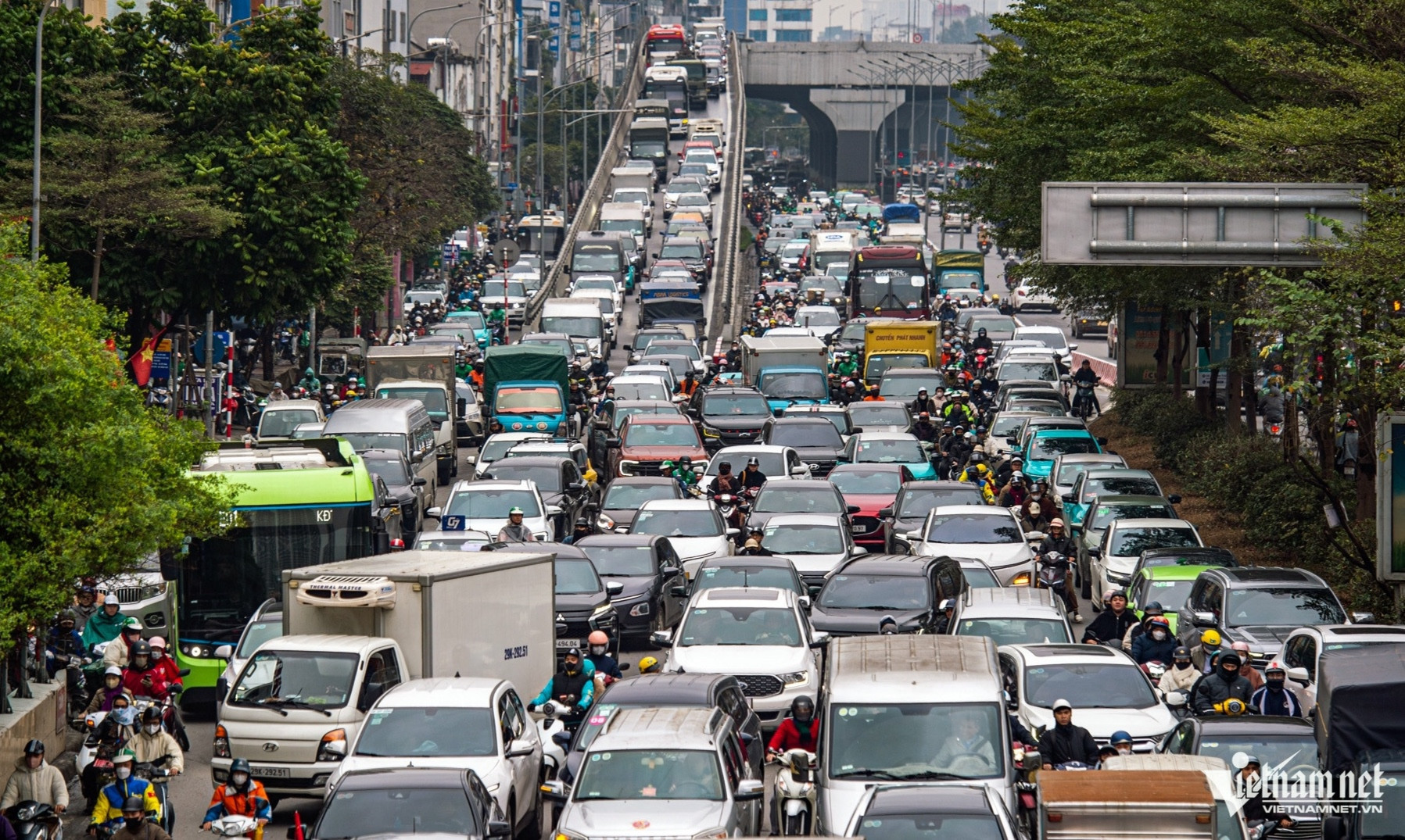
The proposal to impose fees on cars and motorcycles entering the Ring Road 1 area from 2028 continues to attract significant attention from transport and urban planning experts.
A long preparation period is essential
Nguyen Van Thanh, former Director General of the Vietnam Directorate for Roads, said charging vehicles to enter central urban areas is not a new concept. Several major cities around the world have implemented similar policies and achieved positive results. However, most underwent years of preparation before officially introducing such schemes.
According to Thanh, the primary objective of congestion charging is not to generate additional government revenue but to regulate travel demand, reduce traffic pressure and gradually curb private vehicle use in densely populated urban areas.
"Policies that directly affect people's daily travel habits will inevitably generate different opinions," he said.
He argued that public criticism and debate should be viewed as valuable feedback that helps authorities evaluate, refine and improve policy design rather than becoming a reason to delay necessary measures aimed at addressing congestion and urban pollution.
A transportation specialist who previously advised Hanoi on low-emission zone initiatives noted that many cities worldwide spent between seven and ten years conducting studies, gathering public feedback, upgrading infrastructure and carrying out pilot programs before implementing congestion charges or restricting vehicles in central districts.
Cities including London, Stockholm, Paris, Seoul, Beijing and Guangzhou all followed similar paths. Congestion charging was introduced only after public transport systems had reached a certain level of maturity, vehicle databases had been fully developed and residents had access to viable alternatives to private vehicles.
The expert stressed that Hanoi should not view congestion charging simply as a matter of establishing checkpoints and collecting fees.
"It is a comprehensive policy involving transportation management, environmental protection, technology deployment and behavioral change," the expert said.
Vehicle classification matters as much as pricing
International experience also shows that many cities do not apply a single fee structure to all vehicles.
Instead, vehicles are often classified according to emission levels or age. Environmentally friendly vehicles may receive exemptions or reduced fees, while older, higher-emission vehicles face higher charges or traffic restrictions.
In France, many major cities operate low-emission zones where vehicles are categorized according to pollution levels. Cleaner vehicles enjoy greater access privileges, while older vehicles may face restrictions or complete bans in certain central districts.
Enforcement is typically carried out through automated camera systems that recognize license plates or vehicle classification labels and connect directly with vehicle databases to determine access rights and applicable charges.
To support such systems, cities have built integrated vehicle databases linked to registration records, inspection systems and networks of automatic license plate recognition cameras.
According to the expert, this is another area where Hanoi must make substantial preparations. The city would need a comprehensive vehicle database, automated monitoring systems and the capability to process information in real time.
Social impacts require careful assessment
Beyond technology and infrastructure, experts emphasize the need for detailed assessments of the policy's social consequences before implementation.
Key questions include where drivers will park outside restricted zones, how many residents might switch to buses or urban rail services, and whether public transportation systems can absorb increased demand.
According to Nguyen Van Thanh, implementation should depend on several factors, including pollution levels, public transport capacity, public acceptance and supporting measures that facilitate shifts toward cleaner and more sustainable forms of mobility.
As traffic congestion and air pollution continue to intensify in Hanoi, studying measures to limit private vehicle use is increasingly necessary.
However, experts argue that for any congestion charging scheme to be practical and publicly accepted, the city will need a long-term roadmap supported by adequate infrastructure, modern technology and complementary policy measures.
Vu Diep
.svg)
