 Vietnamnet.vn

 Podcast



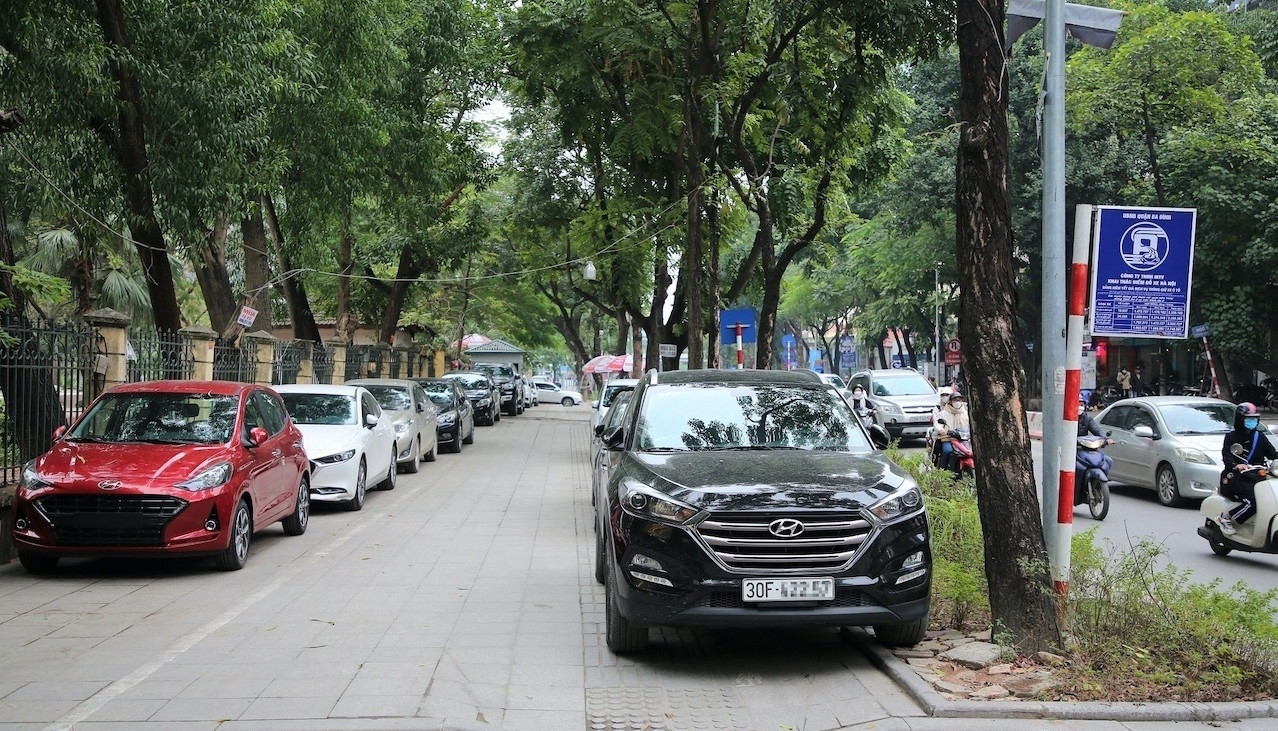
For the policy to be effective, the city needs to soon solve the parking lot problem both inside and outside the inner city.
Nguyen Van Thanh, former Director General of the Directorate for Roads of Vietnam, said that Hanoi is approaching this policy with a high level of caution.
The initial research scope was the entire Ring Road 1 area, but when implemented, it was significantly narrowed down to only 0.5 square kilometers in the core area of Hoan Kiem. The vehicle restriction will not be applied comprehensively but limited to certain hours, mainly on weekends.
“This is a step-by-step, very cautious, but necessary approach, because restricting motor vehicles will directly impact the daily lives and livelihoods of the people, especially those dependent on ride-hailing and delivery services,” Thanh said.
Thanh believes Hanoi’s decision to pilot the program in Hoan Kiem was carefully calculated. This is an area with high population density and complex traffic conditions, so problems are easily exposed during implementation.
Besides, the living standard of residents is relatively high, and their ability to adapt to green vehicles is better. This area already has walking spaces around the lake on weekends, so expanding the model will be more favorable.
“Piloting in this area will help draw many practical experiences before replication,” he said.
Assessing the overall situation, Thanh said the policy is correct and should be supported, but the implementation process must ensure a balance between environmental goals and social stability.
“We cannot be hasty, but we also cannot lack planning and infrastructure preparation,” he emphasized.
Parking lots remain key bottleneck
One of the most critical issues identified by experts is parking infrastructure. This is considered a prerequisite for organizing transit systems, easing traffic pressure and gradually limiting private vehicles entering the city center.
According to Thanh, the city still lacks a transparent master plan for parking systems. Demand for parking space is enormous, but development remains slow, while many underground and high-rise parking projects proposed years ago have yet to materialize.
Meanwhile, informal parking lots continue to expand, disrupting urban order and creating unfair competition.
In the long term, Thanh argued that Hanoi not only needs parking lots within the inner city but must also organize a system of parking lots at the ring roads and gateways. These will be transit points for people to park their vehicles and then move into the center by public transport.
“Currently, right at the gateways and major traffic axes, there is still a lack of large-scale and professional parking lots. This is a major gap that makes switching to buses, taxis, or the metro inconvenient,” he said.
The mechanism is not attractive enough
An expert in the field of urban transport argued that the reason for the slow development of parking lots lies in the unattractive mechanism.
Currently, the city mainly calls for businesses to develop parking lots, but parking fees are regulated by the State, making the expected profit unattractive. Meanwhile, informal parking lots require almost no major investment but still charge fees, creating unfair competition.
To resolve this problem, the expert proposed that the State should play a leading role, using public investment capital to build parking infrastructure, then organizing bidding for operation. This approach ensures control while attracting investors.
At the same time, land plots already planned for parking lots must be used for the right purpose, avoiding prolonged "pending" status.
In addition, Hanoi should allocate surplus land generated after the merger to develop parking infrastructure that meets real demand. Parking facilities should not only be located inside Ring Road 1 but also include remote transfer hubs with synchronized transport connections.
The implementation of Low Emission Zones is inevitable for major cities. For Hanoi, this is not just “banning or restricting cars,” but an overall problem of building a sustainable transport ecosystem, in which parking infrastructure and public transport play the foundational roles.
Vu Diep
.svg)
