 Vietnamnet.vn

 Podcast



Conflicting goals in housing policy
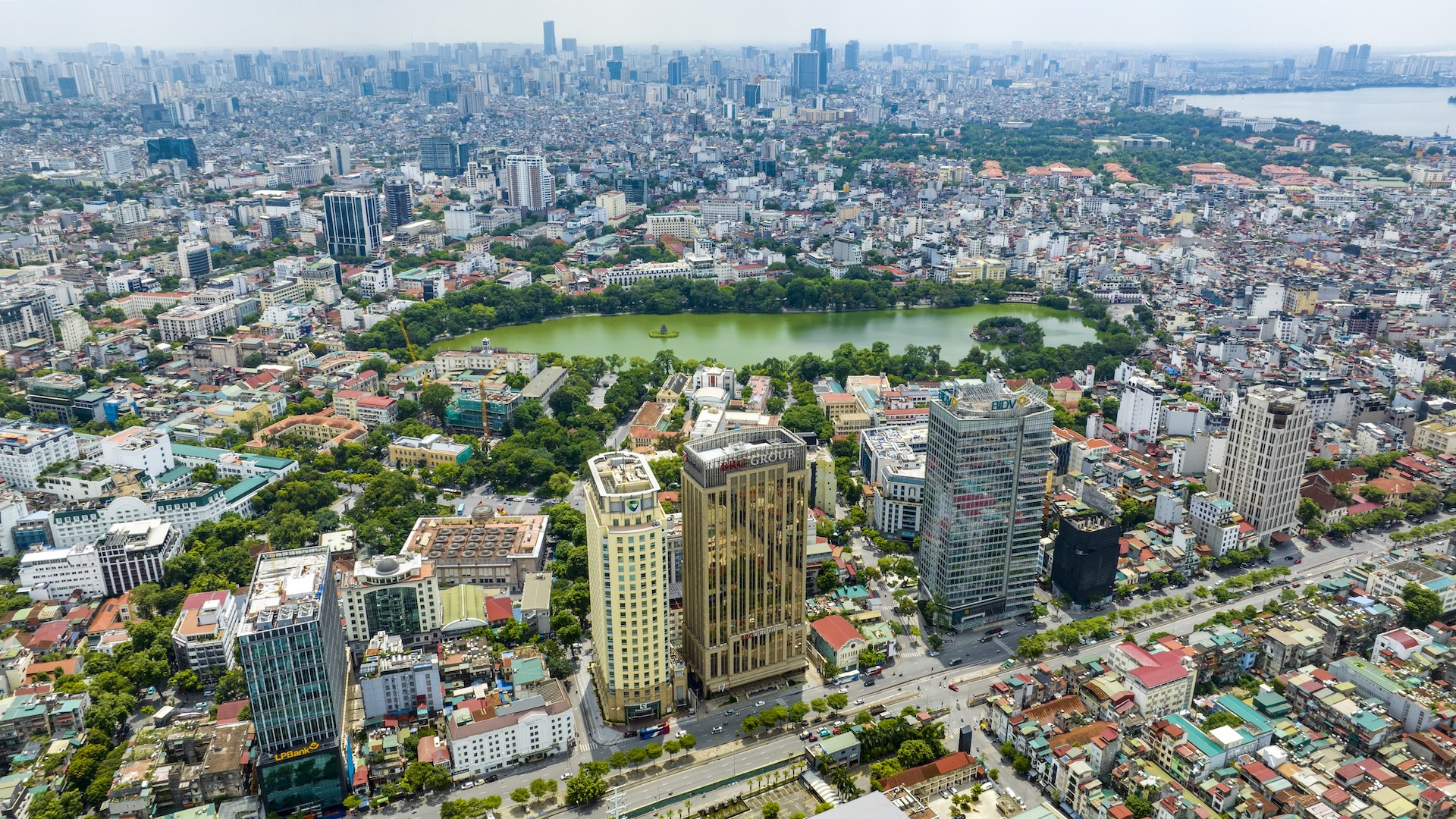
The highest proposed land price in Hanoi is set to surpass $28,700 per square meter. In suburban areas, price hikes are even more dramatic, rising 25–26% on average from current rates, with some areas exceeding $2,600 per square meter. The draft land price framework divides the city into 17 zones, yet it presents a paradox: how can home prices fall when the State is officially raising the cost of inputs?
In just the first nine months of 2025, Hanoi collected over $3.4 billion in land use fees - 72.6% above projections and 2.6 times higher than the same period last year. While these revenues offer short-term gains, they impose long-term economic burdens. Rising land fees, taxes, and administrative charges push up investment costs. Consequently, efforts to stabilize housing prices are undermined by the very policies designed to increase public revenue.
Hanoi’s predicament - and that of many other provinces - is trying to boost land revenue while simultaneously lowering housing prices. These goals are inherently contradictory. As land values rise, land use fees - often accounting for 20–30% of apartment construction costs - also climb. The idea of lowering housing prices becomes a mere slogan.
A real estate expert pointed out another link in this cycle: many housing projects take 10–15 years to complete legal procedures, yet bank loans still incur regular interest. A decade-long delay can double capital costs. If bureaucratic processing were shortened to 2–3 years, cash flow would accelerate, loan interest would fall, and project costs would decrease.
But when procedures drag on like a turtle while land prices rocket upward like a missile, the goal of controlling housing prices collapses.
The flood of money into land
By the end of 2024, the gap between bank deposits and credit lending exceeded $41 billion - a record high. According to the World Bank’s September 2025 Vietnam Economic Update, aggressive lending has tightened liquidity, pushing the credit-to-deposit ratio above 100% at many banks.
This situation reflects a broader trend: individuals are seeking higher-yield investments amid historically low interest rates, and real estate is their top choice.
As of July 31, 2025, outstanding real estate loans exceeded $166 billion - up nearly 17% in just seven months - accounting for 23.68% of the economy’s total credit, according to the State Bank of Vietnam. Cheap capital has flowed into land, with both investors and businesses viewing real estate as a “safe haven.”
However, when cheap credit doesn’t reach production but instead flows into land, the economy becomes distorted. Money invested in land doesn’t produce goods or raise productivity - it simply drives up land and housing prices.
Structural challenges remain
The 2024 Land Law was expected to align with market principles, but in reality, it triggered a land price surge. For the first time, provinces were instructed to set land prices close to market levels. As a result, land prices in Hanoi, Ho Chi Minh City, Da Nang, and Hai Phong have soared - doubling or tripling in some areas.
But what exactly is the “market price”? In many cases, it’s artificially inflated through a few manipulated auctions or speculative transactions. When official prices reflect speculative distortions, the market becomes warped. Developers, residents seeking to subdivide plots, and those applying to build homes all face inflated land costs.
Government revenues from land may balloon, but this comes at the cost of long-term fiscal risks and societal burden. When land becomes a short-term revenue tool instead of a development resource, it holds the economy back.
Hanoi’s population grows by about 200,000 people annually - the size of a large district. Housing demand is soaring, yet supply remains constrained. Over the past five years, the city has issued very few new housing project permits - some years could be counted on one hand.
Rising demand and shrinking supply - a basic economic formula - have caused apartment prices to jump from $750–1,050 per square meter in 2014–2015 to over $3,100 today, with central projects reaching $6,200–8,300 per square meter.
Bureaucratic delays and widespread fear of accountability within the administration have suspended hundreds of projects and stranded trillions of dong in social capital. When supply cannot expand, the market becomes a natural monopoly - prices can only go up.
As land prices rise, speculators reap profits and local governments enjoy windfall revenues. But the real costs fall on businesses and citizens.
Breaking the land and credit trap
Reducing housing prices requires more than slogans - it demands simultaneous reform in both credit and land management.
On the monetary side, credit must be clearly channeled - tightened for speculation, but expanded for production and social housing. Shadow credit systems must be monitored, exchange rates stabilized, and money supply managed to reduce the hoarding of land as a store of value.
On the land management side, Vietnam must build a national land price database, abolish the “auction-based pricing” mechanism, separate pricing for taxes and compensation, and reduce the budget’s dependence on land revenues. It must also expand land reserves for social housing to give low-income earners a path to homeownership.
This is entirely achievable in Vietnam’s socialist-oriented market economy, where land is publicly owned and managed by the State on behalf of the people.
Once reforms are strong and coherent, land will return to its rightful role - as a development asset rather than a cost burden. Credit will fuel production instead of bubbles. Only then can the dream of affordable housing for millions of Hanoians come true.
Tu Giang
.svg)
