 Vietnamnet.vn

 Podcast



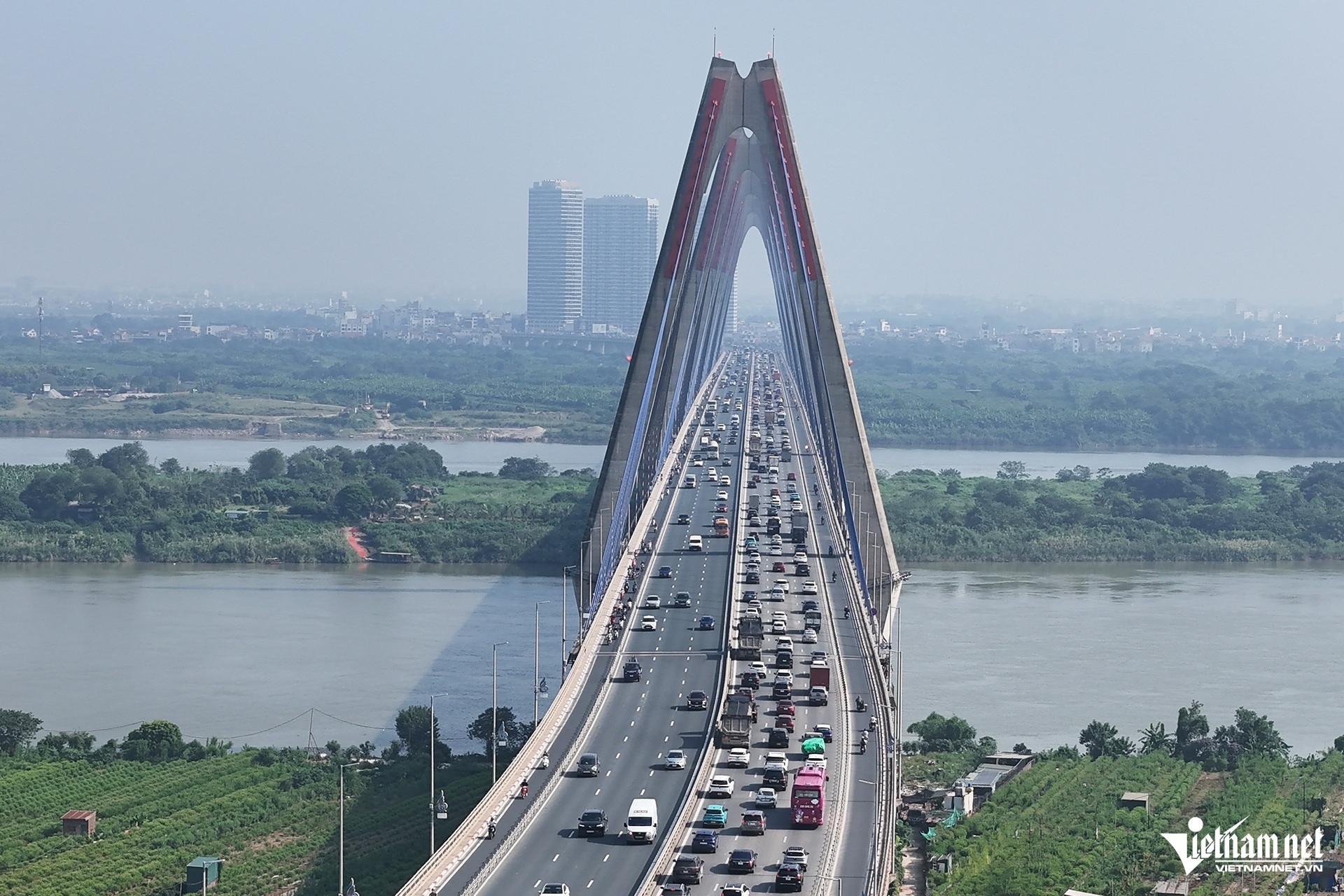
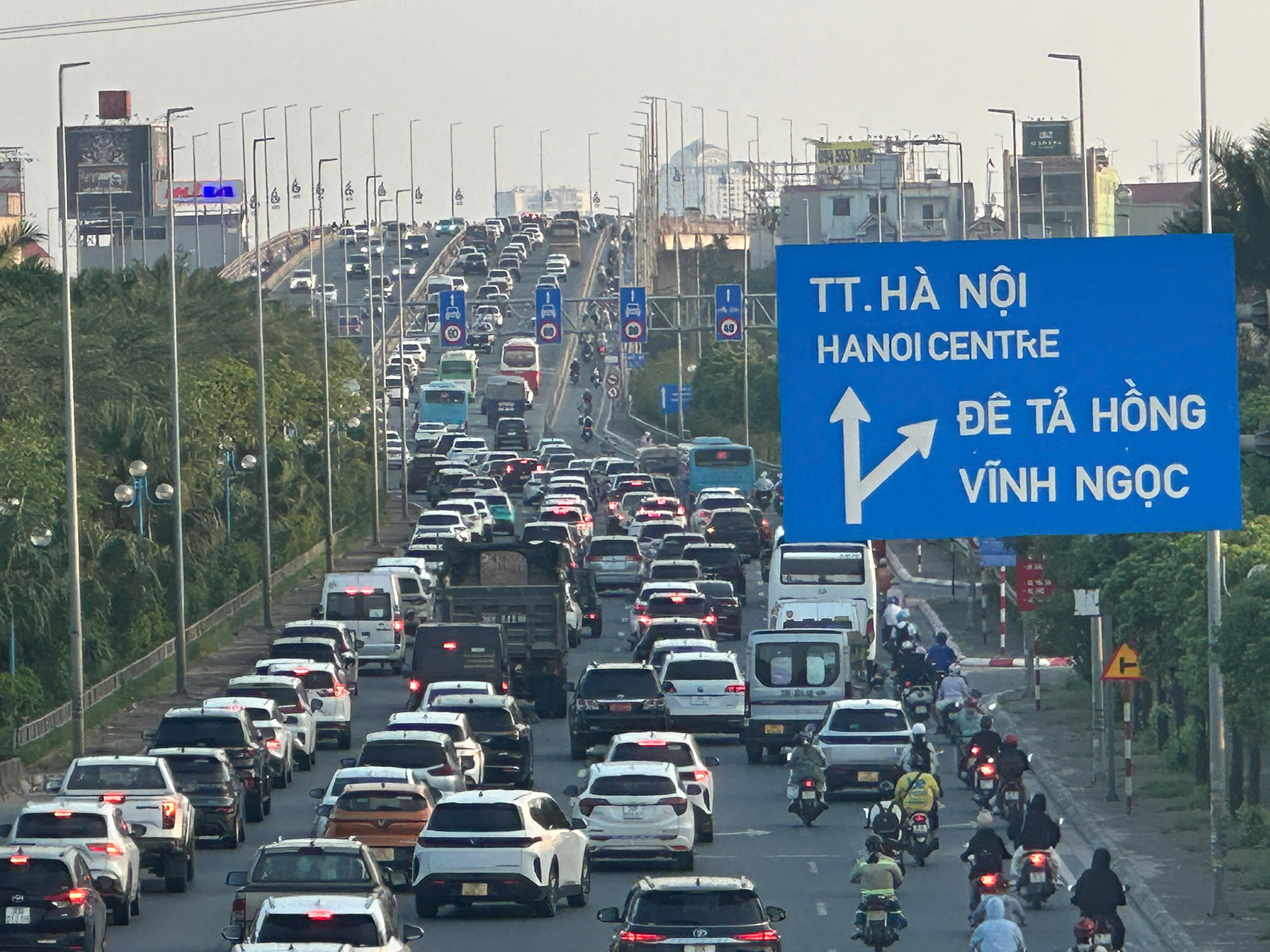
Nguyen Van Thanh, former head of the Directorate for Roads of Vietnam, now the Vietnam Road Administration, told VietNamNet that the principle behind maintaining safe distances between vehicles was not wrong.
Keeping a safe following distance is necessary, particularly on bridges carrying heavy traffic, he said.
However, applying such requirements must take into account the specific operating conditions of each route, including traffic volumes, traffic flow speeds and the capacity to disperse vehicles at both ends of a bridge.
Nhat Tan Bridge is part of the Vo Chi Cong-Vo Nguyen Giap corridor connecting central Hanoi with Dong Anh and Noi Bai airport. It is a major transport artery where traffic from multiple directions converges.
Under heavy traffic conditions, even a portion of vehicles slowing down or leaving larger gaps can quickly affect those behind them.
For example, when one driver sees a distance sign and reduces speed, the vehicle behind may also slow down, prompting other motorists to react in the same way. When thousands of vehicles simultaneously change their driving behavior, the speed of the entire traffic flow can fall.
At bridge entrances and exits, merging points and intersections, even small changes in speed can create points where traffic begins to build up.
Thanh noted that motorists failing to maintain appropriate speeds and safe following distances could cause chain-reaction crashes on bridges. Drivers therefore still need regular reminders about maintaining safe distances.
The issue, he said, is how traffic should be organized and motorists educated so they proactively comply with safety requirements rather than placing excessive emphasis on penalties.
Authorities could increase advance warnings, allowing motorists to understand speed and distance requirements before entering regulated areas and adjust their driving accordingly.
Removing a sign does not mean removing the underlying safety requirement. Drivers must still control their speed, maintain an appropriate following distance and be prepared to respond to unexpected situations.
Authorities, meanwhile, need to find an approach that ensures safety while preserving the road’s traffic capacity.
Fear of fines can slow an entire traffic flow
A traffic expert said measures that directly affect vehicle speeds and following distances on heavily traveled routes should be assessed not only for safety but also for their impact on traffic capacity.
“When road users are worried about being fined, they tend to slow down, pay closer attention to signs and deliberately leave larger gaps. When thousands of vehicles react this way, traffic speeds can fall significantly and may even create a chain effect of congestion,” the expert said.
The expert compared the situation to a classroom designed for 40 students but accommodating far more. A teacher could no longer manage such a class using methods designed for only 40 students.
Traffic works in much the same way, the expert said. When volumes rise sharply, traffic management cannot rely solely on general rules but must take the actual capacity of the infrastructure into account.
The expert said Hanoi’s decision to remove the signs should not be viewed as a relaxation of traffic management, but as an adjustment after practical implementation showed that changes were necessary.
Even pilot schemes require careful planning
Thanh said the Nhat Tan Bridge experience also showed that even pilot measures need thorough study before implementation.
Authorities should assess infrastructure capacity, traffic volumes, operating speeds and the ability of related intersections to absorb and disperse traffic.
For Nhat Tan Bridge, he said, planners cannot look only at conditions on the bridge itself. They must consider traffic entering the bridge, crossing it and leaving at the other end because the actual bottleneck may not be on the bridge.
If vehicles cross the bridge quickly but become backed up at an intersection ahead, changing speeds on the bridge could make traffic conditions more complicated.
Hanoi’s quick removal of the signs demonstrates the importance of adapting measures to real-world conditions. But the broader lesson, Thanh said, is that traffic-management plans affecting thousands of vehicles should be carefully calculated from the outset rather than developed through a “do first, calculate later” approach.
In the longer term, Thanh said Hanoi needs to expand its transport network to better distribute traffic and reduce pressure on major arteries.
Once Ring Road 3.5, Ring Road 4 and new bridges such as Tu Lien and Tran Hung Dao are completed, motorists will have more route options.
As traffic is distributed more evenly, pressure on existing bridges should ease, creating better conditions for traffic-management measures to work effectively.
Vu Diep - Dinh Hieu
.svg)
