 Vietnamnet.vn

 Podcast



Presenting the proposal, Duong Duc Tuan, Standing Vice Chairman of the Hanoi People’s Committee, outlined a roadmap for sustained high growth.
Hanoi aims to achieve an average GRDP growth rate of over 11% annually through 2045. The city’s economic scale is projected to reach approximately US$200 billion by 2035, US$640 billion by 2045 and around US$1.92 trillion by 2065.
The capital envisions itself as a “global city - a cultured, smart, innovative and ecological megacity,” with a strong emphasis on improving quality of life and human development.
By 2035, Hanoi is expected to become a “civilized, modern and happy” city, serving as a leading center for economics, education, healthcare and innovation in the Asia-Pacific region. By 2045, it aims to attract global knowledge and technology flows, and by 2065, to achieve a high human development index comparable to advanced global cities.
Reshaping urban space and connectivity
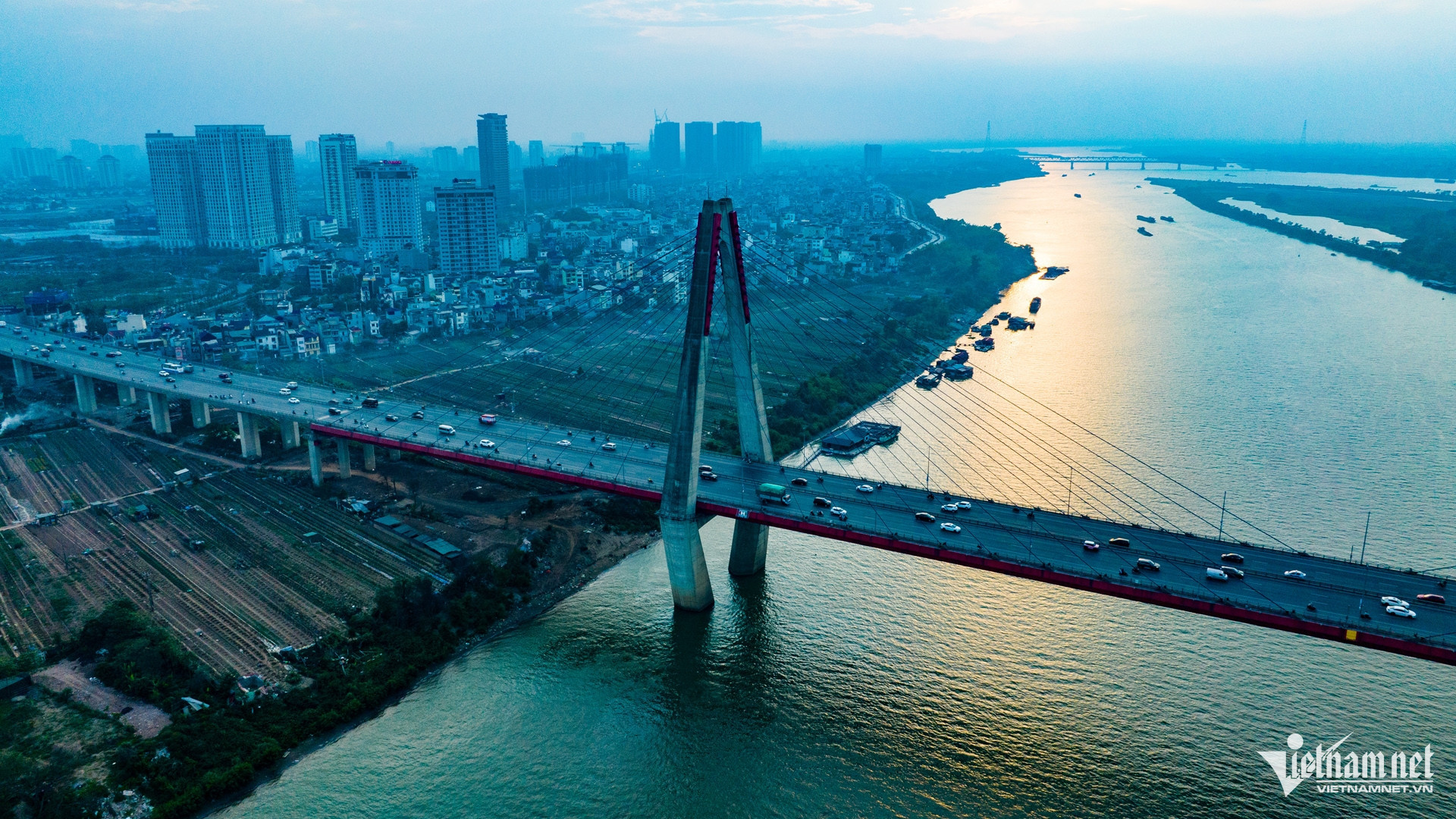
The master plan defines a new urban structure based on a “multi-layered, multi-centered” model. The Red River is identified as the central ecological and cultural axis, playing a key role in shaping and connecting the city’s development.
Population is projected to be controlled at around 14–15 million by 2035, 15–16 million by 2045, and 17–19 million by 2065, with a long-term cap of 20 million to ensure sustainable growth.
The plan covers Hanoi’s entire administrative area of approximately 3,359.84 square kilometers, while also expanding connectivity with surrounding provinces in the Capital Region, the Red River Delta and broader national and international economic corridors.
Transport, environment and future infrastructure
Hanoi plans to develop a public transport system centered on urban rail, with a network expected to span about 1,200 kilometers. Transit-oriented development will be applied to create compact urban areas and optimize land use.
The city will also adopt a core-satellite urban model, linking the central area with surrounding satellite cities to reduce pressure on the inner districts.
Environmental priorities include the restoration of rivers such as To Lich, Nhue and Day, alongside the adoption of advanced waste treatment technologies and a shift toward a circular economy, with the goal of eliminating landfill waste.
Urban space will be developed across multiple layers, including underground, surface and low-altitude spaces.
The Red River is envisioned as a new symbol of the capital, integrating cultural, ecological and creative spaces at an international scale, while ensuring flood control.
Strategic development zones and new airport plan
The plan identifies nine key growth poles across Hanoi, including the central urban area along the right bank of the Red River, as well as zones in Dong Anh - Me Linh - Soc Son, Gia Lam - Long Bien, Hoa Lac, Xuan Mai - Chuong My, Son Tay - Ba Vi and others.
A major infrastructure highlight is the proposed development of a second international airport in the southern area, around Ung Hoa and Chuyen My. The airport is expected to handle approximately 50 million passengers per year and will be developed under an airport city model aligned with international standards.
With its comprehensive scope and long-term ambition, the master plan positions Hanoi for a transformative phase of development, aiming to balance rapid growth with sustainability and livability.
Thanh Hue
.svg)
