 Vietnamnet.vn

 Podcast



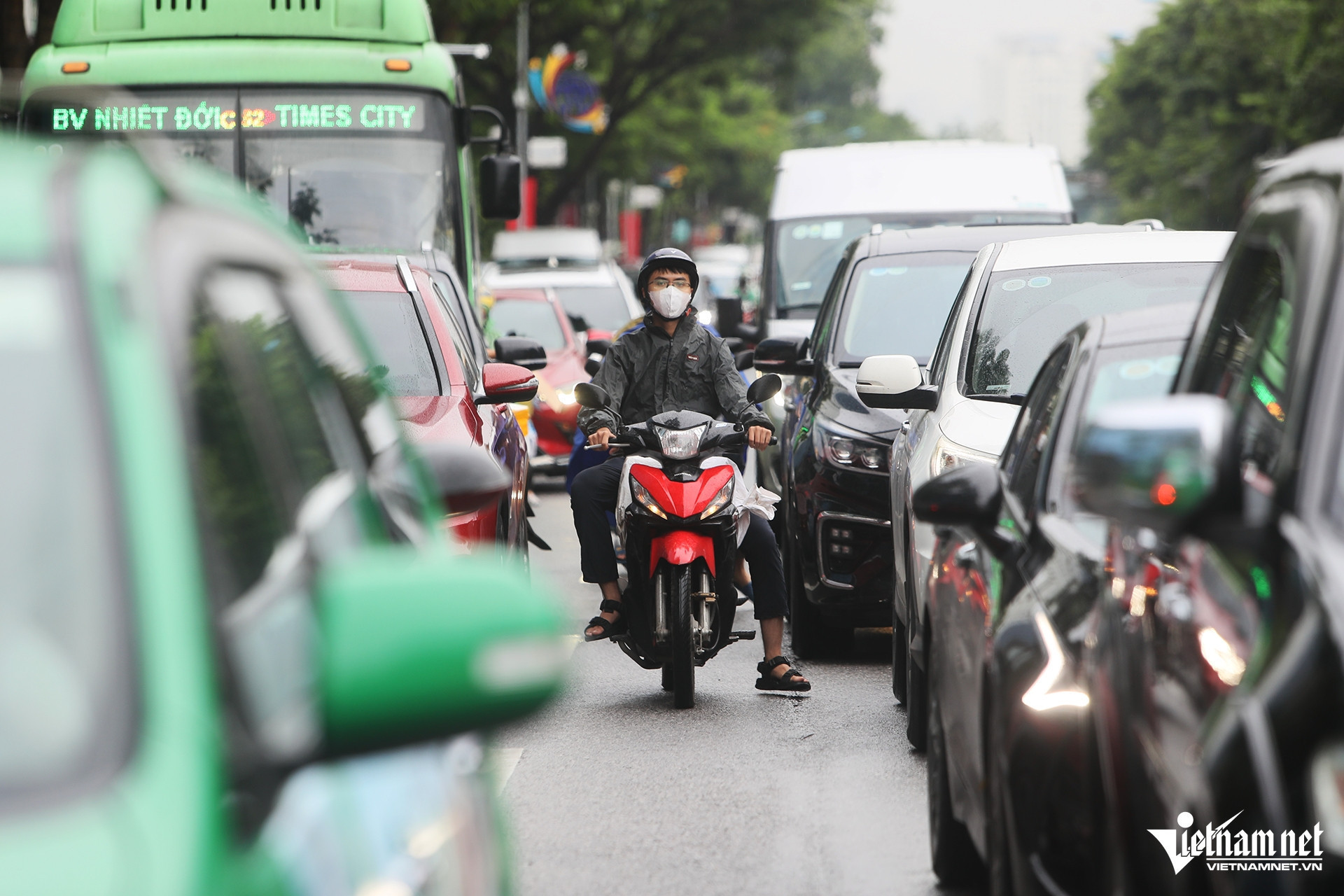
At the workshop discussing international experience in promoting green transport transition organized by the Hanoi Communications Association some days ago, Le Thanh Thuy, Deputy Head of the Environment Division (Hanoi Department of Agriculture and Environment), said the city is gradually developing policies for low-emission zones in line with practical conditions.
According to Thuy, the implementation is based on Resolution 57 of the Hanoi People’s Council, focusing on controlling emissions from transport, a major contributor to urban air pollution. The city will adjust traffic organization in a more rational manner to reduce emissions.
Under the plan, from July 1, 2026, Hanoi will pilot a low-emission zone in the core area of Hoan Kiem Ward. The initial scope will be relatively small, mainly building on the existing pedestrian zone and expanding to some nearby areas.
“Pedestrian streets are essentially a form of low-emission zone. The city will continue testing traffic solutions, then evaluate effectiveness to build a roadmap for expansion,” Thuy said.
After the pilot phase, the low-emission zone is expected to expand to the entire Hoan Kiem central area, then to other districts. Within the next 3–5 years, Hanoi aims to extend the coverage to Ring Road 1 and eventually Ring Road 2 in line with government orientation.
However, Thuy noted this is an ambitious goal, and Hanoi cannot immediately apply strong measures like those in countries with more advanced financial, technological, and policy frameworks.
“We will implement step by step, from small-scale pilots to broader expansion, ensuring feasibility,” she emphasized.
Alongside technical and traffic management solutions, the city is studying policies to support residents and businesses in switching to environmentally friendly vehicles.
According to Thuy, the biggest challenge lies not in policy design but in enforcement and monitoring. Therefore, Hanoi is developing monitoring and evaluation systems based on scientific tools and digital transformation to ensure effectiveness.
Nguyen Quang Huy from the Hanoi Department of Construction said the city is building a roadmap for low-emission zones, focusing on boosting public transport and controlling polluting vehicles.
Hanoi encourages the use of vehicles meeting emission standards, develops pedestrian spaces, enhances transit connectivity, and develops infrastructure for green vehicles such as charging stations and battery processing systems.
According to the roadmap, the city will gradually restrict and move toward stricter control of fossil fuel-powered vehicles; some types may be restricted or banned from circulating within low-emission zones. Vehicles that fail to meet emission standards will also face strict control.
Vu Diep
.svg)
