 Vietnamnet.vn

 Podcast



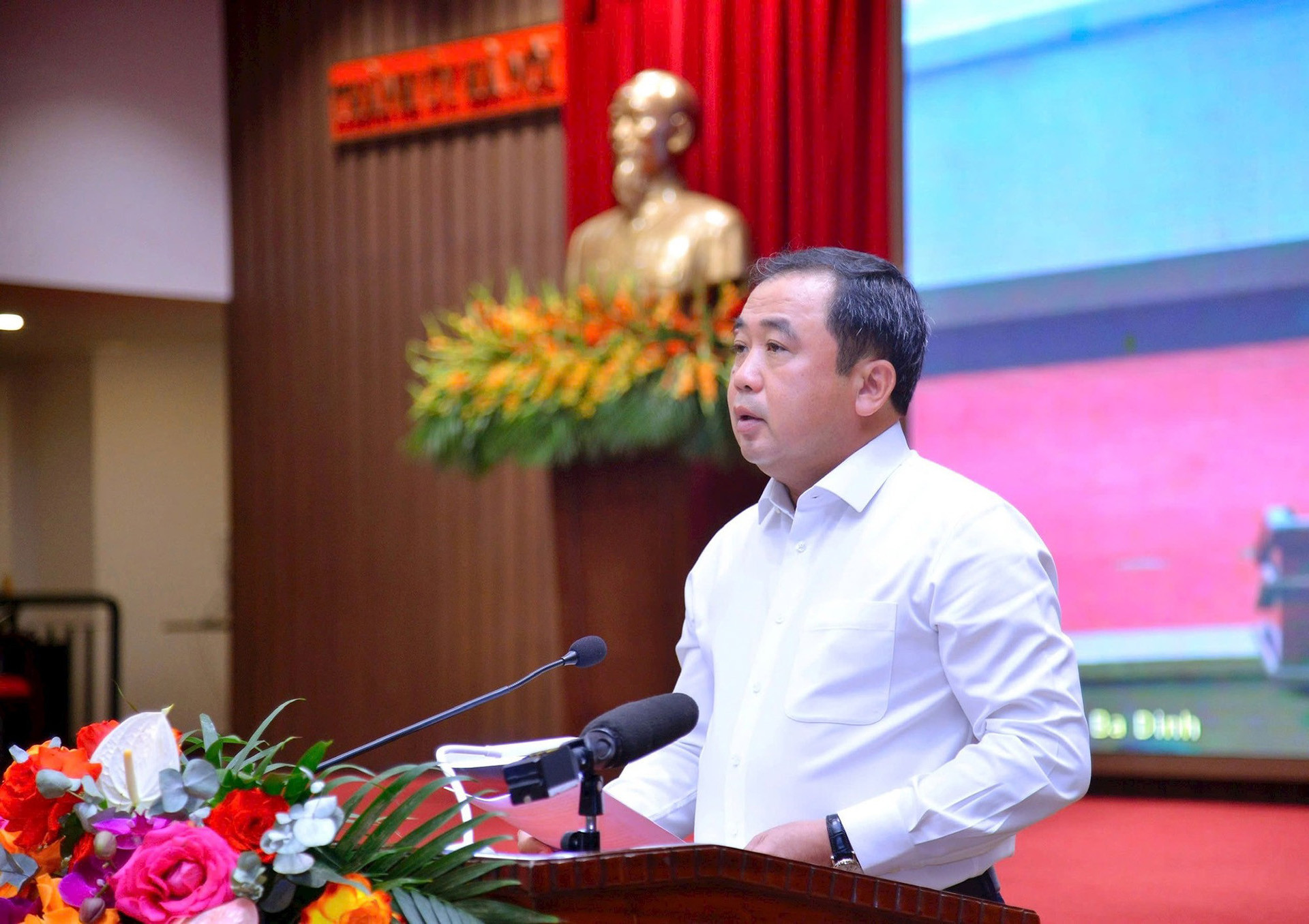
Speaking at a national conference on July 1 reviewing one year of the overall organizational model of the political system and the three-tier government structure, Politburo member and Hanoi Party Secretary Tran Duc Thang shared the capital's achievements after one year of implementing the two-tier local government model.
Hanoi has completed the dissolution of its 30 district-level administrative units and reorganized 526 commune-level administrative units into 126 communes and wards, reducing the total number of commune-level units by more than 76%.
Alongside the organizational restructuring, the city quickly consolidated its leadership teams and organized training and capacity-building programs to strengthen grassroots officials. The transition was carried out in a systematic, rigorous and well-planned manner, helping stabilize the new organizational structure early and ensuring that government operations remained largely uninterrupted immediately after the new model came into effect.
Party Secretary Tran Duc Thang said that, alongside restructuring the administrative apparatus, Hanoi has placed particular emphasis on decentralization based on the principle that responsibilities should be fully assigned to lower levels whenever they are capable of performing them effectively. Delegating responsibilities must go hand in hand with granting authority, providing resources, offering guidance and maintaining close support rather than leaving local authorities to manage on their own.
Building a modern public administration based on digital transformation and data has been identified as one of Hanoi's top priorities. The city currently provides 2,077 public services, including 1,118 administrative procedures that can be completed entirely online and 34 categories of procedures offering online information services.
Tran Duc Thang also said Hanoi has reformed its personnel management by shifting from qualification-based standardization to performance-based management and development. Civil servants are now evaluated using KPI and OKR frameworks. Training and professional development are aligned with competency requirements for each position, gradually creating an integrated mechanism linking assessment, training, deployment and personnel screening.
The city has also attached great importance to regular oversight of key political tasks, newly emerging issues, difficult assignments and long-standing unresolved matters.
Through these supervisory efforts, many obstacles have been identified and addressed promptly, allowing problems to be corrected early before developing into violations. The process also provides Party committees with a comprehensive basis for assessing the sense of responsibility, implementation capacity, coordination ability and work performance of both organizations and individuals.
Drawing on one year of practical experience, Tran Duc Thang said eliminating intermediate administrative layers and accelerating administrative reforms have helped create a more favorable environment for socio-economic development.
The effectiveness of the new model has also become evident in administrative reform and the quality of public services. According to figures presented at the conference, the proportion of overdue administrative dossiers fell sharply from 44.63% in 2025 to 4.2% during the first six months of 2026. Real-time public surveys also showed that 98.95% of respondents were either satisfied or highly satisfied with government services.
With these initial results, Tran Duc Thang said further comprehensive measures are needed if the new model is to truly become a driving force for development.
The city plans to review, assess and classify commune-level administrative units according to the characteristics of different areas, including the urban core, rapidly urbanizing zones, suburban districts and remote rural areas, in order to establish appropriate professional staffing structures.
Hanoi is currently studying the establishment of priority and special commune-level administrative units that can serve as leading models and generate positive spillover effects for other localities.
The city will also continue reviewing and streamlining internal organizational structures by eliminating unnecessary intermediate layers, improving the Party organizational model in parallel with the state administrative system, and transferring certain public services to businesses and social organizations.
Another key priority is to strengthen the implementation capacity of public officials, particularly those at the grassroots level; encourage and protect proactive and innovative officials working for the public interest; reinforce discipline and accountability; strengthen oversight of power; and take firm action against delays, avoidance of responsibility, buck-passing and conduct that causes inconvenience to citizens and businesses.
Tran Thuong
.svg)
