 Vietnamnet.vn

 Podcast



Hanoi's health sector has begun testing the use of unmanned aerial vehicles (UAVs), or drones, to transport blood, laboratory specimens, medical samples, medicines and medical supplies, aiming to shorten delivery times and improve the speed and safety of emergency treatment.
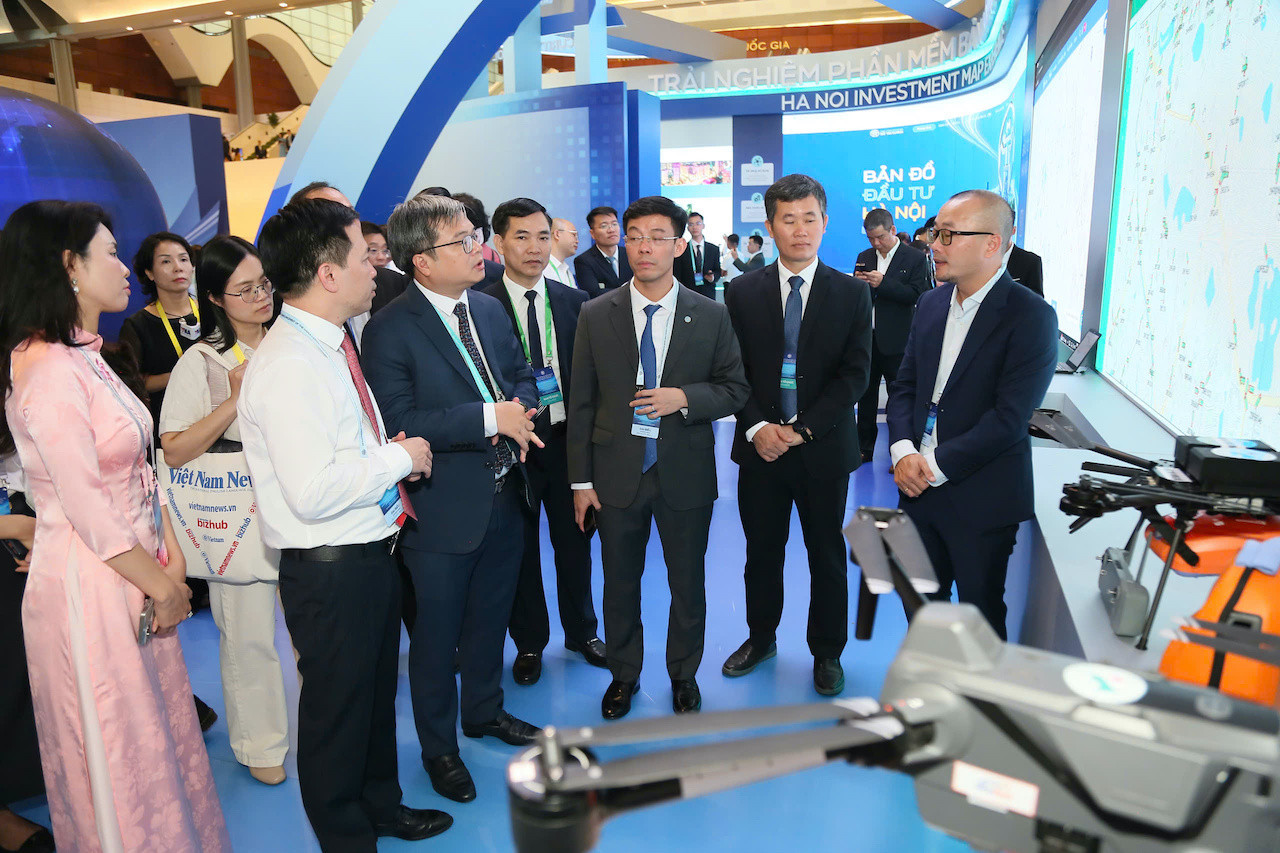
On June 29, the Hanoi People's Committee held a conference at the National Convention Center to announce the capital's master plan with a 100-year vision and its 2026 investment promotion programme.
The Hanoi Department of Health was assigned responsibility for an exhibition area showcasing digital technology applications and smart healthcare solutions, highlighting the sector's achievements in digital transformation.
The exhibits feature representative innovations demonstrating how science and technology are being applied to healthcare management, medical examination and treatment, and public health services.
Among the highlights is a telehealth consultation model that enables real-time connections between leading hospitals and lower-level healthcare facilities. The platform allows doctors to conduct remote consultations, provide specialist support and deliver timely treatment plans for complex cases.
The system is also being developed to connect with ambulance services, allowing specialists to provide medical guidance while patients are being transported. The approach is expected to make better use of the critical "golden hour" in treating stroke, heart attack and other medical emergencies.
The health sector also introduced a drone-based logistics model designed to transport blood, laboratory specimens, medicines and medical supplies.
The solution is expected to significantly reduce transportation time, particularly during emergencies, natural disasters or in areas with difficult transport conditions, while improving logistics coordination and ensuring timely, safe emergency care.
According to Associate Professor Dr. Do Dinh Tung, Director of Duc Giang General Hospital, the first hospital in Vietnam to pilot the UAV model, the programme has operated 10 flight routes linking the hospital with lower-level healthcare facilities since the pilot began on December 20, 2025. A total of 11 medical sites were surveyed and connected during the project.
So far, 26 flights have been completed, including 12 carrying laboratory specimens. All flights were successful, with no reported safety incidents, loss of samples or drone failures.
Comparisons with conventional road transport showed that specimens delivered by UAV maintained equivalent quality, with no evidence of haemolysis or blood clotting. Laboratory test results were consistent with those obtained from samples transported by road, Dr. Tung said.
Operational data also showed that the drones performed reliably in wind conditions of Beaufort Force 4 to 5. Average transport time was between eight and ten minutes per route, substantially shorter than road transport, particularly in Hanoi's congested urban traffic.
Dr. Tung added that the model is capable of supporting two-way flights across multiple routes, making it suitable for connecting hospitals with lower-level healthcare facilities throughout Hanoi.
More recently, Dien Bien Province approved a regulatory sandbox for testing digital products and services supporting the low-altitude economy using UAV technology. Trial activities include transporting agricultural produce, farming materials, medicines, medical supplies, laboratory samples and essential goods, as well as supporting seed sowing, crop spraying, fertiliser application, crop monitoring and pest detection. The programme also covers topographic surveys, digital mapping and the development of digital elevation models (DEM).
Dien Bien aims to conduct approximately 6,000 UAV flights during the trial period, with a target safety rate exceeding 99%.
N. Huyen
.svg)
