 Vietnamnet.vn

 Podcast


Turning train carriages into miniature cultural stages
Ahead of the Thai Nguyen International Tea Festival 2026, scheduled for October 30 to November 7, a themed tourist train called "Journey to the Land of Tea" has begun trial operations on the Hanoi-Thai Nguyen railway.
The initiative introduces a new tourism experience combining rail travel with opportunities to discover the cultural traditions and agricultural specialties of northern Vietnam.
Six tourist train services are scheduled for October 30 and 31, and November 1, 5, 6 and 7. Each train can accommodate approximately 250 passengers.


Round-trip tickets cost VND200,000 ($7.60) per individual passenger, while group travelers pay VND160,000 ($6.10) each.
At 6:25 a.m., the train departs Hanoi Railway Station, beginning its journey toward Thai Nguyen, widely known as Vietnam's tea-growing heartland.
In the cool autumn weather, the train passes through the capital's streets and stops at Long Bien Station, where passengers can take photographs before continuing toward Luu Xa Station in Thai Nguyen.
As the train leaves the urban landscape behind, views from the windows gradually give way to expansive fields and countryside scenery.
The train consists of six carriages, including five passenger coaches and a dedicated communal carriage for artistic performances and cultural exchanges.
A highlight of the approximately two-hour journey is a series of traditional folk performances featuring Then singing, the tinh lute, bowl dancing and the Mong bamboo flute.
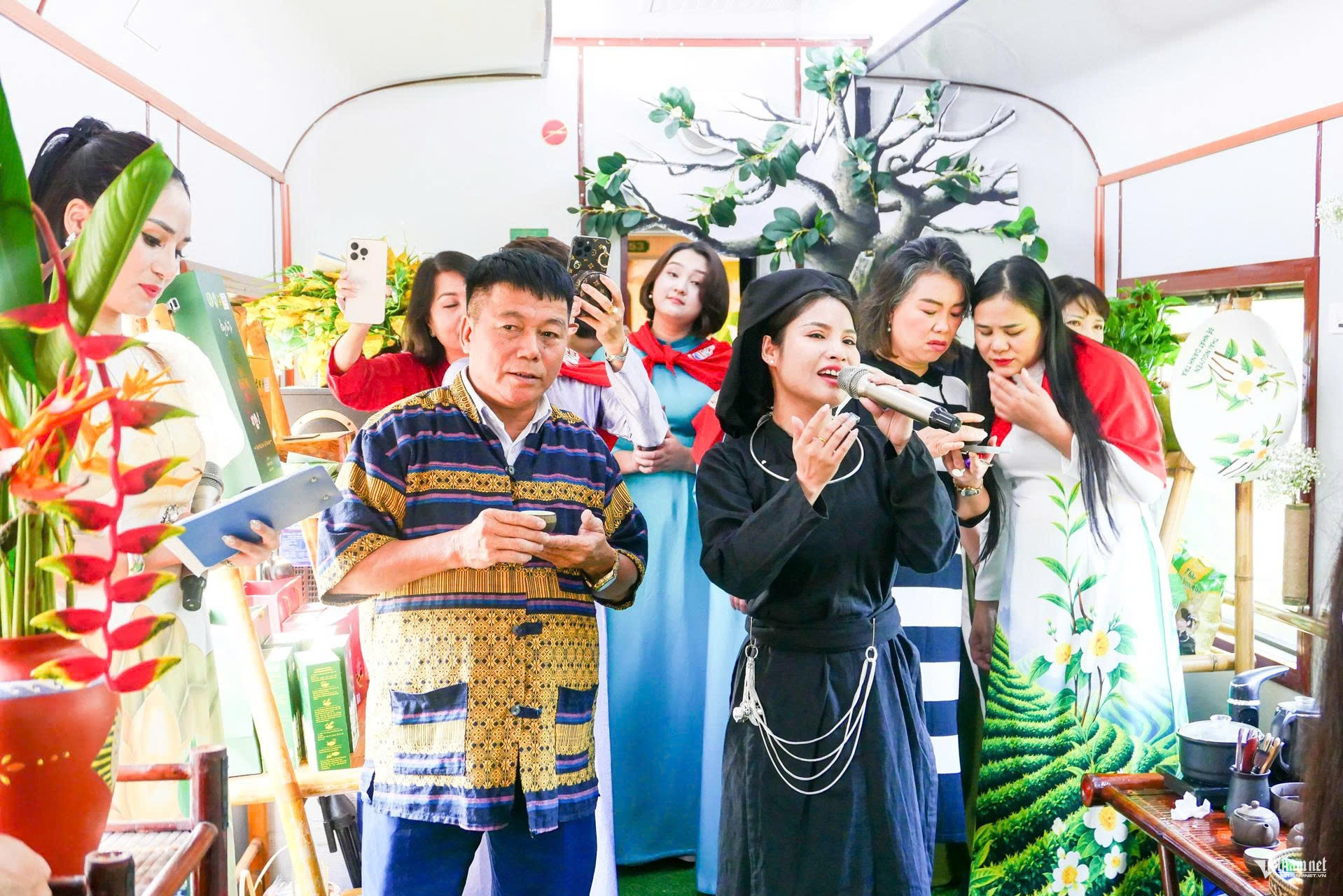
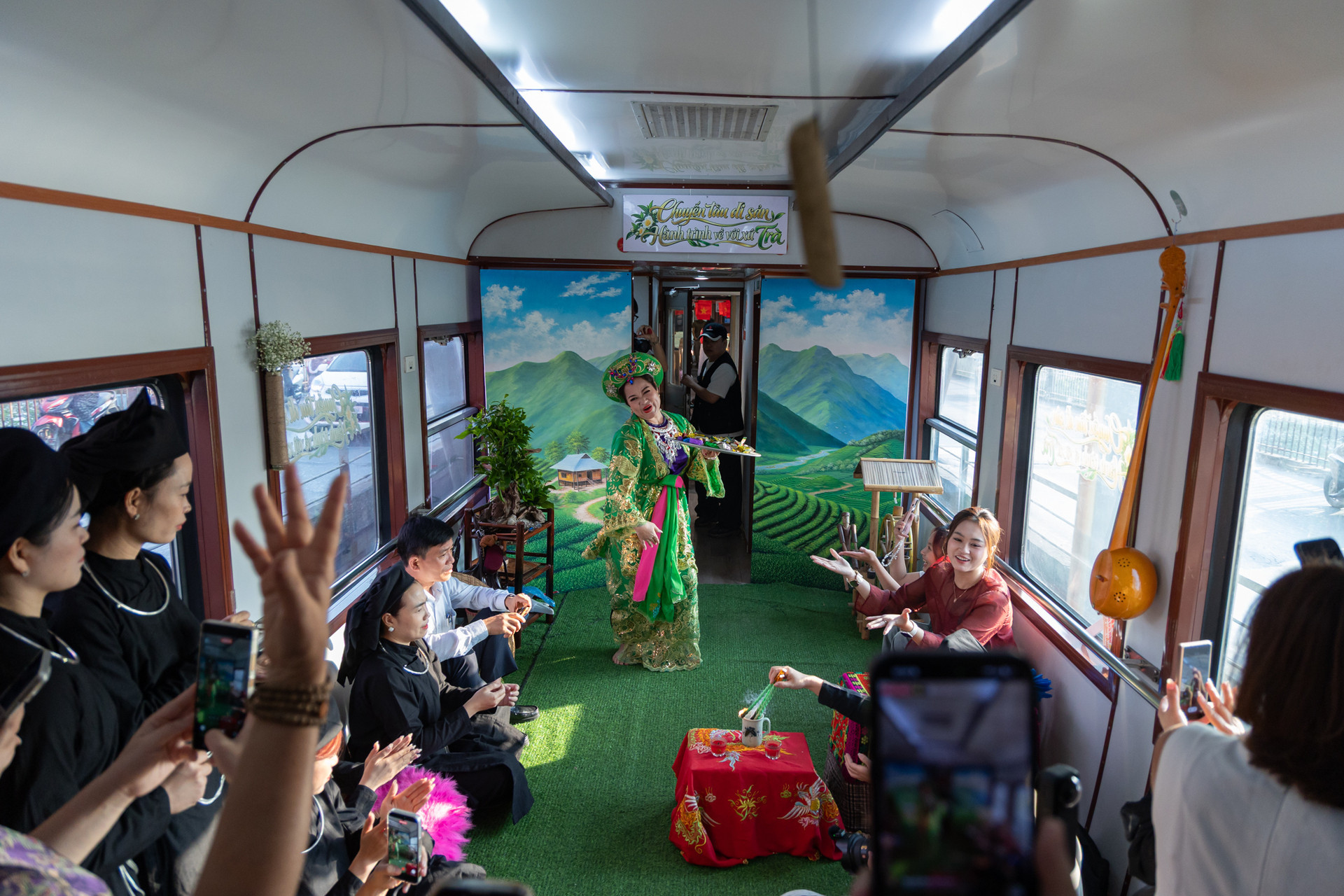
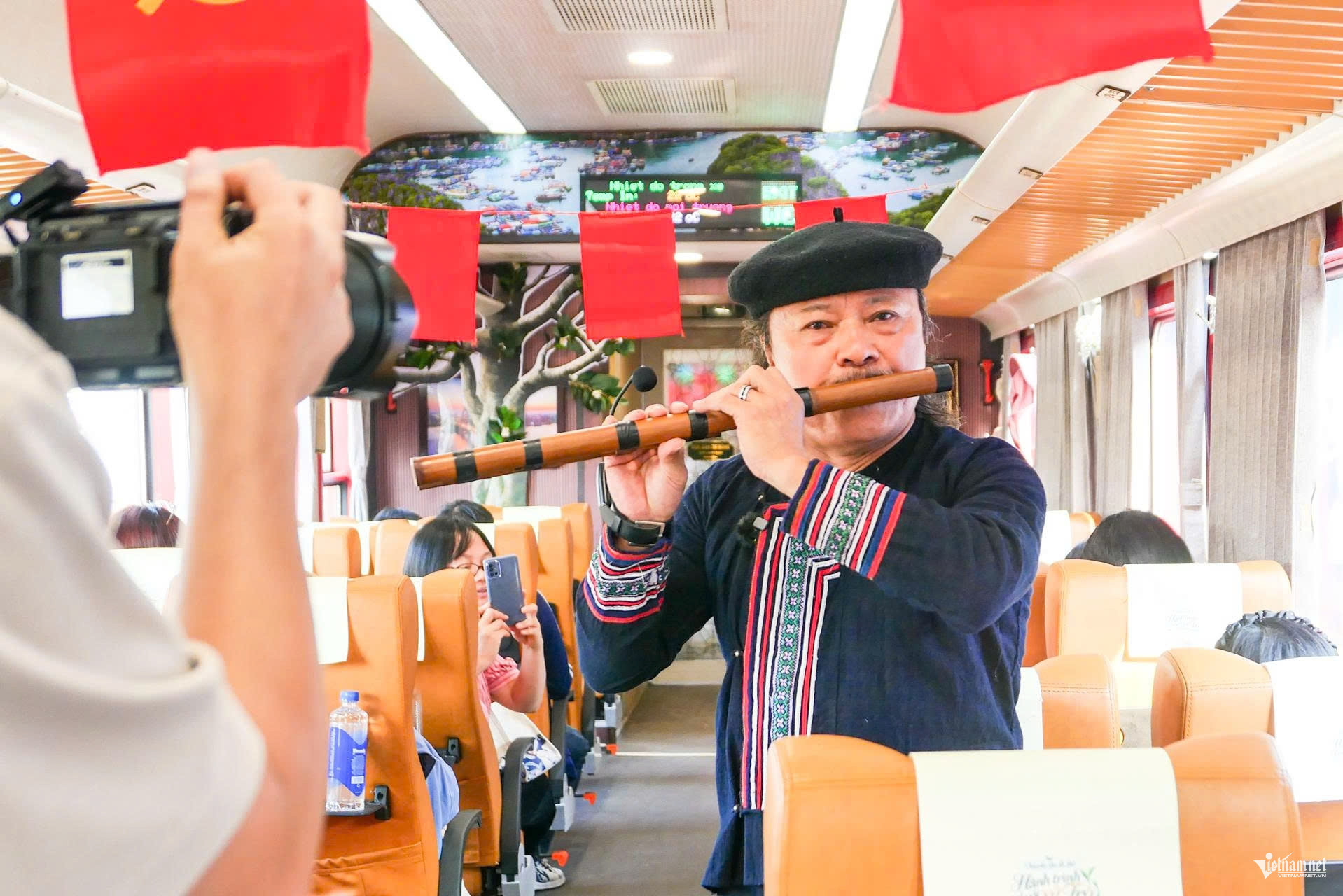
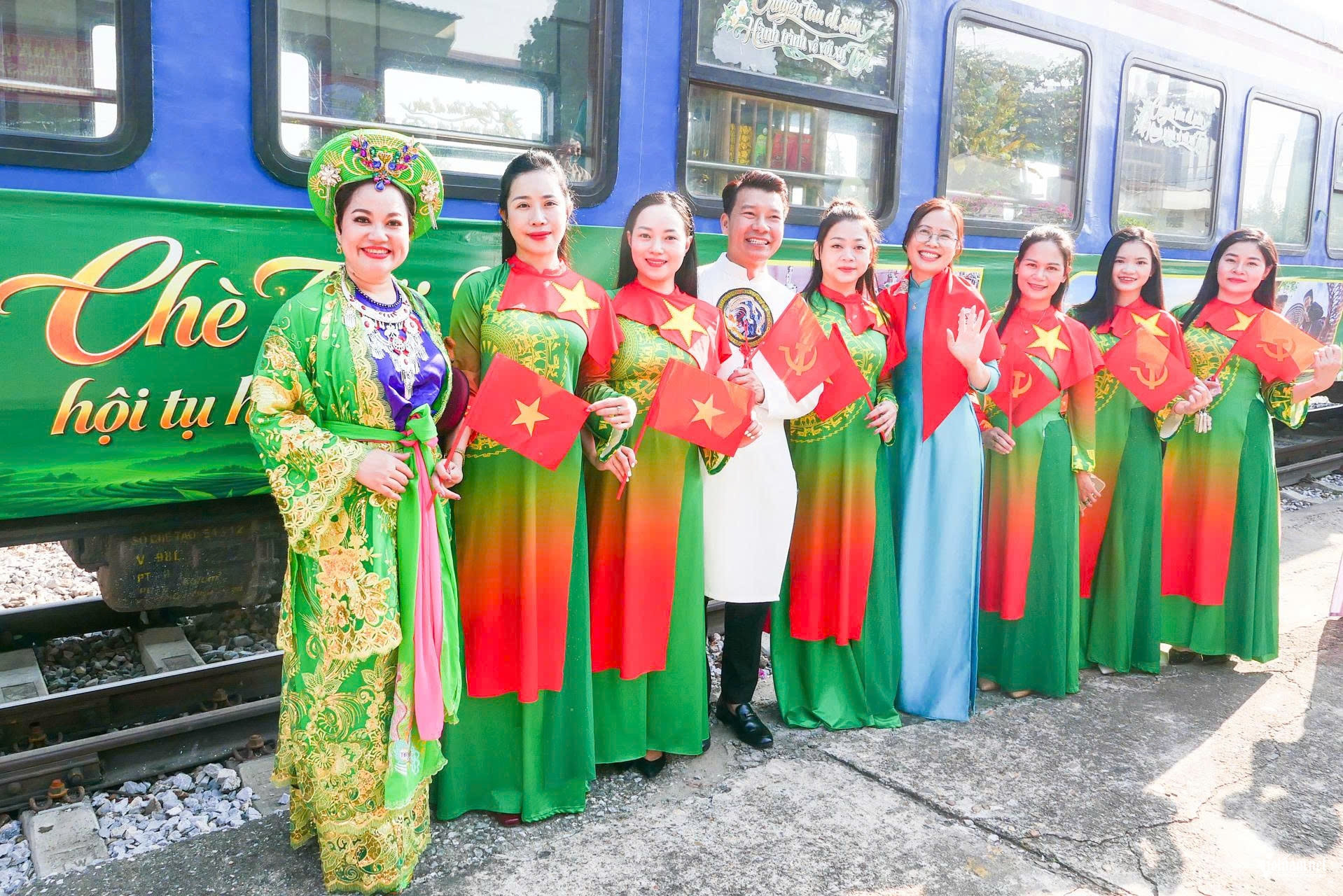
The performances turn the train into a miniature cultural stage, allowing passengers to experience the distinctive sounds and traditions of Vietnam's ethnic communities while traveling through the countryside.
Visitors can also watch a hau dong performance, a spirit mediumship ritual associated with the Vietnamese belief in the Mother Goddesses of the Three Realms.
Traditional artist Thanh Lich moves between carriages performing the Mong flute, bringing the evocative sounds of Vietnam's mountainous regions directly to passengers.
Beyond cultural entertainment, the communal carriage also serves as a showcase for Thai Nguyen's signature tea products.
Passengers can learn about locally produced teas certified with three- and four-star ratings under Vietnam's One Commune One Product (OCOP) program.
Other offerings include tea-based products developed by local agricultural cooperatives, such as green tea peanut candy and various regional specialties.
Introducing these products aboard the train allows organizers to combine cultural tourism with the promotion of local agriculture, traditional crafts and the province's distinctive products.
The Hanoi-Thai Nguyen tourist train is also intended to serve as a starting point for wider journeys exploring tea-growing regions, historical landmarks and community-based tourism destinations.
From Luu Xa Station, passengers can continue by road to some of Thai Nguyen's most recognizable attractions.
Connecting tea plantations, heritage sites and local communities
Nguyen Huu Cuong, Vice Chairman of the Thai Nguyen Tourism Association, said tourism operators have developed five itineraries linked to the Hanoi-Thai Nguyen railway.
The programs combine tea culture with historical heritage, natural landscapes and experiences of local community life.
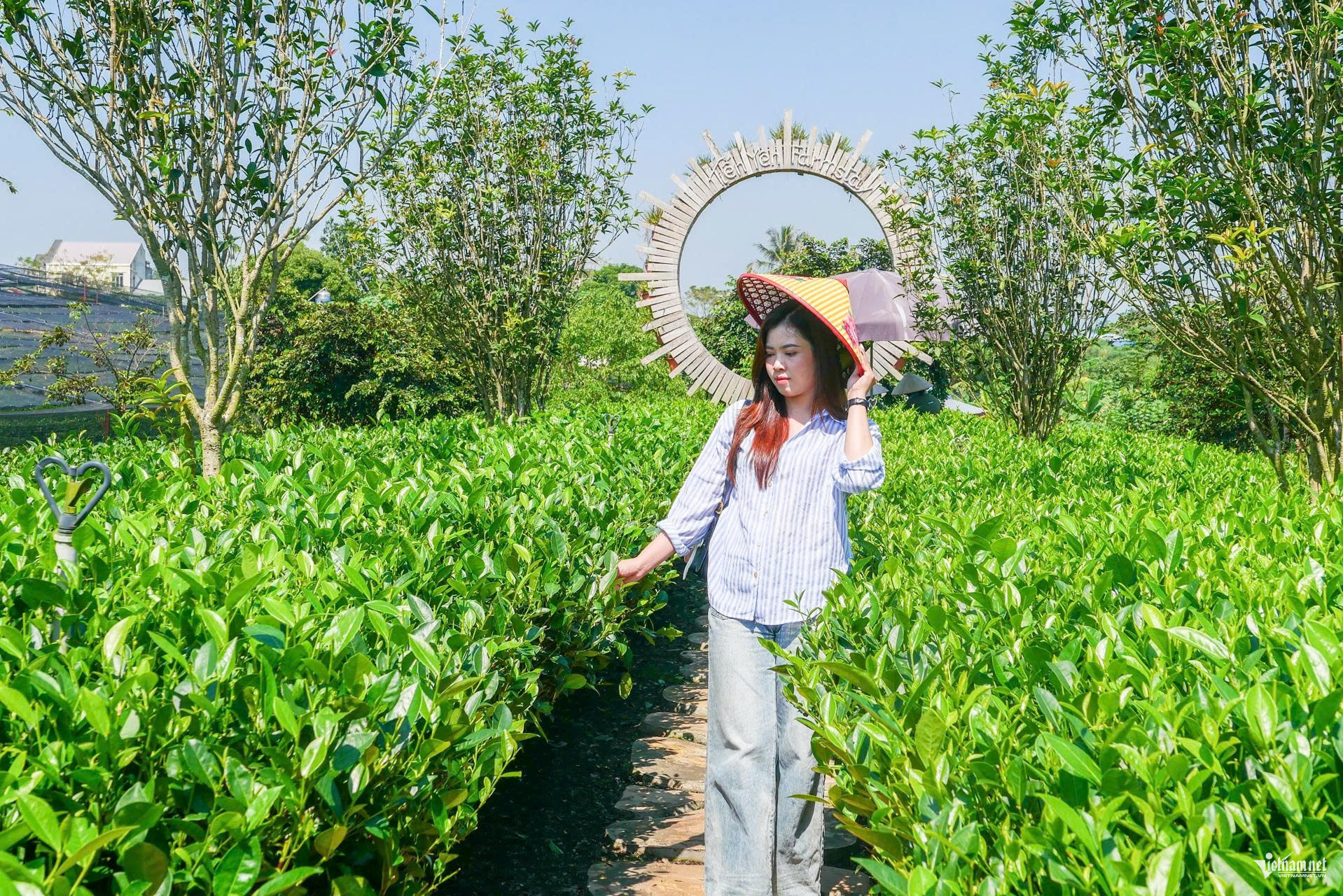
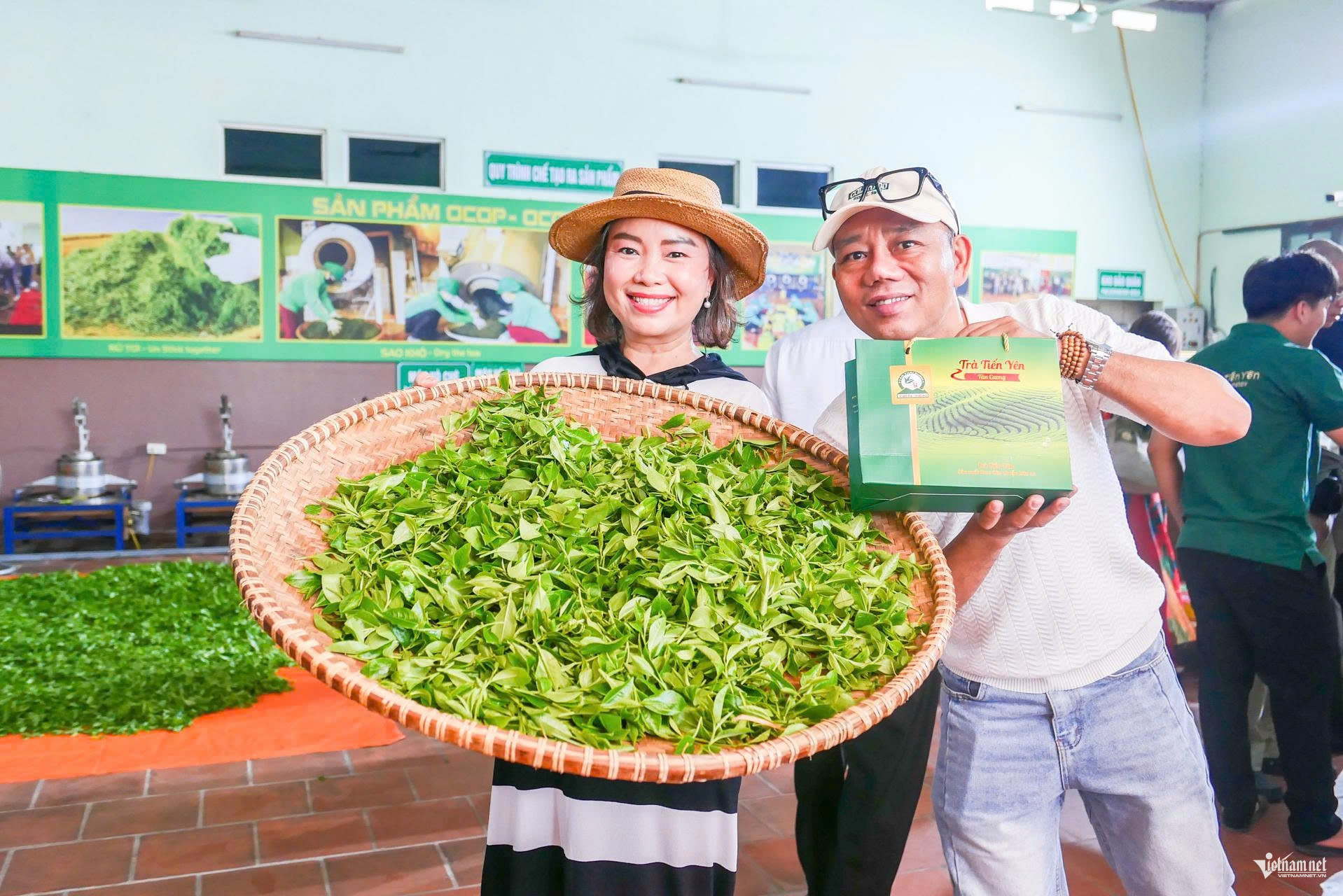
One itinerary, "Tan Cuong Essence - Thai Hai Cultural Colors," takes visitors to the renowned Tan Cuong tea-growing region.
There, travelers can learn about tea production, sample locally grown varieties and experience community traditions at the Thai Hai Ethnic Stilt House Village Conservation Area.
For nature lovers, another itinerary connects the Cau Da and La Bang tea-growing areas with Nui Coc Lake, offering opportunities to explore scenic landscapes, discover traditional tea cultivation and enjoy ecotourism activities.
The "Duom Legends - Khe Coc Tea Fragrance" itinerary combines a visit to Duom Temple with stories about the historical military commander Duong Tu Minh and an introduction to local tea culture.
Two additional programs offer broader travel experiences.
"Shan Tuyet Mountain Clouds - Ba Be Lake Waters" is a two-day journey connecting the Bang Phuc Shan Tuyet tea-growing region with Ba Be Lake, Hua Ma Cave and destinations associated with local community life.
Meanwhile, "Heritage Colors - Trai Cai Tea Fragrance" combines visits to historical sites with experiences in the Trai Cai tea-growing region.
Participants can learn about tea processing, explore the Museum of the Cultures of Vietnam's Ethnic Groups and take part in activities organized during the International Tea Festival.
One-day tours are expected to cost VND790,000 ($30) per person.
The price includes round-trip train tickets, one main meal valued at VND200,000 ($7.60), admission fees, road transfers, a tour guide and travel insurance.

Two-day, one-night packages are expected to cost between VND1.79 million and VND1.99 million ($68-$76) per person.
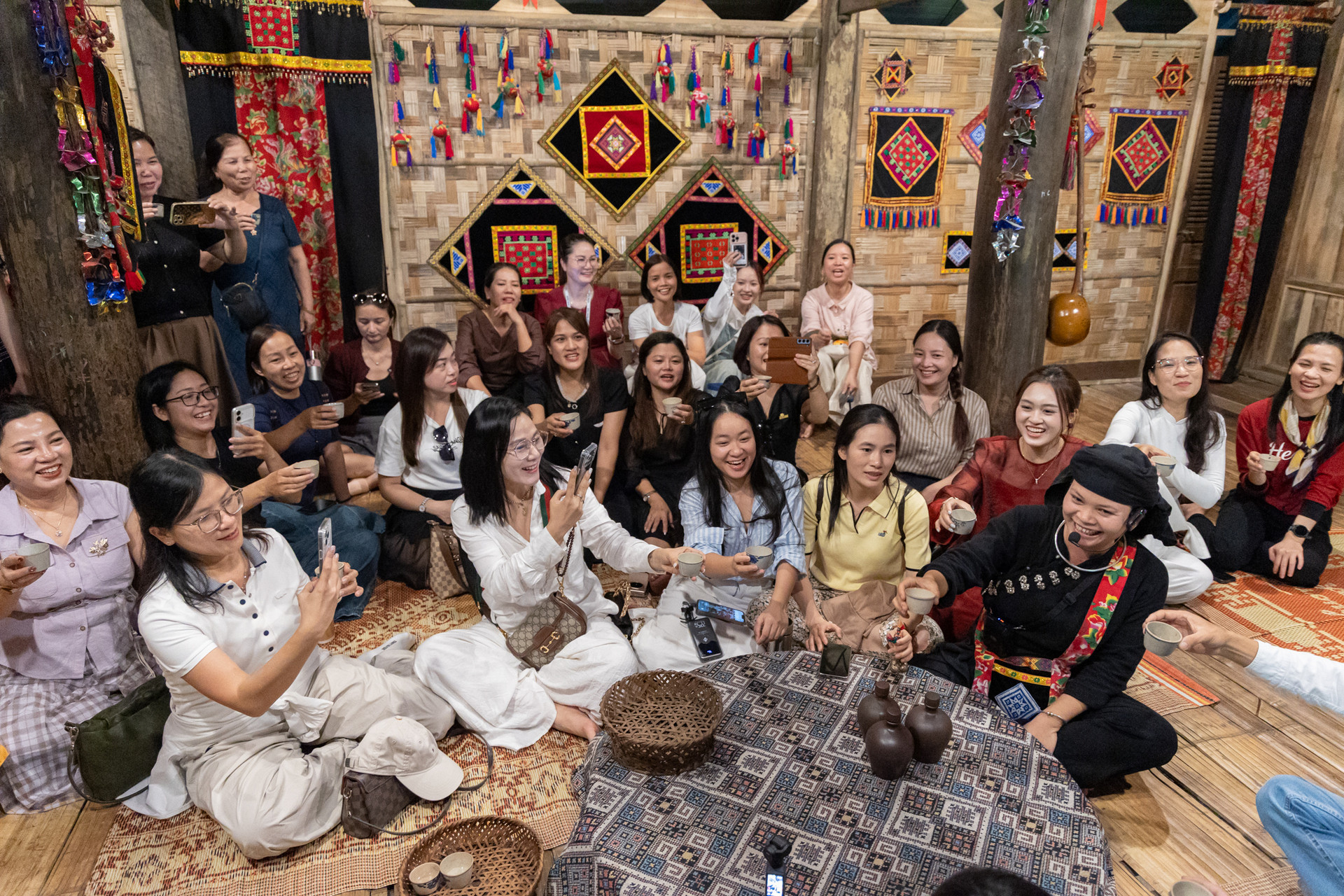
Among the destinations featured in the itineraries is the Thai Hai Ethnic Stilt House Village Conservation Area, which was recognized by UN Tourism as one of the Best Tourism Villages in 2022.
The recognition has helped establish Thai Hai as an appealing destination for travelers interested in ethnic culture, traditional architecture and community-based tourism.
Vu Thi Thu Huong, Deputy Director of the Thai Nguyen Department of Culture, Sports and Tourism, said the development of railway tourism linked to tea culture is intended to showcase the province's tourism potential, destinations and distinctive cultural and culinary heritage.
According to Huong, Thai Nguyen benefits from its geographical location, transport connections with Hanoi and other provinces in the Viet Bac region, and its diverse tourism resources.
Tea culture, however, remains one of the province's most significant competitive advantages.
Thai Nguyen currently has approximately 22,200 hectares of tea plantations and 204 OCOP-rated tea products with certifications ranging from three to five stars.
Of these, six products have received national five-star OCOP recognition.
The Hanoi-Thai Nguyen tourist train is expected to offer visitors an additional travel option during the 2026 International Tea Festival while helping promote the province's tea industry and cultural identity.
Following the festival, relevant agencies and operators will study the possibility of maintaining the service, with a long-term target of operating three to five trains per week, depending on market demand and operational performance.
Linh Trang

