 Vietnamnet.vn

 Podcast



Speaking during group discussions at the fourth session of the 17th Hanoi People's Council, a special meeting focused on major policy issues, Thang said upcoming resolutions would inherit existing legal provisions while maximizing the special mechanisms that the central government has authorized Hanoi to implement, particularly in relation to land policies.
Earlier in 2025, the city rolled out Resolution 258, which introduced a range of special mechanisms for large-scale development projects. The resolution allows the application of tailored policies during investment preparation, investment approval and implementation, particularly in compensation, land clearance and resettlement.
Long-standing service land issues to be resolved
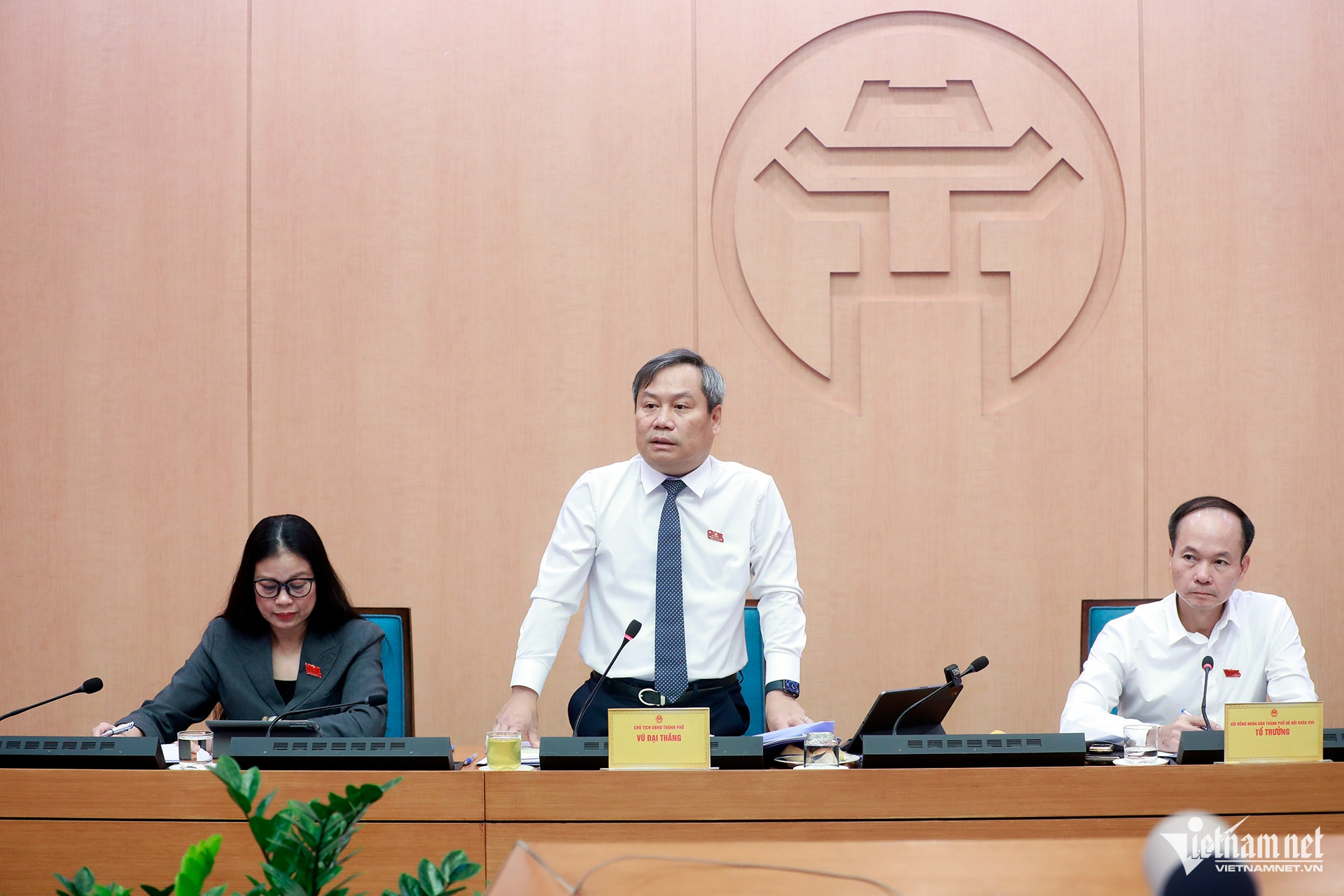
Chairman of the Hanoi People's Committee Vu Dai Thang speaks during a discussion session on Friday. Photo: Pham Hai
According to Thang, major projects such as the Olympic Urban Area and other developments covered by Resolution 258 may benefit from special compensation mechanisms during land clearance.
"As these projects have broad spillover effects on the socio-economic development of both the capital and the country, it is necessary to maintain certain special mechanisms for projects under Resolution 258 during the implementation of the Capital Law and city council resolutions," he said.
Thang added that one of the key objectives of the new resolutions is to finally address long-standing issues that have remained unresolved for years, particularly those involving historical land allocations.
Through the Capital Law and accompanying city resolutions, Hanoi intends to settle outstanding service land disputes that have affected thousands of households for decades, especially in areas that formerly belonged to Ha Tay Province.
"Some of these issues date back to the 1980s and remain unresolved. Once they are addressed, thousands of households will receive their legitimate rights, helping strengthen social consensus and creating new opportunities for local economic development," he said.
The city is also studying mechanisms to remove obstacles facing delayed projects, particularly those related to land allocation and leasing.
One proposal receiving significant attention from local authorities concerns temporary use of land that has been designated for future projects but remains undeveloped.
According to Thang, Hanoi currently has many such sites and is considering allowing short-term land allocation or leasing arrangements to maximize land use efficiency while awaiting implementation of approved plans.
"The issue that requires further discussion is how long these short-term land use periods should last - five years, ten years or another suitable timeframe - so that land can be used effectively while still ensuring compliance with planning objectives," he said.
Strong support for green and circular economy projects
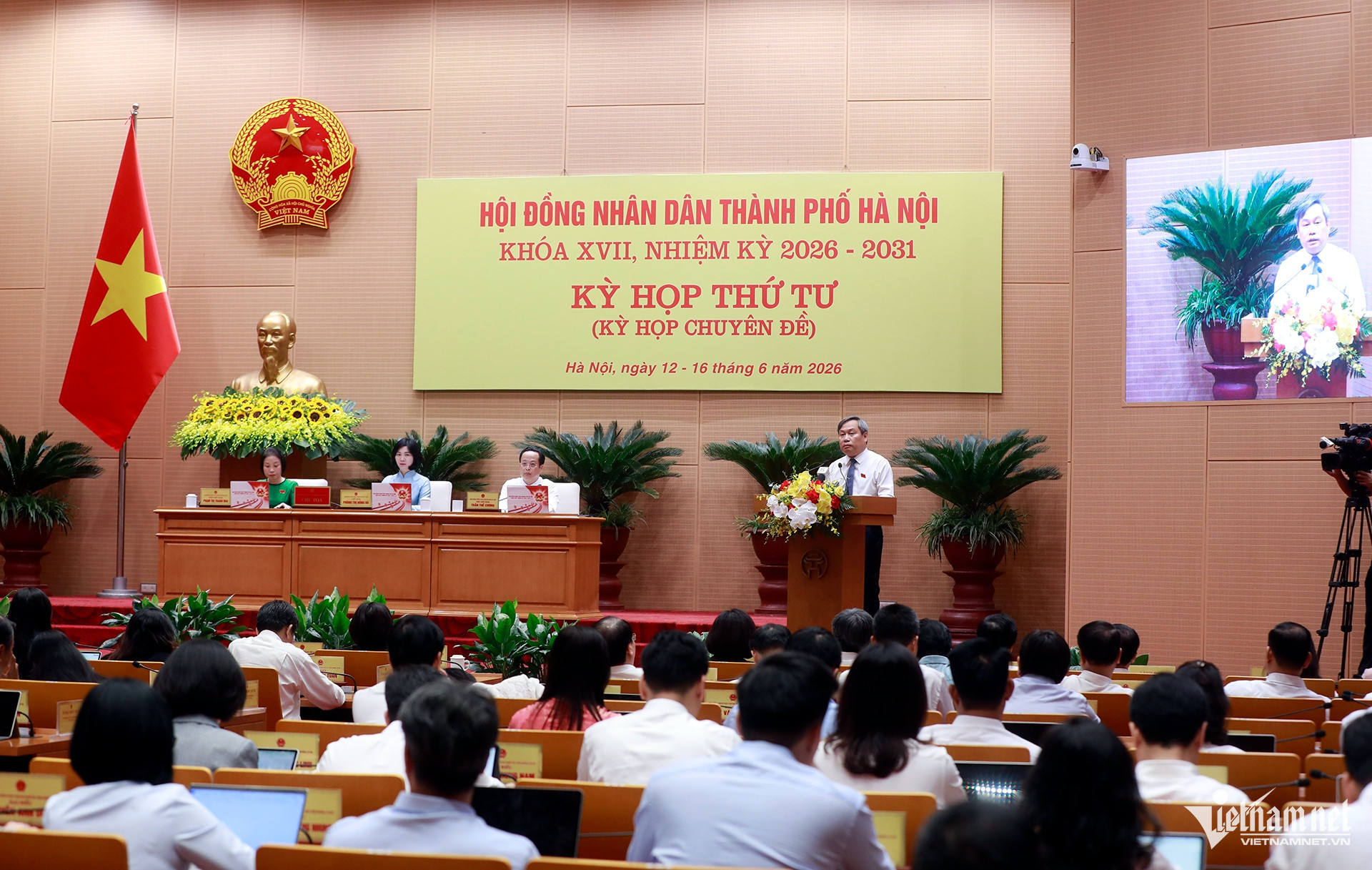
The fourth session of the 17th Hanoi People's Council reviewed 55 key issues concerning the capital. Photo: Pham Hai
For emerging economic sectors such as the circular economy, green transition and environmental protection, Hanoi is preparing a series of strong support mechanisms.
Under current proposals, projects that contribute to circular economic models, emissions reduction and environmental protection could receive support covering up to 70% of eligible costs through city funds.
The city sees this as a significant incentive designed to attract investment into green energy and sustainable development initiatives.
High-tech development identified as a key growth driver
Hanoi has also identified high technology as one of its most important future growth engines.
In addition to the existing Hoa Lac High-Tech Park, the city is developing high-tech industrial parks and biotechnology zones to generate greater added value for the economy.
"Investment projects in high-tech parks and high-tech industrial zones will be considered under preferential mechanisms for strategic investors, creating the most favorable conditions to attract projects with advanced technologies, environmental sustainability and significant economic impact," Thang said.
Another major focus of the Capital Law and the accompanying resolutions is administrative reform aimed at reducing project implementation timelines.
According to the Hanoi chairman, the city has conducted a comprehensive review of procedures and significantly reduced appraisal, verification and intermediary steps.
As a result, processing times for many administrative procedures have been cut by between 30% and 57%, while the time required for investment policy approvals has been reduced by as much as 60%.
In the fields of culture, healthcare and education, Hanoi's policies are being developed in line with central government resolutions and the broader goal of building a modern, civilized, culturally distinctive and livable capital.
Regarding education, Thang emphasized that streamlining administrative structures would not come at the expense of educational access.
"Hanoi will continue increasing the number of classrooms, recruiting additional teachers and investing in educational facilities in rapidly urbanizing areas such as Gia Lam, Hoai Duc and Thanh Tri," he said. "However, the city will not increase the number of management units. Schools will be reorganized in a more streamlined manner, reducing administrative layers while maintaining sufficient educational facilities to meet public demand and align with workforce reduction policies."
Thanh Hue
.svg)
