 Vietnamnet.vn

 Podcast



Hanoi’s Department of Construction has issued a traffic organization and diversion plan to meet rising travel demand during the Hung Kings’ Commemoration holiday from April 25 to 27, 2026, and the Reunification Day and May Day holiday from April 30 to May 3, 2026.
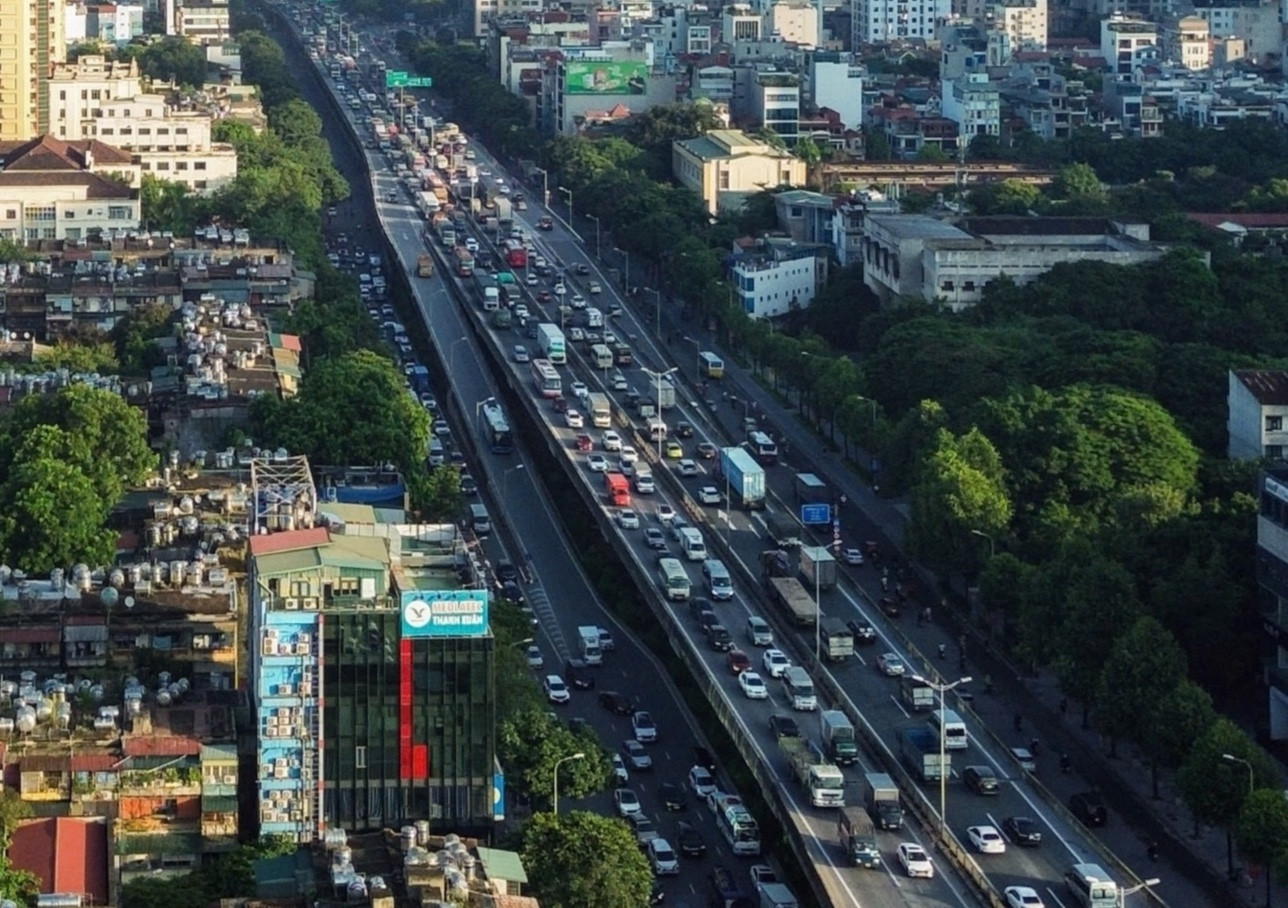
Under the plan, key gateway routes are clearly mapped by direction, enabling residents to proactively choose suitable itineraries and reduce congestion.
For vehicles traveling from central Hanoi to southern provinces such as Hung Yen, Ninh Binh and Thanh Hoa, several options are available.
Drivers can access the Phap Van - Cau Gie interchange to enter the expressway, or follow the Giai Phong - Ngoc Hoi corridor along National Highway 1 (old), joining the expressway at Van Diem or Dai Xuyen interchanges.
Alternative routes include Nguyen Trai - Tran Phu - Quang Trung (National Highway 6), turning at Ba La junction toward Road 21B and National Highway 38, or accessing the expressway at Vuc Vong interchange.
Other options involve taking National Highway 6 to Phung Hung road, continuing along the southern axis to provincial road 427B and connecting at Thuong Tin station, or traveling via Xuan Mai and the Ho Chi Minh road toward National Highway 21B.
For inbound traffic from southern provinces to Hanoi, vehicles can enter via interchanges such as Liem Tuyen, Vuc Vong, Van Diem or Thuong Tin, connecting to major corridors including National Highway 21B, National Highway 6, Ring Road 3 and Thanh Tri bridge.
Travel to northeastern provinces such as Bac Ninh, Lang Son and Thai Nguyen can follow Ring Road 3 to Thanh Tri bridge and the Hanoi - Bac Giang expressway, or take Nhat Tan bridge - Vo Nguyen Giap - National Highway 18. Another option is Chuong Duong bridge - Nguyen Van Cu - Ngo Gia Tu - Duong bridge.
For northern provinces including Phu Tho, Lao Cai and Tuyen Quang, main routes include Thang Long bridge - Vo Van Kiet - National Highway 2 - Hanoi - Lao Cai expressway, or Thang Long bridge via provincial road 23 and Me Linh road. National Highway 3 and provincial road 296 also connect to the expressway, while National Highway 32 leads toward Phu Tho.
Routes to the northwest, including Son La and Dien Bien, include Thang Long Boulevard toward Tan Linh and Yen Bai, connecting to the Hoa Lac - Hoa Binh expressway, as well as National Highway 6 via Xuan Mai or National Highway 32.
For eastern destinations such as Quang Ninh and Hai Phong, drivers can take Co Linh road to Ring Road 3 and the Hanoi - Hai Phong expressway, provincial road 379 toward Hung Yen and Hai Phong, the old National Highway 5 (Nguyen Van Linh - Nguyen Duc Thuan), or Thanh Tri bridge to the Hanoi - Bac Giang expressway and National Highway 18.
To ensure effective implementation, the Department of Construction has instructed relevant units to review traffic signage, maintain infrastructure readiness and deploy personnel to promptly handle incidents.
Hanoi Police have been tasked with coordinating with the Traffic Police Department to guide and divert traffic from a distance, while local authorities will strengthen on-site traffic control. Coordination with the Vietnam Road Administration and neighboring provinces will also be enhanced to ensure seamless interprovincial traffic flow.
Proactive traffic organization is expected to ease congestion on major corridors such as National Highways 1, 5, 6 and 32, as well as key expressways including Phap Van - Cau Gie and Hanoi - Hai Phong, and critical gateway routes like Vo Nguyen Giap and Vo Van Kiet during peak holiday days.
Vu Diep
.svg)
