 Vietnamnet.vn

 Podcast



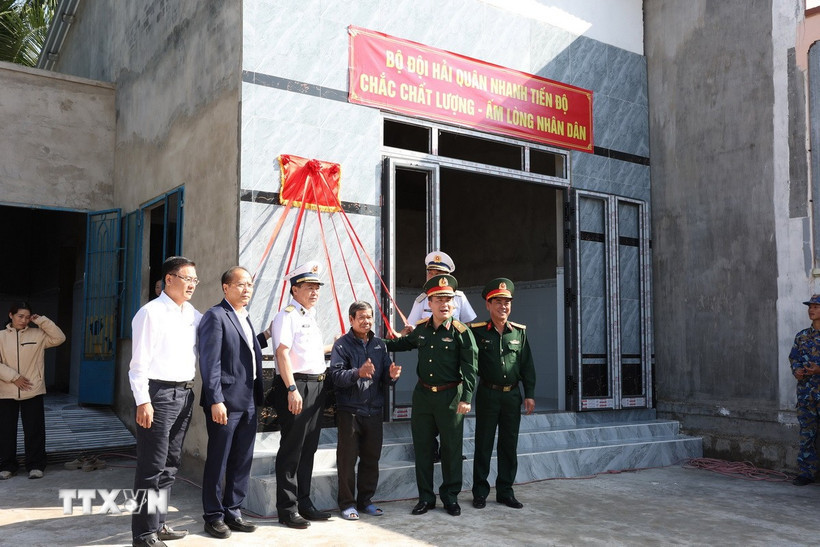
That name reflects the minimum human needs after a natural disaster: living in a stable space, strong enough to withstand hardships, and safe enough for children to study, for the elderly to feel at peace, and for adults to make a living.
Amid climate change and natural diasters, housing is no longer purely a matter of people's livelihoods or welfare; it is becoming a component of social security and sustainable development.
If a disaster-prone region lacks the ability to restore residential infrastructure quickly, it easily leads to disruptions in livelihoods, education, healthcare, and social order.
For that reason, the Quang Trung Campaign to build and repair houses for flood-affected residents in central Vietnam, completed on January 15, 2026, is a special test.
It is not measured only by the number of houses built, but by the capacity for coordination, by how social resources are organized, by discipline in timelines, and most importantly, by whether people truly “regain stability” in their lives.
This is not merely a routine political task, but an obligation and responsibility of the Party, the State, and government of all levels toward people in disaster- and flood-hit areas. It is both an “administrative order” and a “command from the heart,” from conscience and responsibility to the community.
On January 16, at the review conference, Prime Minister Pham Minh Chính stated: "The Quang Trung Campaign, though without gunfire, was a lightning fight and a lightning win, not just a victory, but a resounding victory."
The phrase "lightning fight, lightning win" reflects a requirement of national governance in the new context: every policy must be transformed into action with a timeline, results, and inspection and supervision.
Targets for the people cannot remain on paper. Support cannot be just "spiritual encouragement" while people's lives require minimum material conditions to start over.
Notably, the campaign concluded at a time when the Party and the entire population were preparing for the 14th National Party Congress, an event expected to usher in a new development phase with higher demands on growth quality, governance capacity, sustainability and inclusiveness, and truly “putting people at the center,” as stated in official documents.
In that broader picture, the Quang Trung Campaign, which is a specific event in the field of social security, evokes larger meanings. Only such people-centered, people-aligned, people-serving actions, carried out thoroughly, can create a solid social foundation for entering a new stage of development.
In other words, the happy houses are not just a story of the people of Central Vietnam, but of the whole nation at a transition point: from the term of the 13th Congress to the phase of the 14th Congress.
As the 14th Congress sets requirements for strong innovation in leadership methods, enhancing the effectiveness and efficiency of national governance, and strengthening the adaptability and resilience of the socio-economy against risks, a campaign like Quang Trung is a "test" of the apparatus's operational ability in practice.
It shows that with political determination, scientific organization, and appropriate social mobilization mechanisms, difficult tasks can still be done quickly and firmly.
Technical factors and standards were given priority within the campaign. The Ministry of Construction announced 360 housing design templates, including 45 storm- and flood-resistant designs, for localities to consult and choose from. Post-disaster housing must not only be “finished,” but must be “solid.”
Alongside design and technology, the capacity to mobilize social resources is an important factor. The Vietnam Fatherland Front and mass organizations mobilized, connected, and allocated resources to implement the campaign. The funding allocated to localities to carry out the campaign reached VND486.2 billion.
This figure not only reflects community solidarity, but also highlights a crucial aspect: Vietnamese society can “pool” resources quickly when there is trust and an effective, transparent organizational approach. Ultimately, that trust itself is a development resource.
At the review conference, Prime Minister Pham Minh Chinh emphasized that each house was built or repaired not only with materials such as “concrete, bricks, tiles, sand, gravel,” but also with “national solidarity and fraternal bonds.”
The Quang Trung Campaign closed with a completion milestone and opened up a major implication for the new term: treating social security as the foundation, policy effectiveness as the yardstick, and public trust as a vital resource.
Bui Hoai Son (NA Deputy, Hanoi)
.svg)
