 Vietnamnet.vn

 Podcast



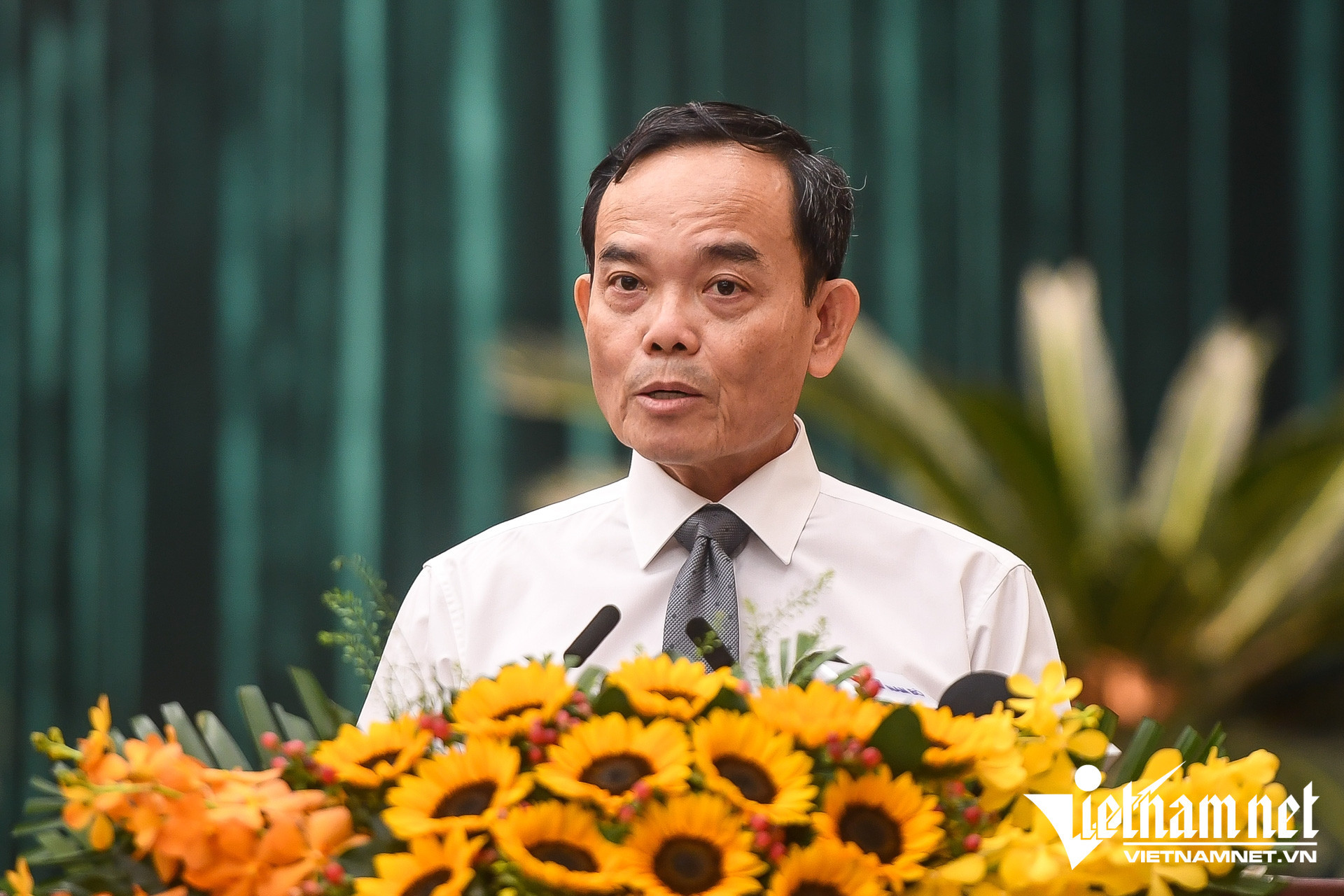
The Urban Development Law officially took effect on October 1, giving HCMC greater authority to make decisions on a range of development issues.
At the recent fifth session, the 11th HCMC People's Council passed 38 important resolutions to implement the Urban Development Law and address urgent socio-economic issues.
Speaking at the session, HCMC Party Committee Secretary Tran Luu Quang noted that authority does not automatically produce results. If the city is given more powers but implementation remains slow, if resolutions fail to translate into practice, and if policies do not reach people and businesses, then those powers can’t create value.
He set criteria for each resolution and policy: it must clearly identify the bottleneck to be removed, the resources or incentives to be unlocked, and the agency responsible for the outcome. The quality of a resolution should be given greater weight than the number of policies issued.
“We should not stop at the question, ‘What are we allowed to do under the regulations?’ We must ask a higher-level question: ‘Within the scope permitted by law, what can we do better for the city's development?’” Quang said.
This requires the city to make effective use of its existing resources. Finance and land must generate value; planning must open up space for investment and development; science and technology must generate products and productivity; and education, healthcare and human resources must be linked to quality of life.
He also called for policy effectiveness to be quantified: How many people benefit from a support policy? How many bottlenecks does a new mechanism remove, and how many projects does it help implement? How much time and cost do administrative reforms save? How much capital is mobilized through new resources?
“Whatever can be measured must be measured,” Quang stressed. Ultimately, he said, results must be reflected in changes that people and businesses can actually see.
Implementation capacity
HCMC People's Committee Chair Nguyen Van Duoc raised the issue of implementation capacity at every authority level.
“Decentralization has already been strengthened significantly, but what about implementation capacity? Are people willing to act? Can they do so effectively? What results will they produce? That is the important issue,” Duoc said at a conference in late August to disseminate and implement the Urban Development Law.
Duoc said the National Assembly had handed HCMC a “key to institutional reform” through a range of special mechanisms and policies. The next requirement, he said, is to organize effective implementation and ensure that the law does not take effect while implementation mechanisms remain dependent on further guidance.
Nguyen Thi Hong Hanh, Director of the HCMC Department of Justice, said departments and agencies had sought comments from 168 wards, communes and special administrative zones on draft policies, but only about half had responded, with most agreeing with the drafts.
According to Hanh, within more than a month, the city had passed 25 resolutions on urban organization in preparation for the Urban Development Law taking effect on October 1.
She said the law provides comprehensive decentralization to local authorities, meaning the policy-making approach must fundamentally change. The city can no longer simply “translate into detailed rules” the frameworks already set by the central government, but must proactively create its own policies.
The Department of Justice leader called on departments and agencies to seek input from ministries from the outset; related agencies, particularly those overseeing finance and land, should coordinate more substantively; and the 168 wards, communes and special administrative zones should provide more in-depth feedback, as they will be directly responsible for implementing most of the policies.
Tran Quang Thang, Director of the HCMC Institute of Economics and Management, said the city needs sufficiently strong mechanisms to fulfill its role as a major economic hub. The law is expected to increase autonomy, shorten decision-making processes, strengthen regional connectivity and attract resources.
He said the condition for these mechanisms to work is a capable, high-quality government apparatus. Decentralization must be accompanied by compliance with the law; urban management must be based on planning, the rule of law and effective implementation; and infrastructure projects must stay on schedule while minimizing waste.
Phuoc Sang
.svg)
