 Vietnamnet.vn

 Podcast



On the afternoon of Sept. 24, Quang and members of Ho Chi Minh City’s National Assembly delegation for Constituency No. 6 met voters from Binh Tien, Cho Quan, An Dong, Cho Lon, Binh Tay, Dien Hong, Binh Phu, Hoa Hung and Vuon Lai wards.
Traffic congestion and the transition to alternative vehicles were among the issues raised by voters.
Quang said addressing congestion would require a coordinated package of measures, starting with increasing public transport capacity to gradually reduce dependence on private vehicles.
Expanding public transport to reduce reliance on private vehicles
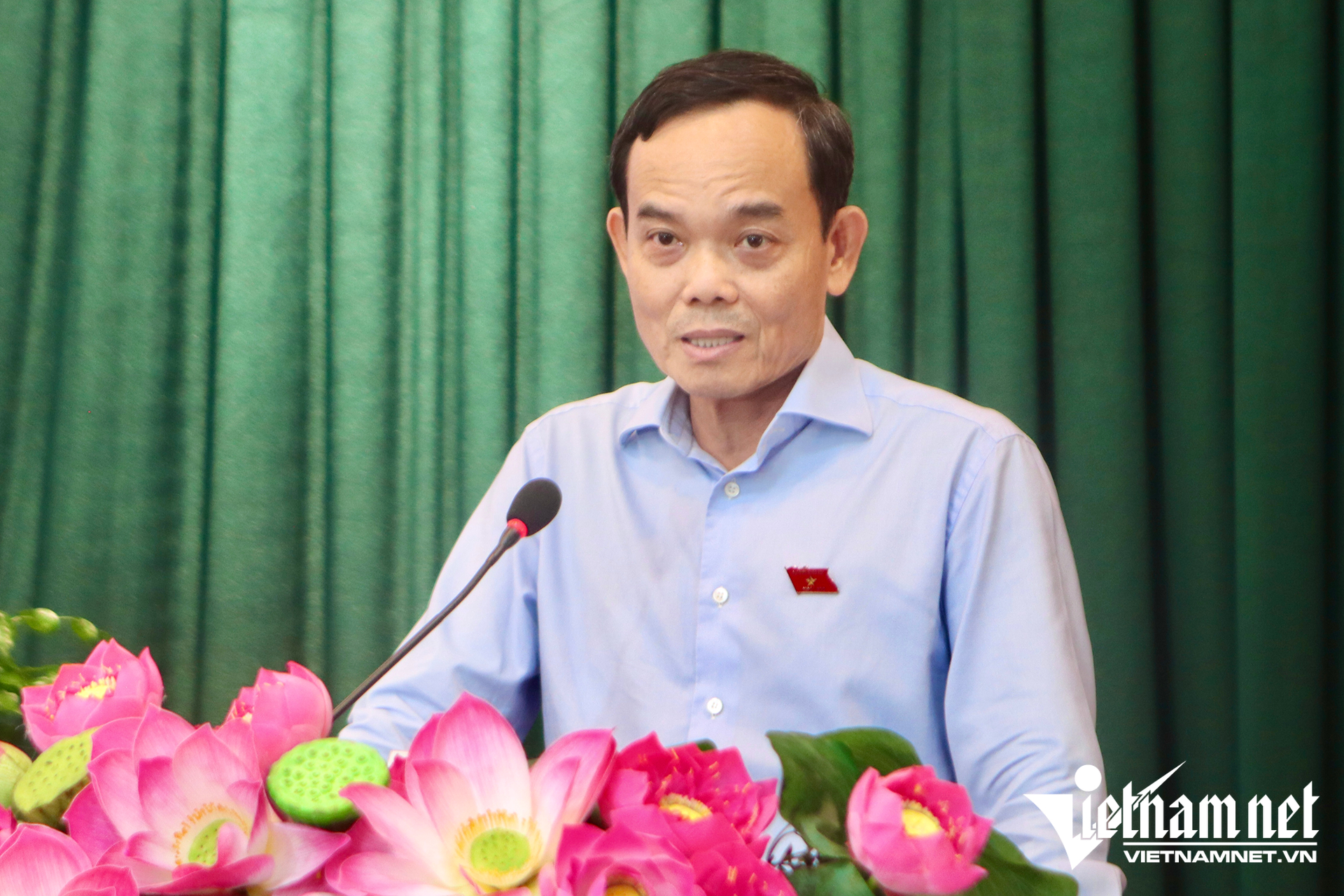
The first solution outlined by Quang was the development of public transport.
He said bus ridership had increased 49% year on year after the introduction of a free-fare policy, indicating that public transport was becoming increasingly attractive to residents.
According to Quang, Ho Chi Minh City currently spends more than VND2 trillion (about US$76 million) a year subsidizing the sector.
The city plans to further reorganize its bus network to make it more efficient and adjust vehicle capacity according to demand at different times. The bus system will also be designed to connect with transport services and covered waiting areas, making transfers more convenient.
Ho Chi Minh City will also continue expanding its urban railway network, improving connections between lines and easing pressure on roads.
Quang said developing public transport was not simply a matter of increasing the number of vehicles. The system must also be convenient and well connected, while helping gradually change residents’ travel habits.
The Party chief also addressed the transition from gasoline-powered vehicles to EVs, saying Ho Chi Minh City would not prohibit residents from using gasoline vehicles. Instead, it will study economic and financial policies to encourage the switch to electric vehicles.
“The general principle is that the city will not ban people from using gasoline vehicles,” Quang stressed.
The city will study area-based road charges and combine smart cameras with technology to manage vehicles, creating differences in travel costs and conditions rather than imposing an administrative ban.
“The city will encourage people to switch to electric vehicles through state support policies. Residents will contribute a portion, the state will provide part of the support, and vehicle manufacturers will also contribute. The transition to electric vehicles will be carried out step by step,” Quang said.
Alongside infrastructure and vehicles, Quang emphasized the importance of traffic culture.
He said arbitrary lane changes and drivers squeezing into available gaps regardless of traffic rules also contribute to worsening congestion.
Improving compliance with traffic laws and fostering better road behavior, he said, must be pursued alongside improvements to infrastructure, public transport and traffic management.
Social housing standards comparable to commercial housing
At the meeting, Quang also discussed the city’s social housing development goals, saying Ho Chi Minh City should pay greater attention to affordable housing that matches workers’ ability to pay.
“Social housing now has standards comparable to commercial housing. The difference is that we have special mechanisms for land prices and other factors, which make it cheaper,” he said.
For resettlement projects, the city aims to ensure coordinated infrastructure, including schools, hospitals, shopping centers, markets and transport connections.
Housing prices should remain reasonable, accompanied by financial policies that allow residents to pay over time.
Regarding project implementation, Quang called on agencies and local authorities to ensure transparency and public disclosure.
“People should know what is happening at every stage. We require project progress to be made public and implementation to be transparent. If residents need clarification, they can ask local authorities about the progress and the reasons for delays. Local authorities have a responsibility to provide an explanation,” Quang said.
According to the HCMC Party chief, if local authorities fail to provide adequate explanations and residents have to raise the matter with city leaders, the city will conduct inspections, issue criticism and may even initiate accountability reviews if violations are found.
Phuoc Sang
.svg)
