 Vietnamnet.vn

 Podcast



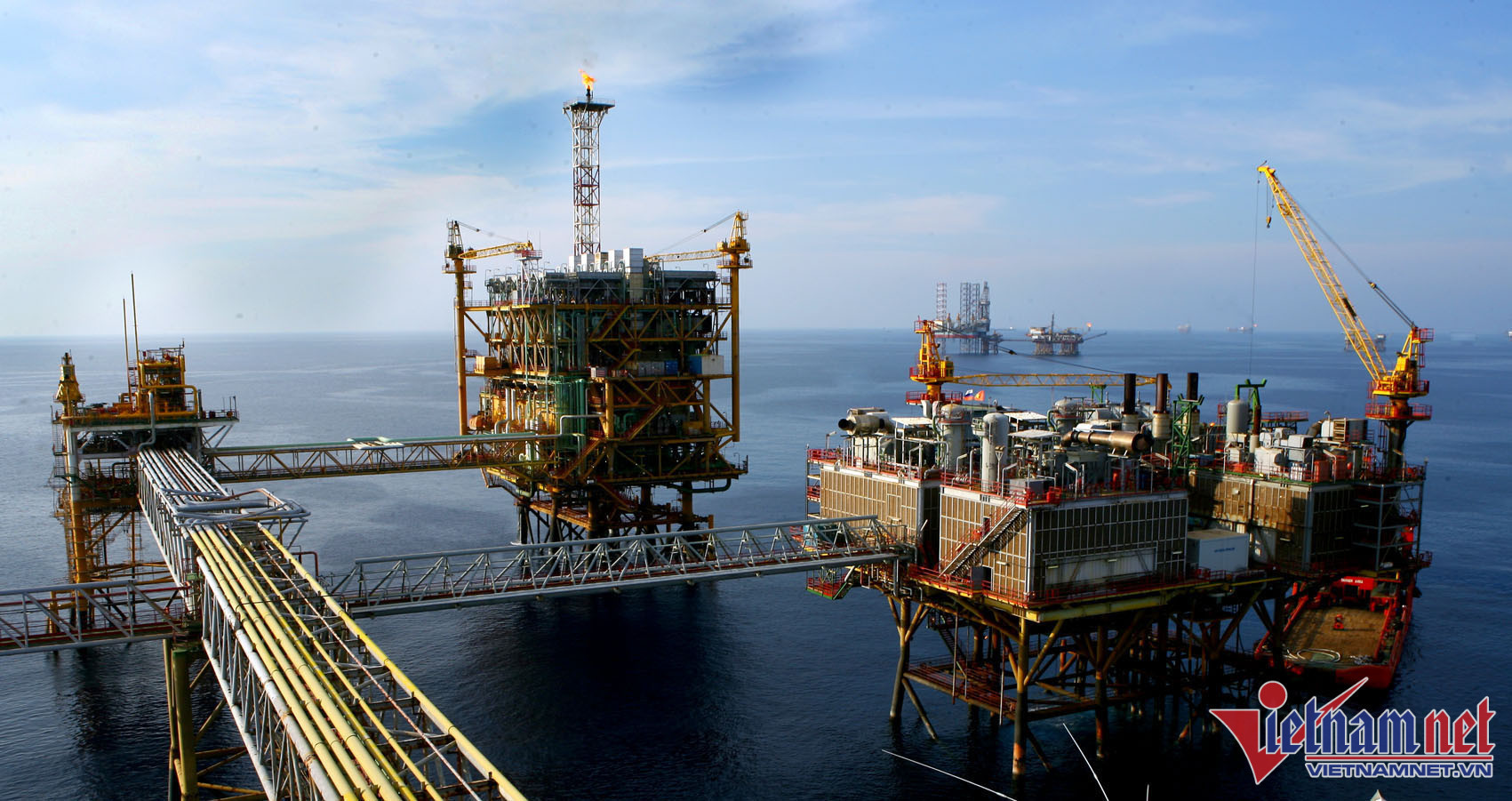
According to the latest report released by the HCMC Statistics Office on the city’s socio-economic performance in Q4 and the full year of 2025, the GRDP grew by 7.53%. However, when oil and gas operations are excluded, the figure rises to 8.03%.
The question arises: Why are there two different growth figures for Vietnam’s economic powerhouse?
At a conference held on January 6 to review 2025 socio-economic results and outline goals for 2026, Nguyen Khac Hoang, Director of the HCMC Statistics Office, explained that oil and gas operations are heavily dependent on global oil price fluctuations. Moreover, all planning and resource management in this sector falls under central government authority-not under local jurisdiction.
In 2025, oil and gas activities declined by 2.54%, pulling the city’s overall GRDP down by 0.5 percentage points.
“Including oil and gas in HCMC’s GRDP would misrepresent the effectiveness of the city’s governance,” Hoang explained. He emphasized that adding oil figures brings little meaningful insight into the actual income levels of local residents.
He added that including oil inflates the average income per capita but doesn’t accurately reflect local economic performance or living standards.
“Therefore, excluding oil from HCMC’s economic evaluation is necessary. It helps better represent the quality of growth and the city government's performance in 2025,” Hoang stressed.
Hoang also noted that following the administrative merger, HCMC’s economy now accounts for approximately 23.1% of the national total. A 1% growth in the city’s GRDP equates to around 18.44 trillion VND (approximately 752 million USD), a value larger than the entire GRDP of several other provinces.
For example, Cao Bang’s GRDP is about 14 trillion VND (~571 million USD), Dien Bien’s is around 17 trillion VND (~694 million USD), and Lai Chau’s is about 16 trillion VND (~653 million USD).
He added that for other centrally managed cities to achieve a growth impact equivalent to HCMC’s 1%, they would need to grow at much higher rates. For instance, Hanoi would need 2%, Hai Phong 5%, Hue 44%, Da Nang 12%, and Can Tho 13%.
Given such economic scale, a 1% growth in HCMC represents a significant accomplishment.
Looking ahead to 2026, Hoang projected that HCMC’s growth could reach 8.5–9%. However, the city is targeting double-digit growth to create momentum for the 2026–2030 development phase.
To achieve this, every economic sector must exert substantial effort. For example, agriculture needs to grow by over 3%, industry and construction by 10–11%, and services by around 11%.
In addition, total social investment is expected to reach about 880 trillion VND (approximately 35.9 billion USD) in 2026, up from 705 trillion VND (~28.8 billion USD) in 2025. Public investment disbursement must reach 100%, credit growth should exceed 15%, and labor productivity must improve by about 8.5%, Hoang emphasized.
In reality, the oil sector has had a significant impact on HCMC’s growth indicators due to its merger with Ba Ria–Vung Tau-the largest center for oil and gas extraction and processing in Vietnam. As of 2023, Ba Ria–Vung Tau held about 400 million tons of oil reserves, accounting for 93.29% of the national total, and over 100 billion cubic meters of gas reserves, representing 16.2% nationwide.
For years, Ba Ria–Vung Tau has ranked among the top 10 localities in terms of GRDP and total state budget revenue. In 2021, its average GRDP per capita reached 12,154 USD (including oil) and about 7,141 USD (excluding oil).
Tran Chung
.svg)
