 Vietnamnet.vn

 Podcast


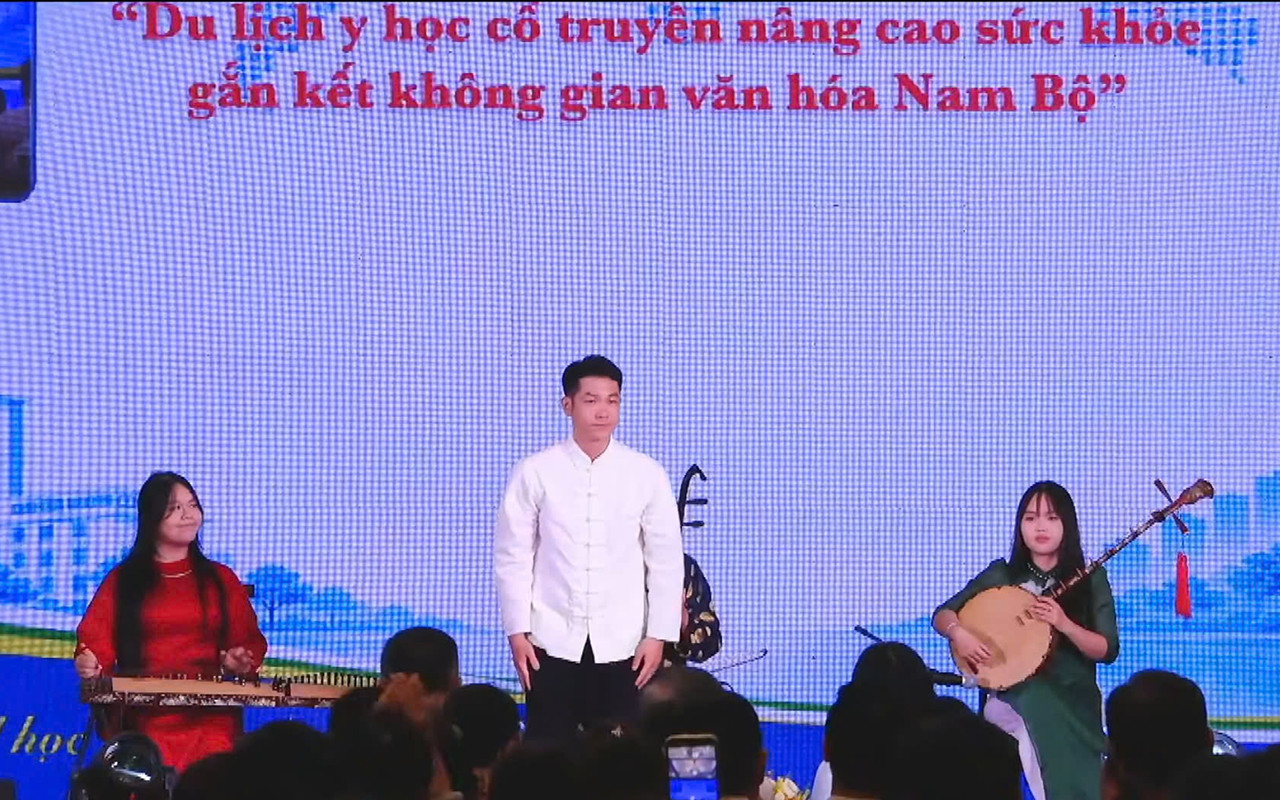
At the 2026 International Scientific Conference on Traditional Medicine Tourism, organized by the Ho Chi Minh City Traditional Medicine Hospital on November 27, participants were introduced to an innovative approach to healthcare and wellness.
Presented by Dr. Vo Thanh Phong, a lecturer at the Faculty of Traditional Medicine at the University of Medicine and Pharmacy at Ho Chi Minh City, the model incorporates Don ca tai tu (southern Vietnamese traditional music) into music therapy for tourists.
Rather than simply listening to relaxing music, participants actively engage in physical movements and regulate their breathing in synchronization with musical rhythms.
From a scientific perspective, the sounds of traditional percussion instruments, instrumental melodies and vocals serve as auditory cues, helping participants determine when to initiate, redirect or complete a movement.
For example, a 12-bar passage from the traditional folk song Ly cay xanh is divided into three equal sections, corresponding precisely to three sequences of forward and backward steps.
Each instrument in the therapeutic ensemble serves a distinct purpose in supporting participants.
The song lang, a traditional wooden percussion instrument, maintains a steady rhythm, while the dan tranh (Vietnamese zither) signals the beginning of movements. The dan kim (moon lute) creates lively musical exchanges, while the bamboo flute and dan bau (monochord) provide smooth melodic transitions intended to soothe emotions.
A standard therapy session lasts between 12 and 24 minutes and consists of three distinct stages.
Participants begin with gentle seated warm-up exercises accompanied by the melody of Ly Ba Tri before standing up to perform moderate arm and leg movements to the rhythms of Luu thuy hanh van or Phi van diep khuc.
The session concludes with the soothing melody of Ly Cai Mon, guiding participants into a stable standing position while practicing a four-phase breathing exercise involving inhalation, breath retention, exhalation and rest in eight-second cycles to help relieve stress.
The Ho Chi Minh City Traditional Medicine Hospital has established a dedicated space for music therapy and cultural heritage on the second floor of its Traditional Medicine Tourism Center.
By bringing together healthcare professionals, traditional musicians and tourists, the initiative aims to support physical rehabilitation and emotional well-being while giving the city's medical tourism sector a distinctive southern Vietnamese cultural identity.
Thanh Huyen

