 Vietnamnet.vn

 Podcast



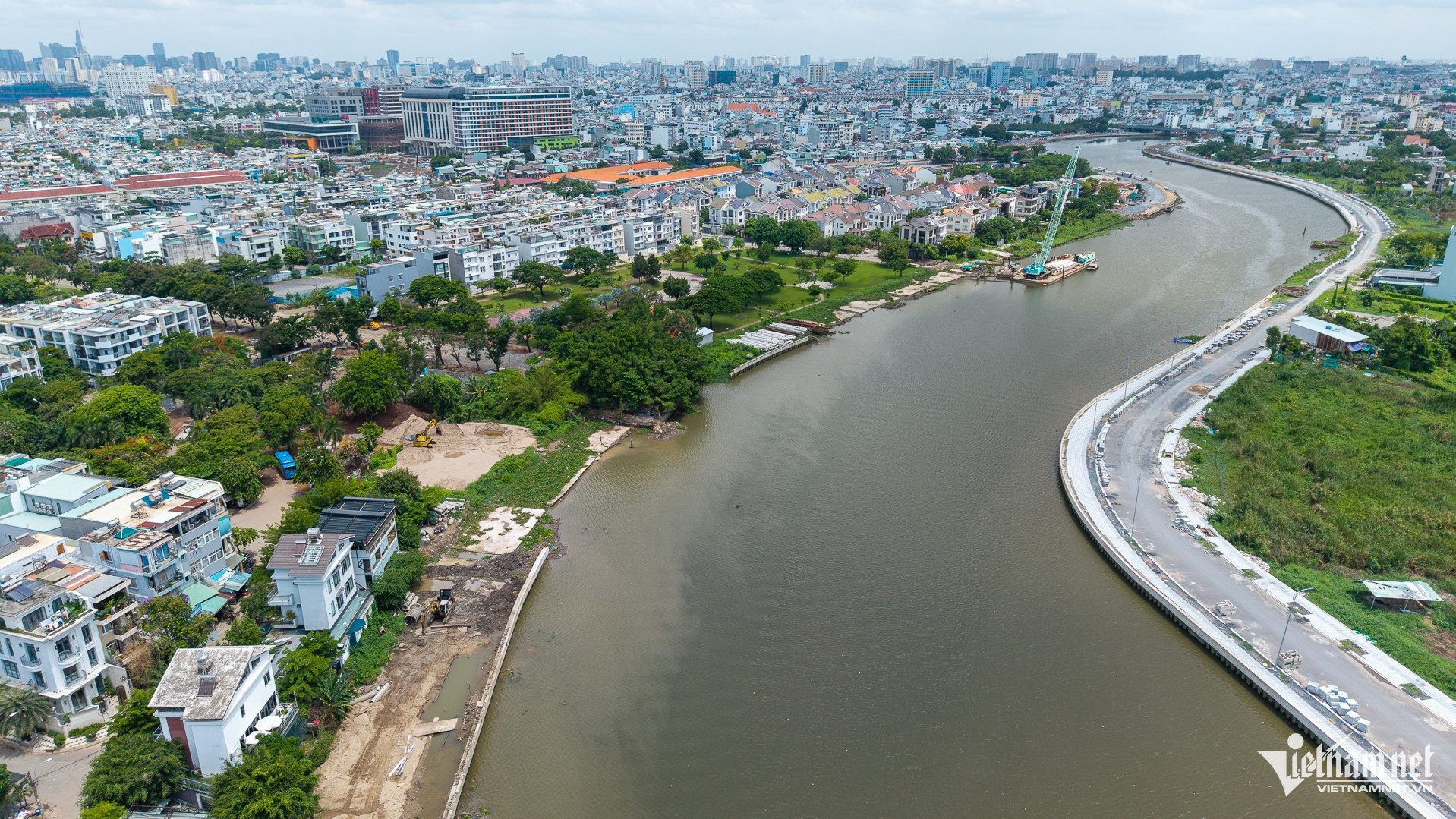
Under a decision by the Ho Chi Minh City People’s Committee, the plan includes one offshore disposal site off the coast of Vung Tau with a capacity of around 13.61 million cubic meters, along with seven onshore sites with a combined capacity of approximately 12.55 million cubic meters.
Among the onshore locations, the 387.07-hectare Van Thuong Industrial Park project in Tan Hai Ward will receive around 8 million cubic meters for land filling from 2027, or possibly earlier. A port logistics service site in Phuoc Hoa Ward is expected to take approximately 1.6 million cubic meters.
The 40.45-hectare Ben Dinh Islet Urban Area project can accommodate around 1.2 million cubic meters, while the 39.68-hectare Long Son My Xuan General Port project will receive approximately 969,400 cubic meters.
In addition, a site in Phuoc Thang Ward will receive around 470,000 cubic meters for land filling and tree planting. The 16-hectare second phase of the SP-PSA International Port project will take approximately 250,000 cubic meters, while farmland managed by Thanh An Commune will receive around 60,000 cubic meters.
By making the list public, the city aims to address difficulties faced by project investors that have struggled to find legal disposal sites for dredged material.
The Ho Chi Minh City Management Board of Urban Infrastructure Construction Investment Projects previously reported that around 17.2 million cubic meters of dredged mud and soil from projects under its management had yet to find suitable disposal sites.
The problem has delayed several major projects. The Tham Luong-Ben Cat-Nuoc Len Canal environmental improvement project alone has faced difficulties disposing of 4.7 million cubic meters of dredged material. The corresponding volumes are more than 643,000 cubic meters for the Xuyen Tam Canal project, 350,000 cubic meters for Xom Cui Canal and 260,000 cubic meters for the northern bank of the Doi Canal project.
Along with issuing the list, the city government requires entities seeking to dispose of dredged material to prepare applications for approval by the Ho Chi Minh City People’s Committee. The documents must specify coordinates, locations, volumes, transportation schedules and the results of quality testing of the dredged mud and soil.
All collection, transportation and disposal activities can only proceed after the required environmental, natural resources and construction procedures have been completed.
The Ho Chi Minh City Department of Construction is responsible for assessing applications, supervising implementation, and reviewing and updating the list annually.
Tuan Kiet
.svg)
