 Vietnamnet.vn

 Podcast



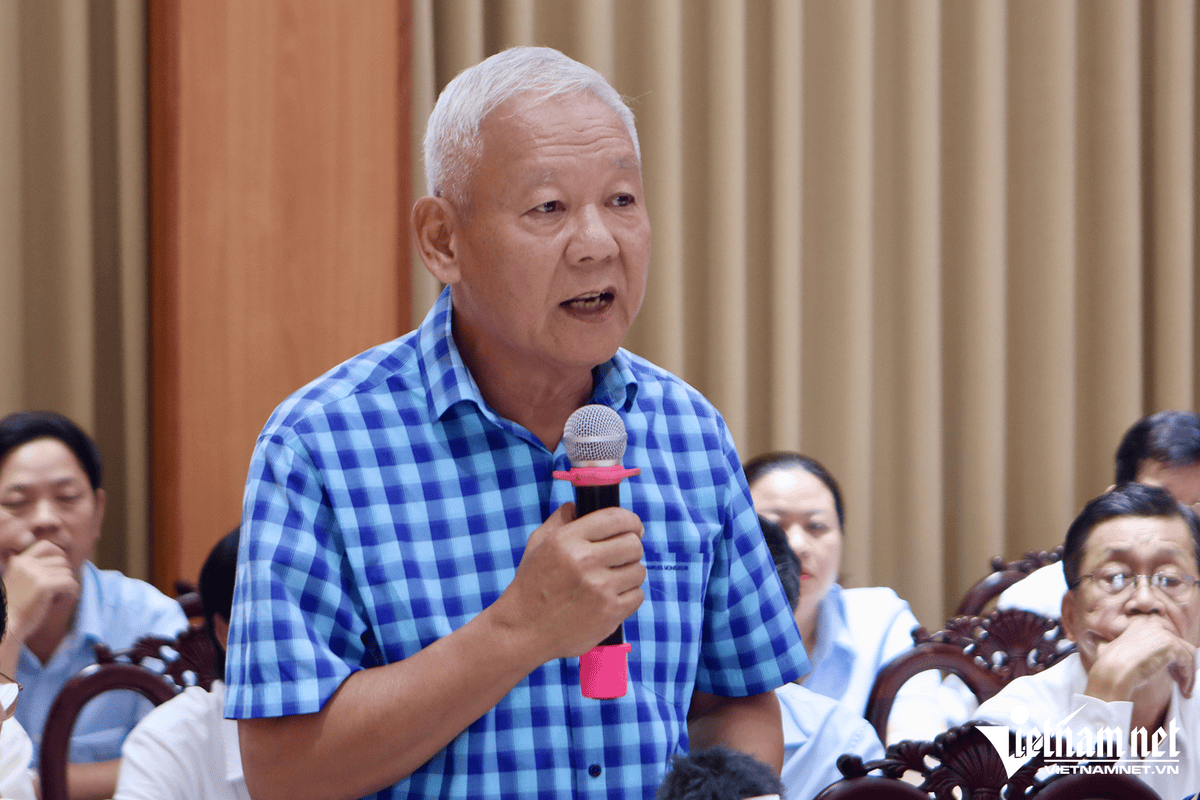
At a social review conference on the draft HCMC Master Plan for the 2025-2050 period, with a 100-year vision on August 18, Dr. Tran Van, former deputy chair of the National Assembly’s Finance and Budget Committee, noted that urban rail was among the fields that require a careful feasibility assessment.
Under the planning, HCMC aims to develop an urban rail network of 187km by 2030, 275km by 2035 and 1,200km by 2050. Public transport is expected to meet 35-50 percent of travel demand by 2030.
Van pointed to the fact that the 19.7-km Metro Line 1 (Ben Thanh-Suoi Tien) took more than a decade to complete, while the proportion of residents using public transport remains low. He said the plan needs to quantify how realistically these targets can be achieved, rather than simply setting ambitious goals.
According to Van, urban rail accounts for a major share of the capital requirements under the plan. If estimates of the number of kilometers to be built are inaccurate, the city’s overall resource-balancing calculations will also be affected.
Another concern is the impact of announcing the master plan on the land market. The draft predicts that land prices around stations could rise by 20-150 percent after rail lines are announced.
Van warned that if the city announces all planned lines at once, including those without identified funding sources, land speculation could increase. If projects are implemented only years later, sharply higher land prices could drive up site clearance costs and trigger public frustration.
“The draft master plan has not fully demonstrated its capacity to absorb funding or its ability to be implemented in practice,” Van said, pointing to HCMC’s public investment disbursement rate, which has fallen short of targets for many years.
He proposed dividing the urban rail network into three groups based on the level of funding commitments.
The first group would comprise lines for which funding has already been secured; the second would include projects in the investment preparation stage; and the third would consist of long-term projects without a specific funding roadmap.
HCMC should, he said, announce urban development boundaries linked to transit-oriented development (TOD) and apply land-based financial tools only to lines with committed funding.
Meanwhile, lines without identified resources should instead be protected through reserved planning corridors, with mechanisms to curb speculation, rather than being publicly announced in full.
He also said this tiered approach should be defined as a time-bound task within the planning period. The National Assembly and Government need to continue refining the legal framework to provide a basis for land-based financial tools, which are expected to become a major source of funding for urban rail investment.
According to Van, an iconic infrastructure target such as urban rail, if not tied to the actual capacity to mobilize capital, could pose risks not only to the transport sector but also to the entire financial structure underpinning the 100-year master plan.
Proposal to use railways for freight transport
Architect and urban planning expert Ngo Viet Nam Son said HCMC faces the dual challenge of managing a megacity while maintaining its target of double-digit economic growth. The master plan should therefore place greater emphasis on infrastructure connectivity and logistics.
He proposed reorganizing the logistics system to ensure seamless connections among roads, railways, waterways and aviation. In particular, railways should be studied as a means of transporting goods directly from industrial parks to seaports.
This approach could reduce reliance on container trucks, ease pressure on roads and help lower logistics costs.
The expert also proposed studying the relocation of part of Cat Lai Port’s operations to the Hiep Phuoc and Can Gio areas to reduce the number of container trucks traveling through inner-city areas, ease congestion and create more room for urban redevelopment.
Regarding transit-oriented development (TOD), Son said that although Metro Line 1 is already operating, the areas around its stations have yet to fully develop into a genuine TOD model.
He said HCMC should continue developing the areas around Metro Line 1 stations and turn the line into a pilot model that could later be replicated along other urban rail routes.
In terms of spatial planning, architect Ngo Viet Nam Son proposed that the master plan should not only divide the city into 10 landscape and architectural sub-zones but also incorporate an approach based on socioeconomic characteristics.
Phuoc Sang
.svg)
