 Vietnamnet.vn

 Podcast



When Hanoi simultaneously begins construction on five new metro lines with a combined investment of around US$50 billion, many people picture trains, stations and massive construction sites.
By 2030, together with the metro lines already operating or under construction, the Vietnamese capital could have a network stretching roughly 400 kilometers - nearly 20 times the length currently in service.
Imagine how daily life and the way the city operates could change when Hanoi is covered by a modern public transport network.
A technology engineer living in Hoa Lac could commute to Cau Giay by metro. A university student from Son Tay could travel into central Hanoi for classes and return home the same day. A young family might choose to buy an apartment in Thuong Tin without feeling they live too far from the city center.
At that point, the metro would become the starting point for a completely different Hanoi - changing the way the city functions, the way people live and the way it grows.
When every road leads to the center
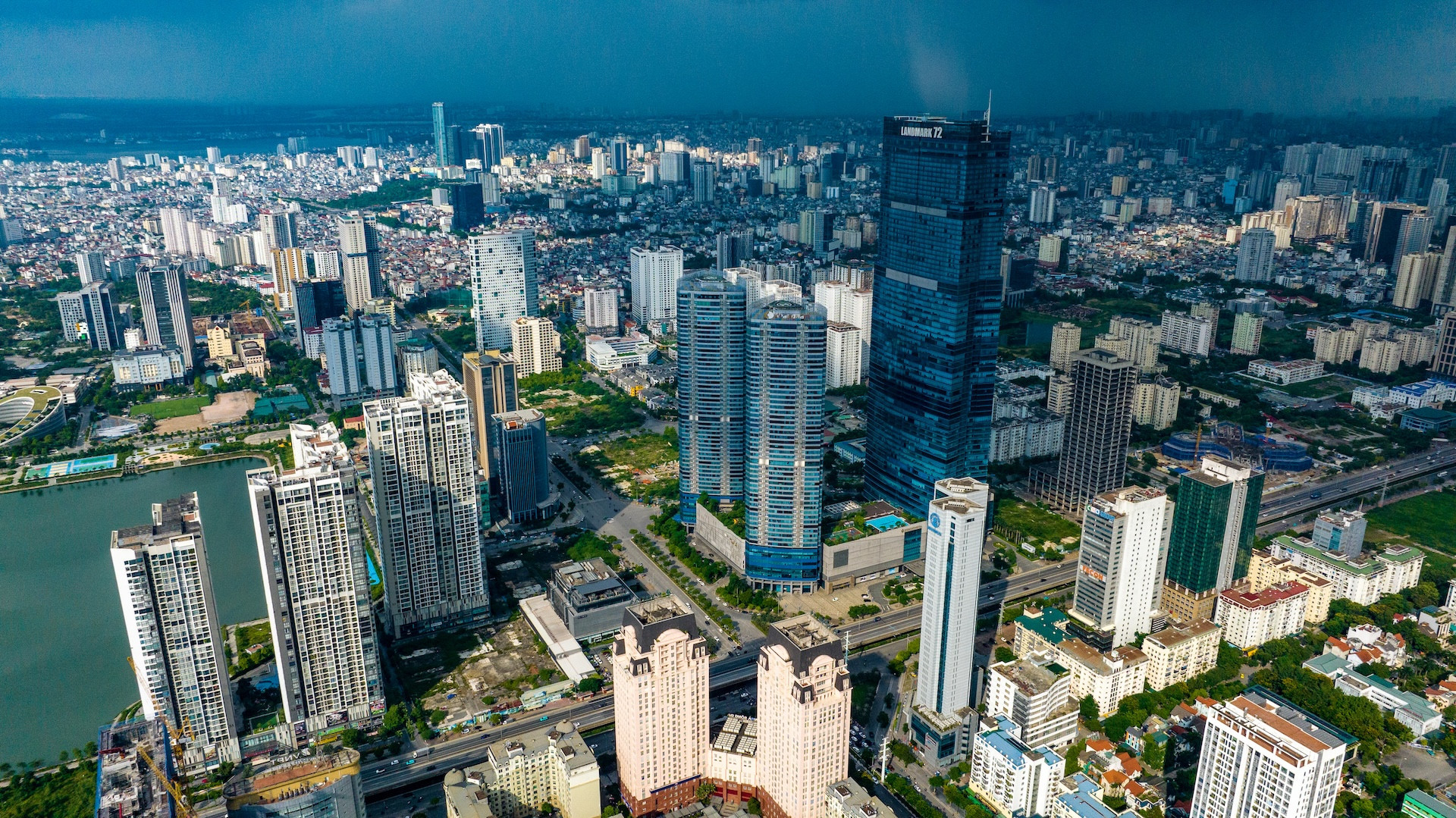
For nearly three decades, motorcycles have largely shaped how Hanoians live, work and decide where to live. For many years, living close to central Hanoi has meant better access to jobs, education and essential services.
As a result, millions of people stream into the inner city every morning. Housing prices continue to climb. Traffic congestion has become an everyday reality. Roads such as Nguyen Trai, Giai Phong, Cau Giay and Ring Road 3 carry far more traffic than they were designed to handle.
Today, Hanoi is home to nearly nine million permanent residents, more than seven million motorcycles and over one million cars. According to the city's master plan, the capital's population could reach between 15 million and 20 million in the coming decades.
A city of that scale cannot continue operating under a model in which every individual relies on private vehicles to meet their transportation needs.
In other words, the metro is not the ultimate goal. It is the solution to a far more fundamental challenge: how a city can accommodate millions of additional residents without becoming paralyzed by traffic.
When people talk about the metro, they often focus on staggering figures - trillions of Vietnamese dong in investment, hundreds of kilometers of railway and modern trains.
Yet its greatest value may lie in something far more difficult to measure: time.
Every hour not spent trapped in traffic is an hour returned to family, education or personal well-being.
Ultimately, the metro is not only about transporting passengers. It is about giving the city back countless hours of life that are currently lost in daily congestion.
A polycentric city
Reducing congestion may be the metro's most visible benefit, but at its core, the system is a tool for reorganizing Hanoi's entire pattern of urban development.
For more than a thousand years, Hanoi has essentially developed as a single-center city. Under the current model, most high-quality jobs, services and economic opportunities remain concentrated in the city center.
Every morning, people travel from every direction into the historic urban core, where most employment opportunities and premium services are located.
Areas once considered the city's outskirts - such as Hoa Lac, Dong Anh and Son Tay - now have the opportunity to emerge as new development hubs instead of remaining satellite districts.
For the first time in decades, Hanoi has a genuine chance to move beyond a model in which nearly every opportunity is concentrated within just a few kilometers of Hoan Kiem Lake.
If land value today is largely determined by its distance from the city center, tomorrow it may be measured more by its proximity to a metro station.
One day, Hanoians may care just as much about which station they live near as which ward they call home.
What could disappear
Perhaps even more significant are the things that could gradually disappear from urban life.
Hours-long daily commutes. Expensive apartments purchased simply because they are close to workplaces. Vast motorcycle parking lots around schools and office buildings. The feeling that career opportunities must be sacrificed because of geographical distance.
The familiar scenes of endless traffic on Nguyen Trai, Giai Phong and Cau Giay during rush hour may no longer define the city. Even the concept of a "long commute" could take on an entirely different meaning.
When traveling from Hoa Lac to Cau Giay or from Dong Anh to central Hanoi takes only a few dozen minutes by metro, physical distance will increasingly give way to travel time as the more meaningful measure.
Yet the metro's value lies not only in replacing old habits. It also has the potential to create an entirely new urban structure.
The system could provide broader access to jobs, services and public amenities. But without supportive policies, the very process of development could also push lower-income residents farther away from the areas that benefit the most.
The greatest challenge
Hanoi's greatest strength lies not only in its highly skilled workforce - engineers, technology specialists, researchers, finance professionals and millions of skilled workers - but also in its broader labor force.
The key question is whether the city can develop a sufficiently large knowledge workforce to fill the emerging urban centers in Hoa Lac, Dong Anh, Gia Lam and Son Tay.
Training an engineer, researcher or technology specialist, however, typically takes more than a decade.
The gap in human capital is far less visible than the kilometers of railway now being built, yet it may ultimately determine whether the entire transformation succeeds.
The greatest value of Hanoi's expanding metro network lies in the opportunity to redesign how a megacity of tens of millions of people operates in the 21st century.
If successful, Hanoi by 2030 will have new urban centers, new growth poles and a public transport system capable of serving as the backbone of the city.
But the success of this transformation will ultimately be measured by the hours of life residents no longer lose to daily traffic congestion. It will also be measured by the new opportunities created beyond the historic inner city.
More importantly, a modern Hanoi must remain inclusive enough that no one is left behind. A city of high-speed trains must also be a city for the delivery rider working under the midday sun, the sanitation worker cleaning the streets after midnight, the construction worker building new towers and the security guard keeping watch through the night. They are not merely witnesses to Hanoi's transformation - they are among the people making it possible.
In the end, a truly livable city is measured not by how fast its trains run or how tall its buildings stand, but by how it treats the ordinary people who quietly keep it running every single day.
Lan Anh
.svg)
