 Vietnamnet.vn

 Podcast



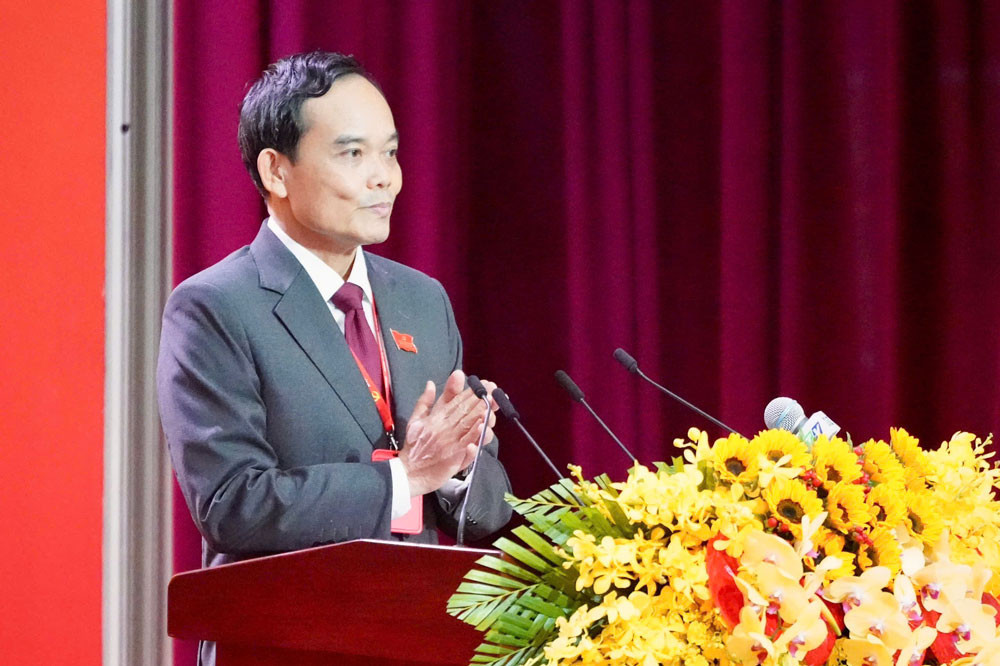
They are all highly experienced officials at both central and local levels, with strong backgrounds in organizational leadership, socio-economic management, and urban planning.
With the Politburo’s appointment of key personnel to the standing committee of the HCMC Party Committee for the 2025-2030 term during the first city-level Party Congress held on October 14, HCMC has officially consolidated its leadership for the next phase of the megacity’s development.
Among them, the Party Secretary, Standing Deputy Party Secretary, Chair of the People’s Committee, and Chair of the People’s Council are all seasoned leaders with experience in local governance, youth affairs, and high-level socio-economic administration both locally and nationally.
Notably, three faces in HCMC’s leadership are Central Committee members: Party Secretary Tran Luu Quang, Standing Deputy Party Secretary Le Quoc Phong, and Chair of the People’s Committee Nguyen Van Duoc.
Party Secretary Tran Luu Quang: unlocking structural bottlenecks
Born in 1967, Tran Luu Quang holds a master's degree in public management and a bachelor's in mechanical engineering. He was an alternate member of the 11th Central Committee, full member of the 12th, and is currently full member of the 13th; Secretary of the 13th Central Party.
Quang has experience in Party building and state management, honed through many positions, with effective working thinking and methods. In various roles, Quang has made important contributions to achievements of localities, agencies and units.
Over more than 25 years of work, serving in different positions in different localities: Secretary of Tay Ninh Provincial Party Committee, Deputy Secretary of HCMC Party Committee, Secretary of Hai Phong City Party Committee has helped him understand local administrative mechanisms and experience in regional economic development, especially vision in managing and steering large cities.
At the national level, his time of serving as Deputy Prime Minister and Head of the Central Economic Commission (now the Central Policy and Strategy Commission) has given him a comprehensive, strategic, and macro-level view of socio-economic development.
His stance that "HCMC cannot afford to stop or be complacent" reflects a strong commitment to propel the city not only as Vietnam’s economic engine but also as a leading growth hub in the region.
During the opening session of the congress, Party Chief To Lam pointed out that HCMC still faces "structural bottlenecks that hinder sustainable growth" and called for leaders to hold "firm political will, strategic thinking, and the ability to solve complex problems," emphasizing the need for those who "dare to think, dare to act, and dare to take responsibility."
Thus, appointing Tran Luu Quang as HCMC Party Secretary not only shows the Politburo’s recognition of him but also expectations for the great responsibility entrusted by the Party, State, and people with trust in a leader who "dares to think, dare to do, dare to take responsibility" to untangle the "structural knots" mentioned by the Party Chief.
|
The first HCM City Party Congress for the 2025-2030 term closed after two days of work. In the closing session, the congress passed important reports, including compiling contributions to draft documents of the 14th Party Congress and city Party documents, while absorbing and supplementing key issues into the new term resolution. Many discussions were presented, focusing on two main pillars: enhancing governance capacity and creating new growth momentum. Truong Thi Bich Hanh, Standing Vice Chair of the Vietnam Fatherland Front Committee of HCMC, affirmed the key role of promoting democracy, supervision, and social critique in building government. She proposed five key solution groups to improve operational efficiency: innovating operation methods, promoting digital transformation, expanding online feedback channels, and strengthening tripartite coordination of Party, Government, and Front. Lam Dinh Thang, Director of the Department of Science and Technology, said science-technology and innovation are important drivers for the city’s growth. The TFP index (total factor productivity) is expected to reach 59 percent by year-end and forecasted to continue leading in the next 5 years. Digital economy has developed strongly, contributing 22 percent to GRDP in 2024 and projected to rise to 25 percent this year. Major goals set for the next five years include TFP contributing at least 60 percent, digital economy occupying 30-40 percent GRDP, HCMC becoming an international-class innovation center by 2030, innovative startup ecosystem entering top 100 most dynamic cities globally, and having at least five international-standard research centers in strategic technology fields. |
to be continued...
Quoc Ngoc
.svg)
