 Vietnamnet.vn

 Podcast



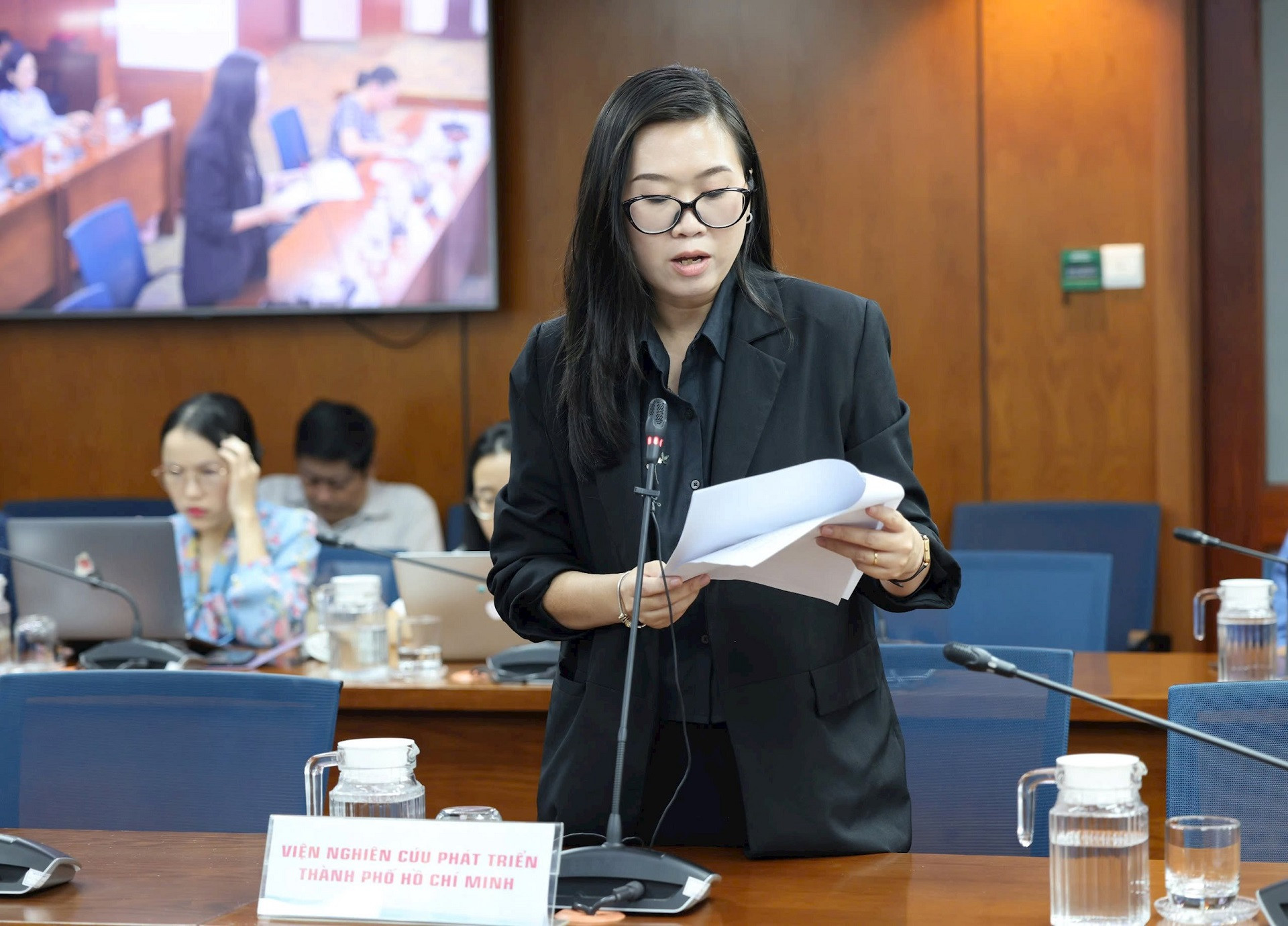
At a press briefing held on January 15, Truong Thiet Ha, Deputy Head of Economic Development Research at the HCMC Institute for Development Studies, emphasized that the city’s success hinges on its ability to implement long-term policy strategies between 2026 and 2030.
The first major obstacle, according to Ha, is urban planning. She stressed the need to develop a unified master plan that aligns national, regional, provincial, and municipal planning frameworks. This effort should be carried out under Resolution 260/2025/QH15, which builds on the special mechanisms outlined in Resolution 98.
The goal is to complete and approve this master plan by 2026. In tandem, the city must digitize and publicly share planning data, improve inter-agency coordination, and allocate sufficient resources to ensure effective execution.
The second major hurdle is transport infrastructure. The city plans to prioritize integrated and smart transport networks that support both regional and inter-regional connectivity. Key investments include major metro lines (Ben Thanh–Tham Luong, Ben Thanh–Can Gio, Ben Thanh–Thu Thiem, Thu Thiem–Long Thanh) and high-profile infrastructure projects such as Ring Roads 3 and 4, Phu My Bridge, and Can Gio Bridge.
Ha also called for efforts to strengthen traditional growth drivers like consumption, exports, and investment. With a domestic market of 13.6 million people, the city should expand e-commerce and build sustainable production-consumption linkages with other provinces. Leveraging free trade agreements (FTAs) and boosting tourism - especially “in-place exports” - is seen as a key direction.
One standout project in the investment landscape is the planned International Financial Center in Thu Thiem, spanning 9.2 hectares. It is positioned as a strategic anchor to attract global capital flows. Alongside this, the city is actively courting strategic investors for mega-projects like the Can Gio international transshipment port and the Binh Quoi–Thanh Da urban area.
These initiatives are expected to help fill the investment gap, with public investment needs estimated at 3.2 quadrillion VND (approx. 135 billion USD) for the 2026–2030 period.
Looking ahead to 2030, HCMC aims to become a leading innovation hub in the region. It will focus on developing core technology sectors, including semiconductors, artificial intelligence (AI), the Internet of Things (IoT), and biotechnology.
To support this vision, mega data center projects and specialized high-tech zones are beginning to take shape. The city is also launching initiatives such as “HCMC – Destination for Unicorns” and a venture capital fund under the public-private partnership (PPP) model to foster a robust startup ecosystem.
Additionally, through legal sandbox mechanisms, the city is creating a flexible regulatory framework to nurture the digital economy and the circular economy - critical for adapting to new economic models.
The HCMC Institute for Development Studies believes this innovation-driven approach, centered on data and supported by strong political will, marks the beginning of a transformative era for the city’s economy.
However, the institute also identified four deep-rooted constraints that must be urgently addressed:
Planning mismatch and inefficiencies: Urban plans often fail to reflect real-world needs. Fragmented vision and delayed projects have wasted resources.
Overloaded transport infrastructure: Lack of regional integration has led to chronic congestion and rising logistics costs.
Slow disbursement of public investment: The city met only 78% of its 2025 investment goals. Currently, local budgets cover just 30% of projected capital needs for 2026–2030.
Inadequate legal framework for digital and tech investment: Gaps in legal consistency, weak inter-agency data sharing, and public sector talent shortages continue to hinder digital transformation.
With comprehensive reforms and targeted investment, Ho Chi Minh City hopes to unlock its full potential and solidify its role as the nation’s economic engine in the years to come.
Quoc Ngoc
.svg)
