 Vietnamnet.vn

 Podcast


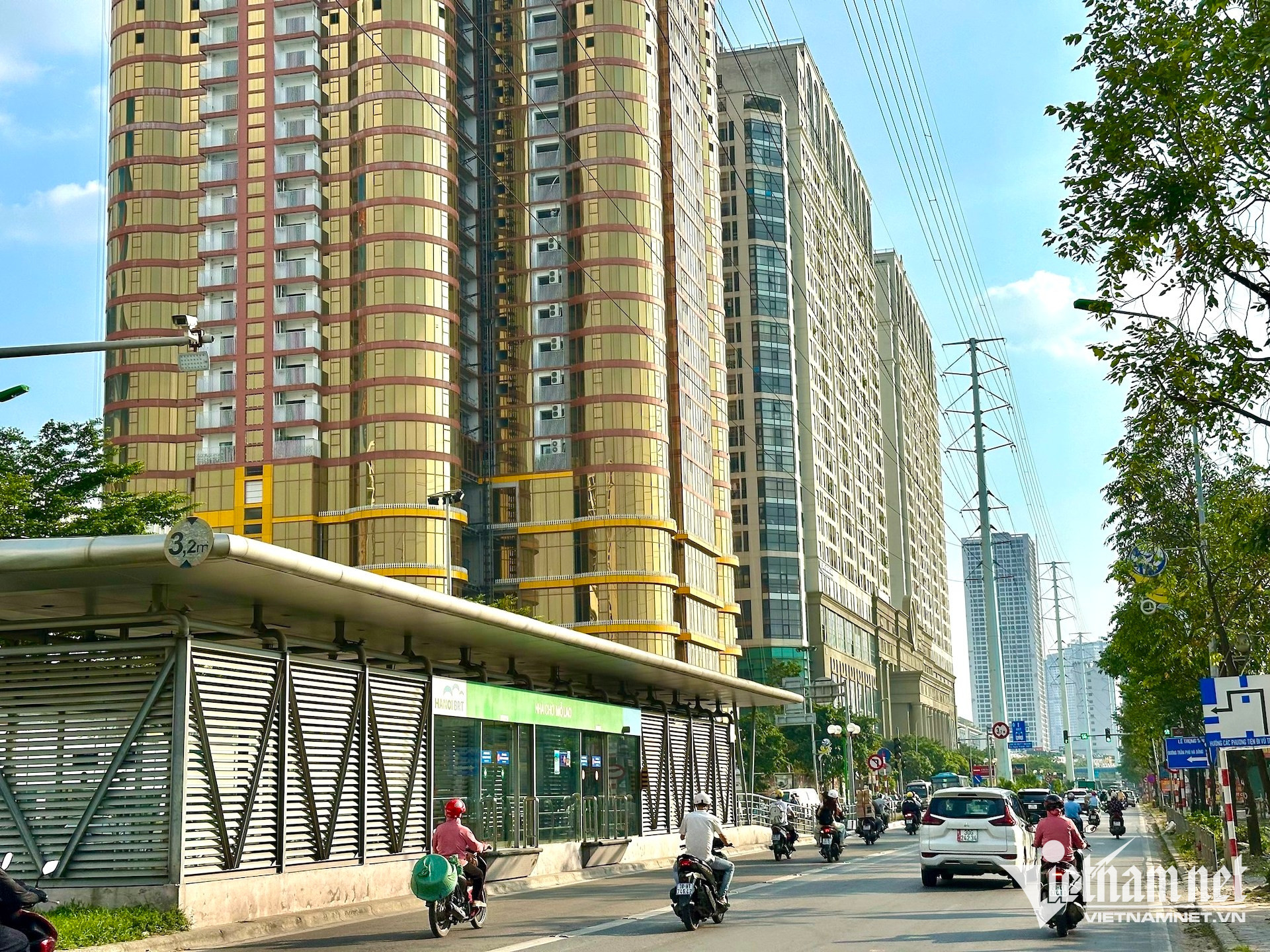
The data was released in an oversight report on real estate development and state management by the Urban Committee of the Hanoi People's Council.
According to the report, commercial apartments remained the primary segment driving new supply in the capital's real estate market during the six-month period.
Apartments accounted for 70 percent of total newly launched supply and 73 percent of total transaction volume. However, supply structure revealed a distinct price mismatch.
The Urban Committee reported that high-end apartments priced between VND50 million and VND80 million per square meter, alongside luxury and super-luxury units priced above VND80 million per square meter, made up 78 percent of new commercial apartment supply in Hanoi in the first half of the year.
However, apartments priced below VND25 million per square meter were virtually absent from the primary market.
While apartments remain the primary supply driver, the vast majority of new inventory caters to high-income buyers.
Beyond affordable supply shortages, the apartment market also faces challenges in establishing accurate transaction prices and actual sales volumes.
The Committee noted that, similar to land plots, apartment trading lacks comprehensive data regarding transfer prices, actual transaction values, and sales volume.
This issue stems from diverse market participants, including developers, trading floors, secondary investors, and business partners. Products are sold directly, through trading platforms, secondary investors, or various cooperative arrangements.
Among buyers, apartments are traded directly, funded through capital contributions, or resold multiple times. These factors complicate accurate statistical tracking of transaction volumes and transfer prices, hindering comprehensive market evaluations.
Speculative land plots face liquidity pressure
Hanoi's apartment supply landscape aligns with broader national trends. According to a report by the Vietnam Association of Realtors (VARS), the country recorded about 25,500 newly launched apartments in the second quarter of 2026.
Of this total, luxury and super-luxury units priced from VND80 million per square meter accounted for 45 percent of supply. High-end units priced between VND50 million and VND80 million per square meter comprised 37 percent, while mid-end apartments represented 18 percent. Affordable units priced below VND25 million per square meter remained absent from the primary market.
Nationwide, nearly one out of every two newly launched apartments in the second quarter belonged to the luxury or super-luxury segment.
VARS observed that although overall real estate supply improved, the supply-demand imbalance remains unaddressed, with most new products priced at high levels.
Hanoi has the highest primary-market apartment prices in the country. According to VARS, primary apartment prices in the capital averaged around VND123 million per square meter in the second quarter.
This price level highlights the growing gap between new supply and the purchasing power of most homebuyers.
Assessing Hanoi’s real estate market, the Urban Affairs Committee said the market experienced a boom in 2024 and 2025, with property prices rising sharply. Market activity was driven largely by expectations of short-term price gains and investors’ fear of missing out (FOMO).
However, the market became calmer in 2026. Liquidity declined, while transactions were concentrated mainly in lower-priced properties, including social housing and homes available at more affordable prices.
According to the committee, investment capital is increasingly following the actual value of real estate products rather than relying solely on expectations of future price increases.
Meanwhile, speculative land plots that had been purchased based on planning rumors, as well as projects that have yet to develop established residential communities, continue to face liquidity problems. Even when owners make substantial price cuts, these properties remain difficult to sell.
Hanoi’s social housing segment has shown positive progress, with supply increasing significantly compared with previous years. Since the beginning of the year, the city has broken ground on 33 projects with a combined scale of around 30,000 apartments, exceeding the target assigned by the Government.
Under the plan, Hanoi expects to bring 28,696 social housing units from 27 additional projects to market in 2027. During 2028–2030, the city plans to continue implementing 101 projects, providing around 86,216 more apartments.
Hong Khanh

