 Vietnamnet.vn

 Podcast



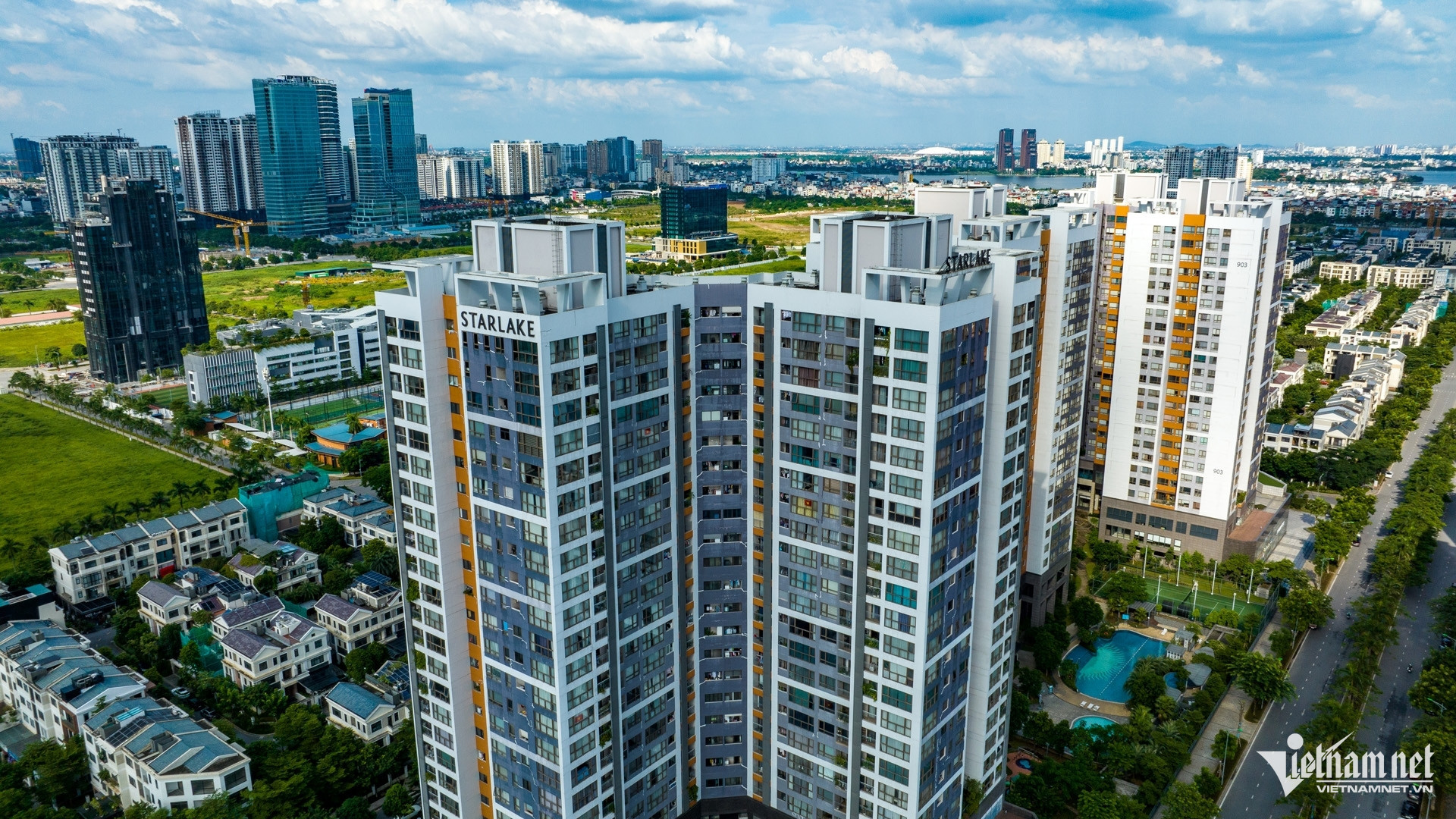
Resolution 21, issued on July 28, 2026, at the Third Plenum of the 14th Party Central Committee regarding perspectives and orientations for amending the Land Law and related legislation, clearly stipulates long term land allocation for building commercial housing for sale, mainly apartment buildings.
For newly built apartments, the ownership period for individual apartments will be determined in relation to the design life of the building. At the end of that period, apartment owners will retain the right to fulfill the required financial obligations to participate in rebuilding the apartment complex in accordance with the law, and their property rights will be protected.
Dr. Le Ba Chi Nhan, an economist, noted that Resolution 21 could help remove the institutional bottleneck that has persisted for years in renovating and rebuilding old apartment complexes. This serves as a necessary condition, though additional sufficient conditions remain required for a complete solution.
According to Nhan, redevelopment projects have long been stalled because of a contradiction: many apartment buildings have exceeded their design life, or have even been declared unsafe, yet ownership rights have generally been regarded as effectively perpetual.
Without unanimous agreement on compensation or resettlement, redevelopment has often been impossible.
"This is one of the main reasons why many apartment buildings have outlived their design life but not their legal life. Resolution 21 seeks to address that contradiction," he said.
He believes linking apartment ownership to the building's design life will clearly define the rights and obligations of all parties from the outset, reducing disputes when redevelopment becomes necessary.
Nhan also argued that, alongside amendments to the Land Law and the Housing Law, Vietnam should establish transparent mechanisms governing compensation, resettlement, benefit sharing, and financial responsibilities among the government, developers, and homeowners.
When property rights are protected by law and implemented through clear procedures, redevelopment will no longer depend on prolonged negotiations.
The Vietnam Association of Realtors Institute of Real Estate Market Research (VARS IRE) noted that setting apartment ownership terms based on structural lifespans aligns with modern urban development demands and asset lifecycle management, while helping clear bottlenecks in old apartment building renovations.
Pham Thi Mien, deputy director of VARS IRE, said a key point requiring clarification is that the new regulation does not alter land use rights for commercial housing for sale. Land allocated for commercial housing construction remains stable and long-term. The adjusted content specifically addresses apartment ownership terms, which are determined by the building's structural lifespan, tied to technical longevity and safety levels.
"This approach aligns with the core nature of the asset. While land use rights can remain stable long-term, physical structures possess a finite lifespan influenced by time, construction quality, operating conditions, and maintenance. Setting apartment terms based on structural lifespan reflects technical reality rather than assuming permanent usability," Mien explained.
Safeguarding asset rights upon expiration
Resolution 21 delivers a clear message: the State does not confiscate citizen property, but establishes a mechanism ensuring the value of citizens' property rights is preserved during apartment renovation and rebuilding.
"Expiration of structural lifespan does not mean termination of property rights. What ends is the physical life of the building; the law protects asset value and citizens' economic interests," Nhan stressed.
VARS IRE’s Mien similarly emphasized that Resolution 21 not only defines condo usage terms by structural lifespan, but links it directly to safeguarding owners' property rights.
This means that when a building reaches the end of its lifespan, the legitimate rights and interests of apartment owners remain protected through mechanisms enabling participation in reconstruction as prescribed by law.
However, to bring this regulation into practical effect, several critical details require further clarification, including: technical criteria for determining structural lifespans; conditions, procedures, and authority for declaring a building expired; mechanisms for fulfilling financial obligations during rebuilding; post-reconstruction ownership rights; and solutions for cases involving non-consensus or insufficient financial capacity to participate.
VARS IRE recommended several specific solutions. First, clear criteria must be established to determine a building's structural lifespan based on technical standards.
Second, mechanisms safeguarding apartment owners' property rights upon structural expiration must be specified, particularly the right to participate in redevelopment.
Third, transitional provisions and an appropriate implementation roadmap must be formulated for newly constructed apartment projects. Fourth, communication efforts must be intensified to ensure the public accurately understands the policy's core intent.
Nguyen Le
.svg)
