 Vietnamnet.vn

 Podcast



General Secretary and President To Lam has raised concerns that the pressure surrounding Grade 10 entrance exams has become even more intense than university admissions, emphasizing that exams should not be used as a tool to exclude students from continuing their education.
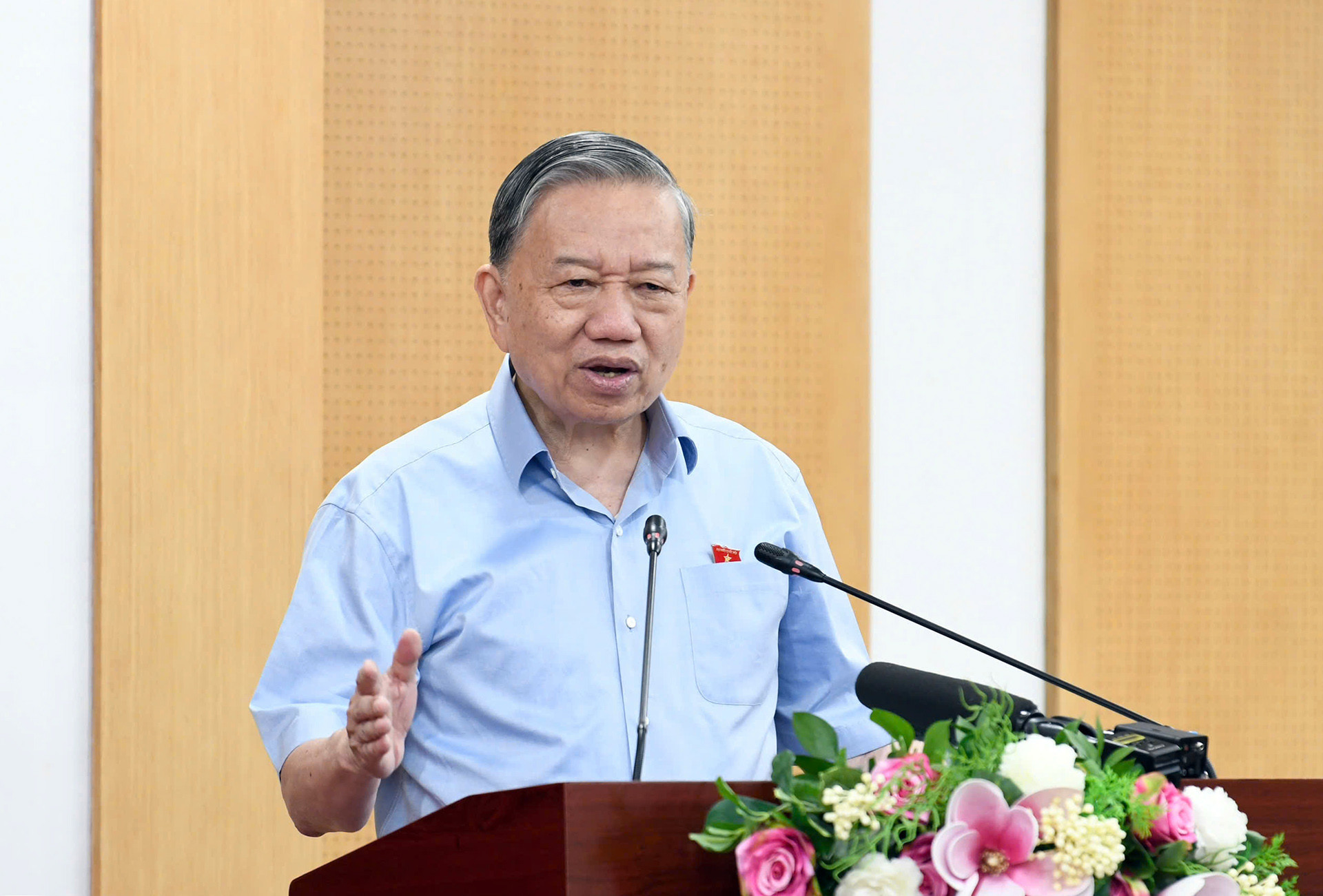
On the morning of May 4, the Party leader met with voters from 10 wards in Hanoi’s constituency No. 1, where he shared updates from recent National Assembly sessions and addressed public concerns and recommendations.
Entrance exams more stressful than university admissions
Reflecting on voters’ feedback, Mr. To Lam noted that many of the concerns raised today are closely tied to daily life - from employment and education to healthcare, administrative reform, and the living environment.
He stressed that food safety and public health directly affect people’s well-being and trust. The Politburo has issued resolutions on these issues, which have been welcomed by the public and institutionalized by the National Assembly and Government.
Turning to education, he called for a review of whether the current number of schools is sufficient. Hanoi alone, he said, is short of around 1,000 schools. With a population exceeding 9 million, of which roughly one-third are students, society must invest more attention and resources into education as it shapes the country’s future generations.
The leader also shared that he recently worked with relevant agencies on staffing within the administrative system. Of nearly 2 million public employees, over 80% are in the education sector and around 10% in healthcare. He emphasized the need to calculate appropriate teacher staffing levels.
Support services such as school catering, he suggested, should be outsourced to professional companies so that teachers can focus on teaching rather than administrative or logistical tasks.
“If teachers must handle service contracts, they lose valuable time and may lack expertise in areas like food safety, potentially leading to serious consequences,” he said.
Addressing voter concerns about high school entrance exam pressure, Mr. To Lam pointed out that the root cause lies in insufficient schools and teachers, leading to competitive admissions processes that effectively exclude students.
“Learning requires exams, but exams should not be a method to prevent students from continuing their education. They are meant to assess teaching and learning quality,” he said.
“With the Grade 10 exam approaching, why is it creating more anxiety than university entrance exams? This psychological burden affects not only students and parents but also teachers. If students perform poorly, they should receive further support; if they excel, they should be nurtured to achieve even more.”
He noted that each exam season brings pressure and even negative phenomena, which could be alleviated if school capacity were sufficient. Local authorities, he added, can rely on population data to forecast the number of students entering Grade 1 or Grade 10 each year and plan accordingly.
The city must invest in building schools at an appropriate scale, he stressed.
He also highlighted that staffing levels cannot remain fixed. As student numbers fluctuate, the number of teachers must adjust accordingly to ensure proper learning conditions.
In addition, private schools should be encouraged to expand, ensuring that no student is left without access to education after completing Grade 9. Without continued schooling, he warned, broader social issues may arise.
Who is accountable when multiple ministries are involved?
On healthcare, Mr. To Lam emphasized the need to determine appropriate doctor-to-population ratios, questioning whether one doctor should serve 500 or 1,000 people. Compared to education, healthcare staffing remains significantly lower.
He also highlighted the importance of family doctor models and electronic health records, which would allow for comprehensive tracking of individuals’ medical histories, treatments, and vaccinations.
Family doctors, he said, could guide people in managing their health and reduce the risks of self-medication based on advertising.
He called for strengthening grassroots healthcare systems at the ward and commune levels, ensuring that citizens receive regular, free health screenings.
Citing an example from Ho Chi Minh City, he noted that pilot health checks revealed that about 30% of people had undiagnosed conditions, including serious illnesses such as cancer.
He also stressed the need to develop geriatric and pediatric healthcare, expand specialized hospitals, and proactively implement vaccination programs to eliminate infectious diseases such as tuberculosis and dengue fever.
On food safety, Mr. To Lam described it as a major national issue requiring strict control from production to consumption. Currently, multiple ministries are involved, but accountability remains fragmented.
The Ministry of Agriculture and Environment oversees crop production, the Ministry of Industry and Trade manages market circulation, and the Ministry of Health is responsible for public health outcomes.
Ho Chi Minh City has established a Department of Food Safety, but it does not fall under any single ministry, and lacks a clear operational structure at lower levels.
“We have agreed to assign the Ministry of Health ultimate responsibility for public health,” he said, adding that other ministries and agencies must coordinate closely.
He also urged greater attention to food safety around school gates, where students often purchase snacks that may be of poor quality or near expiry.
Schools and local authorities must take responsibility for monitoring these vendors to protect students’ health.
“Food safety directly affects people’s health, lives, and trust in daily meals. It is not just a matter of market management but a critical social issue,” he said.
He warned that failure to strictly handle violations - such as the use of banned substances in livestock, counterfeit food, or substandard products - would directly harm public health, especially for children and the elderly.
“I have heard heartbreaking stories, such as an elderly mother buying milk to improve her health, only to find it was fake,” he shared.
He agreed with voters’ proposals to strengthen sanctions, clarify management responsibilities, and address overlapping authority among agencies.
He also called for strict enforcement against the production of counterfeit, toxic, or low-quality food, including criminal prosecution where warranted.
Tran Thuong
.svg)
