 Vietnamnet.vn

 Podcast



These sites, known locally as “dinh lang” and “dinh van”, serve not only as places of worship for the Whale God, founding ancestors, and craft pioneers, but also as repositories of collective memory, customs, and maritime beliefs. They also function as spaces where traditional rituals and festivals are revived, strengthening community bonds and sustaining intangible cultural values.
One of the most prominent sites is Van Thuy Tu temple in Phan Thiet ward, a well-known destination offering insight into the unique whale worship practised by fishermen across Vietnam’s south-central coastal localities. Established in 1762, the shrine honours the Whale God, believed to protect fishermen at sea during storms and rough waters.
Over more than 260 years, Van Thuy Tu has retained much of its original architecture, evolving from a modest thatched structure into a spacious complex of over 500 sq m with brick walls and Yin-Yang tiled roofs. Recognised as a national historical relic in 1996, it houses nearly 100 whale skeletons, including several over 250 years old. Notably, it preserves one of Vietnam’s largest whale skeletons, measuring 22 metres in length and weighing around 64 tonnes, which continues to awe visitors.
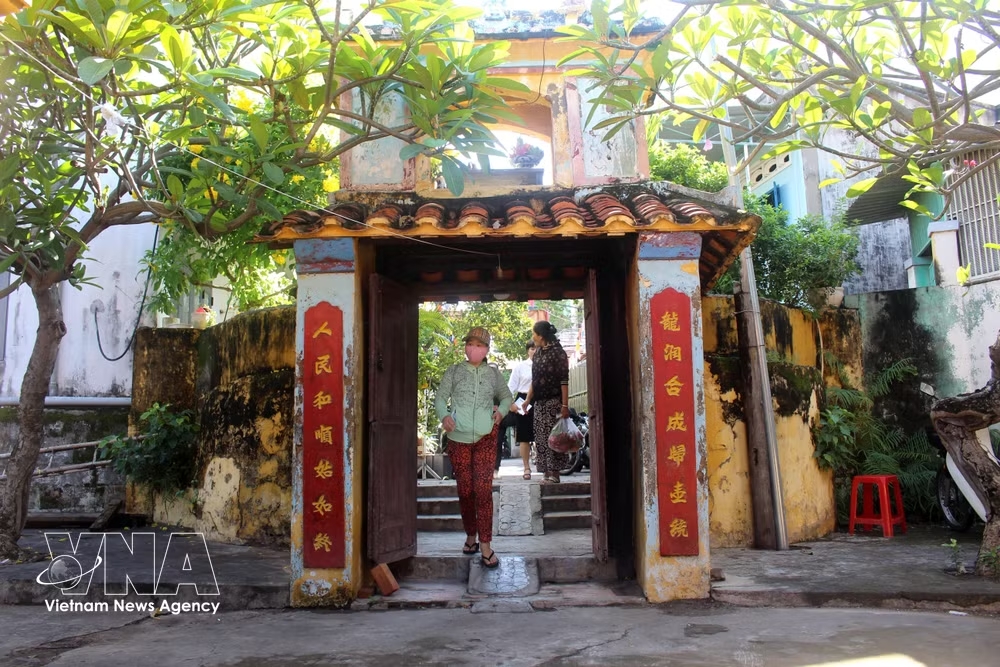
The site also safeguards valuable Han-Nom cultural artefacts, including 24 royal decrees bestowed by Nguyen Dynasty kings. Beyond its physical relics, Van Thuy Tu remains a spiritual hub for local fishermen closely associated with the Whale Worship Festival, an intangible cultural heritage event. For many, the shrine represents a sacred space where prayers for safe voyages and abundant catches are offered before each fishing season.
Communal cultural institutions
Equally significant, though distinct in function, is the Tu Luong Communal House in Tien Thanh ward. With a history spanning over two centuries, it serves as an indispensable spiritual, religious and cultural centre for coastal communities in Lam Dong province.
Built in the early 19th century and later restored in 1871 under King Tu Duc, the communal house is dedicated to the village’s tutelary deity and settlers who reclaimed the land and built the village. Recognised as a national architectural and artistic relic in 2001, Tu Luong communal house preserves numerous historical artefacts, including 10 royal decrees by Nguyen Dynasty kings and ancient village conventions engraved on wood.
More than a place of worship, it functions as a vital community space. Annual spring and autumn ceremonies, held in the second and eighth lunar months, bring residents together to celebrate traditional values, reinforce social ties, and express hopes for prosperity and peace. These gatherings also serve as reminders of ethical living and communal responsibility.
According to the Museum of Lam Dong province, the locality’s coastal region is home to 54 communal houses, including 10 nationally recognised heritage sites. These structures reflect significant architectural, historical, and cultural values tied to migration, land reclamation, and the formation of coastal settlements.
In recent years, these heritage sites have gained popularity among young visitors, particularly for cultural exploration and traditional costume photography. Several heritage-linked tourism routes have been developed, connecting sites such as the Duc Thanh School, Tu Luong Communal House, Duc Thang Communal House – Ba Duc Sanh Pagoda, Van Thuy Tu Temple, and Po Sah Inu tower relic site.
The preservation and promotion of coastal communal houses and shrines are now opening up sustainable pathways for diversifying local tourism products./. VNA
.svg)
