 Vietnamnet.vn

 Podcast



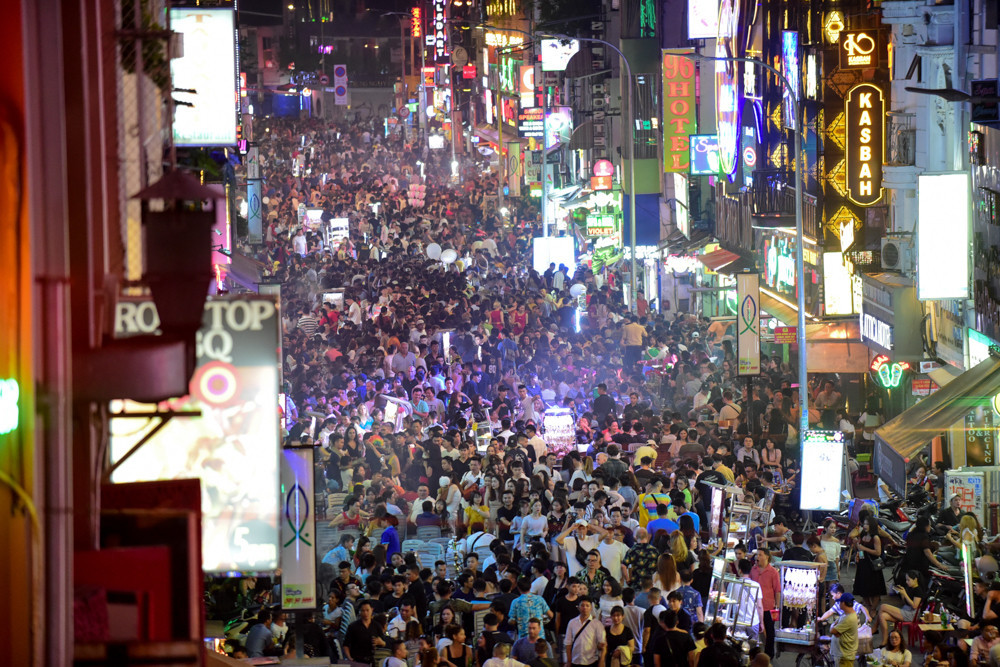
The Ho Chi Minh City People's Committee is seeking feedback on a draft resolution governing the organization, operation, management and incentive policies for developing the night economy.
Under the proposal, if nighttime economic activities violate the law, seriously affect residents' lives or face significant opposition from people directly affected, the relevant management authority would be required to conduct a review and hold consultations.
Based on that process, it would report to the competent authority, which could consider modifying, suspending or terminating the activities.
The draft classifies reports involving fires, explosions, accidents, violence or other safety threats as emergencies.
Prolonged noise, large volumes of waste, traffic congestion and other impacts that create conflicts with residents would be classified as serious problems.
Applications to establish designated night economy areas, streets or sites would be required to include records showing that representatives of residents in the affected or neighboring areas had been consulted.
Proposals would also need to clearly identify the boundaries and scale of the area, the number of businesses, homeowners and permanent households, as well as the rights and responsibilities of the parties involved.
For projects likely to have a direct impact on residential communities, the responsible authority would have to conduct community consultations and a social impact assessment before granting recognition or approving a pilot program.
Consultations would cover the area's boundaries, types of businesses and operating hours, as well as measures to manage noise, waste, traffic, security and fire prevention and firefighting.
They would also address mechanisms for handling complaints and proposals for sharing benefits with local communities.
Commune- and ward-level People's Committees where night economy activities take place would be directly responsible for receiving and handling residents' complaints.
Local authorities would also conduct dialogue and mediation when conflicts arise between residents and businesses or individuals involved in nighttime commercial activities.
Under the proposed division of authority, the Ho Chi Minh City Department of Culture and Sports would process applications and submit them to the municipal People's Committee for decisions in several categories.
These include designated night economy zones; areas or streets extending across two or more communes or wards; and sites associated with UNESCO heritage, special national relics, prominent historical sites, old streets and villages, or other distinctive cultural spaces.
According to the Department of Culture and Sports, the resolution is intended to establish a legal framework for developing the city's cultural, tourism, commercial and service resources while attracting investment.
The city also aims to develop distinctive nighttime destinations and products rather than allowing the sector to expand in a fragmented manner.
Night economy zones, streets and individual sites would have to comply with planning requirements and connect cultural and creative industries with heritage, tourism and services.
At the same time, operators would be required to ensure security, environmental protection, fire safety and food safety while limiting disruption to residents' daily lives.
Phuoc Sang
.svg)
