 Vietnamnet.vn

 Podcast


Better connections help ease rush-hour pressure
Since beginning commercial operations on December 22, 2024, Ho Chi Minh City's Metro Line 1, connecting Ben Thanh and Suoi Tien, has carried more than 40 million passenger journeys, according to Van Thi Huu Tam, Deputy Director of Ho Chi Minh City Urban Railway No. 1 Company Limited (HURC1).
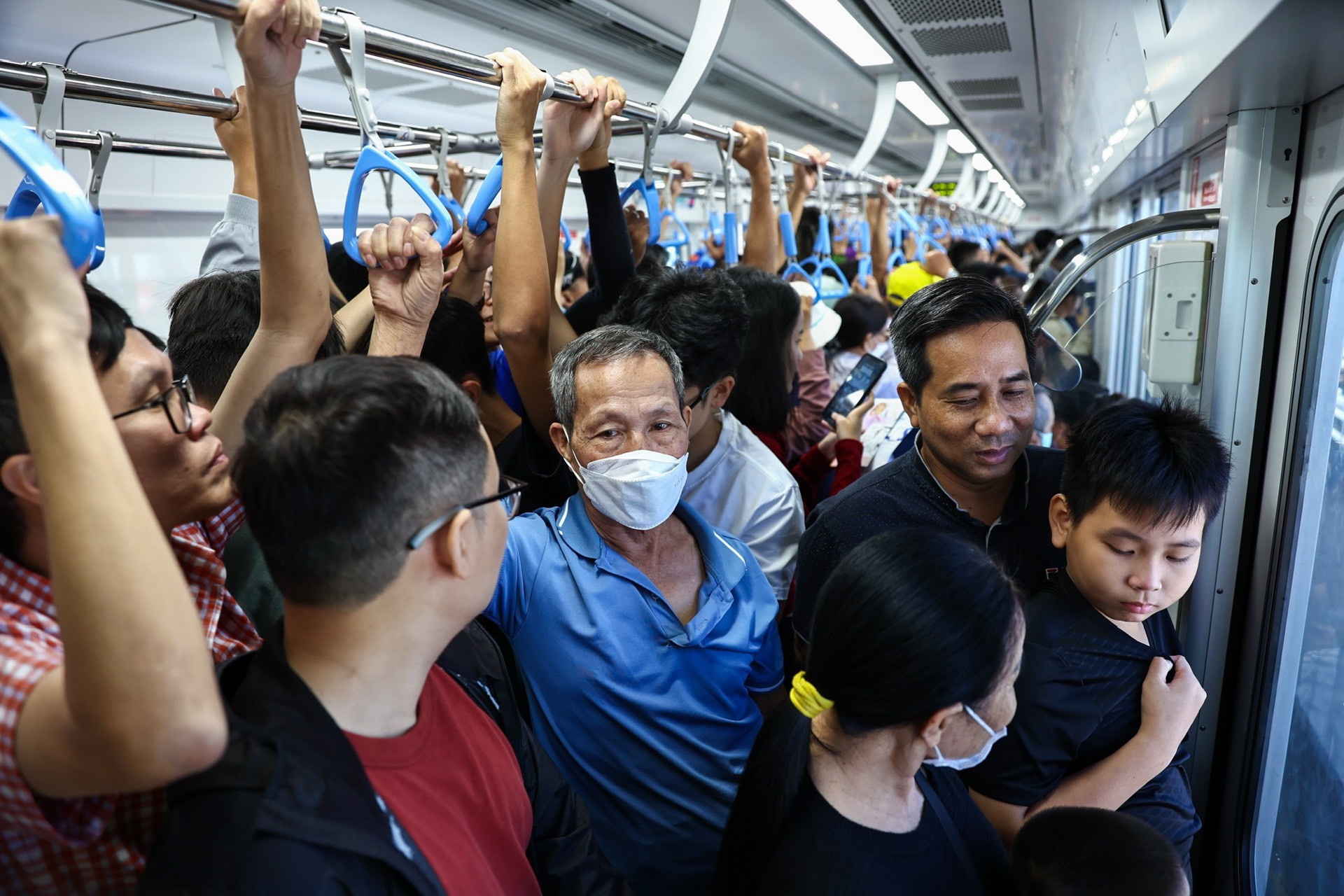
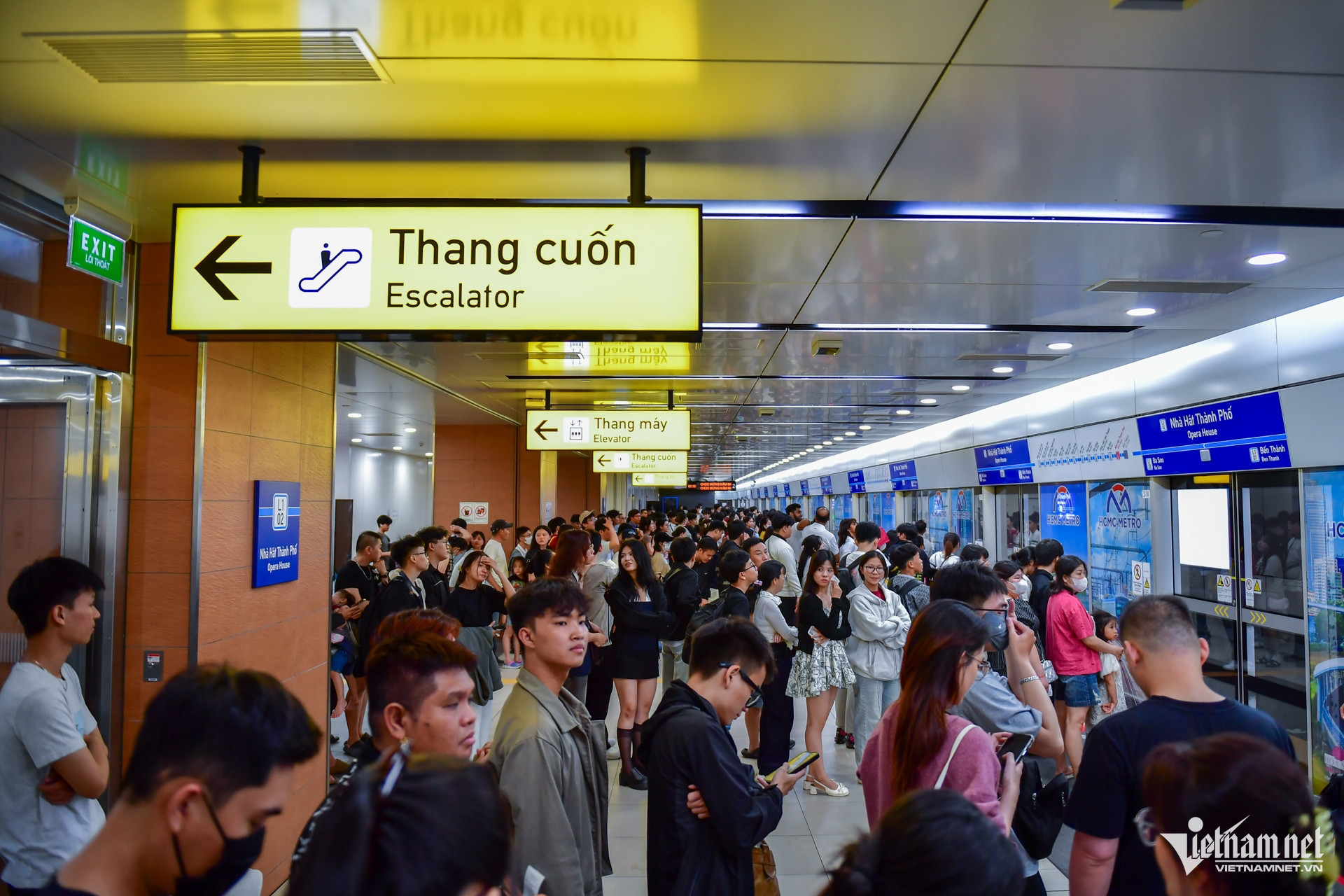
In the first nine months of 2026 alone, the line recorded more than 18 million journeys, up 17.5% year on year. Daily ridership has continued to grow, averaging over 70,000 journeys and leaving some stations crowded during peak hours.
The figures point to a gradual change in how residents of a city long dominated by motorbikes are choosing to travel.
Tam said the metro line is now connected to 68 bus routes serving its 14 stations, with 11 motorbike parking facilities and additional transport options including taxis, bicycles, electric motorbikes and water buses at Ba Son Station.
However, access to stations remains limited in some densely populated areas, particularly around Tan Cang and the city's eastern districts.
To address these gaps, operators are considering increasing the number of trains and reducing waiting times during rush hours. They also plan to strengthen connections with feeder buses, public bicycles and electric motorbikes, while exploring fare reductions or exemptions for passengers using connecting services.
Early improvements in transport integration are already making a difference to commuters.
Nguyen Thi Minh Anh, 34, who lives in Thu Duc Ward, said she no longer needs to ride her motorbike to work since a feeder bus service became available near the metro station.
"Now I leave my motorbike at home. In the morning, I take a feeder bus to the metro station at Binh Thai intersection, then reach central Ho Chi Minh City in just 20 minutes. It's comfortable, and I don't have to worry about exhaust fumes or dust," she said.
Tran Quoc Dai, 29, an office worker in Ben Thanh Ward, has found a different combination that suits his daily routine.
"After getting off at Ben Thanh Station, I rent a public bicycle and ride another 500 meters to my office. It gives me flexibility and a chance to get some exercise," he said.
Phan Cong Bang, head of the Ho Chi Minh City Management Authority for Urban Railways (MAUR), said Metro Line 1 has proved effective in transporting passengers between the city center and its eastern areas.
The success of the first line, he added, provides an important foundation for implementing the city's broader urban railway master plan, which envisions a network of approximately 1,500 kilometers over the long term.
Major rail projects gather pace as city expands regional links
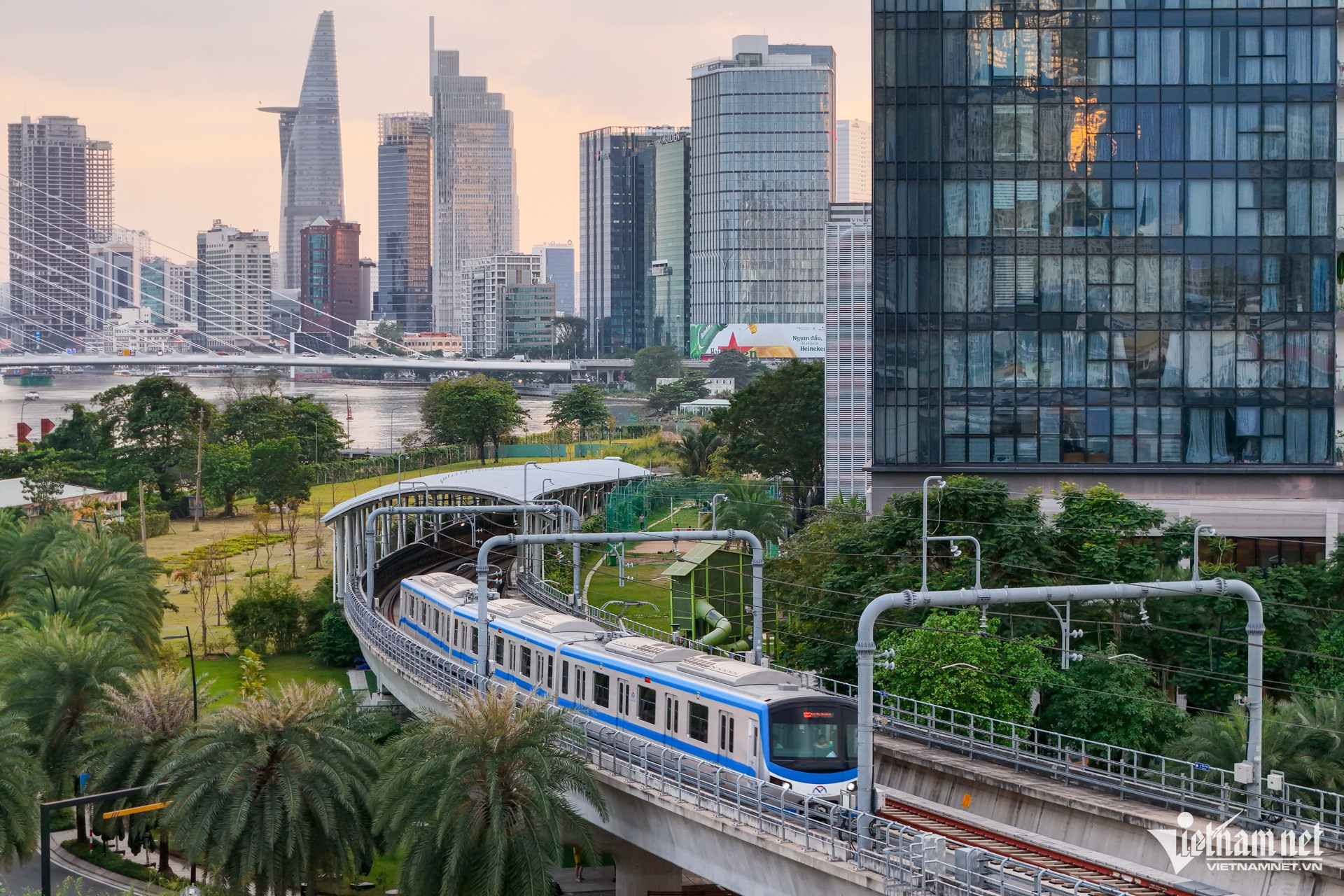
Building on the performance of the Ben Thanh - Suoi Tien line, Ho Chi Minh City is accelerating several major urban railway projects aimed at expanding connectivity across the metropolitan area and neighboring localities.
Metro Line 2 is among the priorities. Construction of the Ben Thanh - Tham Luong section began in December 2025 and is now being accelerated, while work on the Ben Thanh - Thu Thiem section officially started on April 29, 2026.
Meanwhile, full-scale construction of the Ben Thanh - Can Gio line is scheduled to begin on October 30, 2026.
Other projects, including the Thu Thiem - Long Thanh railway and the Tham Luong - An Ha - Northwest Urban Area section, are moving through the final stages of investment preparation.
The city also expects to launch construction of three additional metro lines by the end of 2026, with a combined length of nearly 90 kilometers and preliminary investment estimated at more than VND254 trillion (approximately US$9.8 billion).
The first is the Thu Dau Mot - Central Ho Chi Minh City line, stretching more than 33 kilometers and requiring an estimated VND113 trillion (US$4.35 billion).
Featuring 24 elevated and underground stations, the line will begin on Hung Vuong Street and follow major corridors including Binh Duong Boulevard and National Highway 13 before reaching Tao Dan Station, where it will connect with the Ben Thanh - Tham Luong line.
Another major project is the first phase of Metro Line 6, linking Tan Son Nhat International Airport with Phu Huu.
The approximately 23-kilometer line, with an estimated investment exceeding VND86 trillion (US$3.31 billion), is expected to help ease congestion in central Ho Chi Minh City while creating a high-capacity transport corridor connecting Tan Son Nhat Airport with the planned Thu Thiem - Long Thanh railway.
The third project is the Binh Duong New City - Suoi Tien line, extending nearly 31 kilometers at an estimated cost of VND55 trillion (US$2.12 billion).
Starting at the A1 roundabout, the route will pass through major urban and industrial areas including Phu Loi, Thuan Giao, An Phu and Di An before reaching Suoi Tien Bus Station.
It will connect directly with Metro Line 1, creating a continuous transport corridor toward Dong Nai Province and Long Thanh International Airport.
"If everything proceeds according to plan, the city's urban transport landscape will undergo a major transformation, bringing the total length of its urban railway network to around 255 kilometers by the end of 2030," Bang said.
A 1,540-kilometer rail network envisioned by 2050
Under its long-term development strategy, Ho Chi Minh City aims to establish an urban railway network of approximately 1,540 kilometers by 2050, comprising 1,100 kilometers of metro lines and 440 kilometers of light rail transit (LRT).
The plan forms part of a broader vision for the city's transport development over the next 100 years.
To achieve these ambitions, the city intends to make full use of special policy mechanisms to streamline administrative procedures and accelerate project implementation.
It will also review urban planning to better integrate transit-oriented development (TOD), a model that concentrates residential, commercial and public facilities around mass transit stations.
Public investment will play a leading role in attracting private capital, while the city also plans to modernize railway management and operations and develop a domestic urban railway industry.
Together, these initiatives are expected to create a more integrated public transport system, giving residents greater alternatives to private vehicles and gradually establishing greener travel habits across the expanding metropolitan area.
Tuan Kiet

