 Vietnamnet.vn

 Podcast



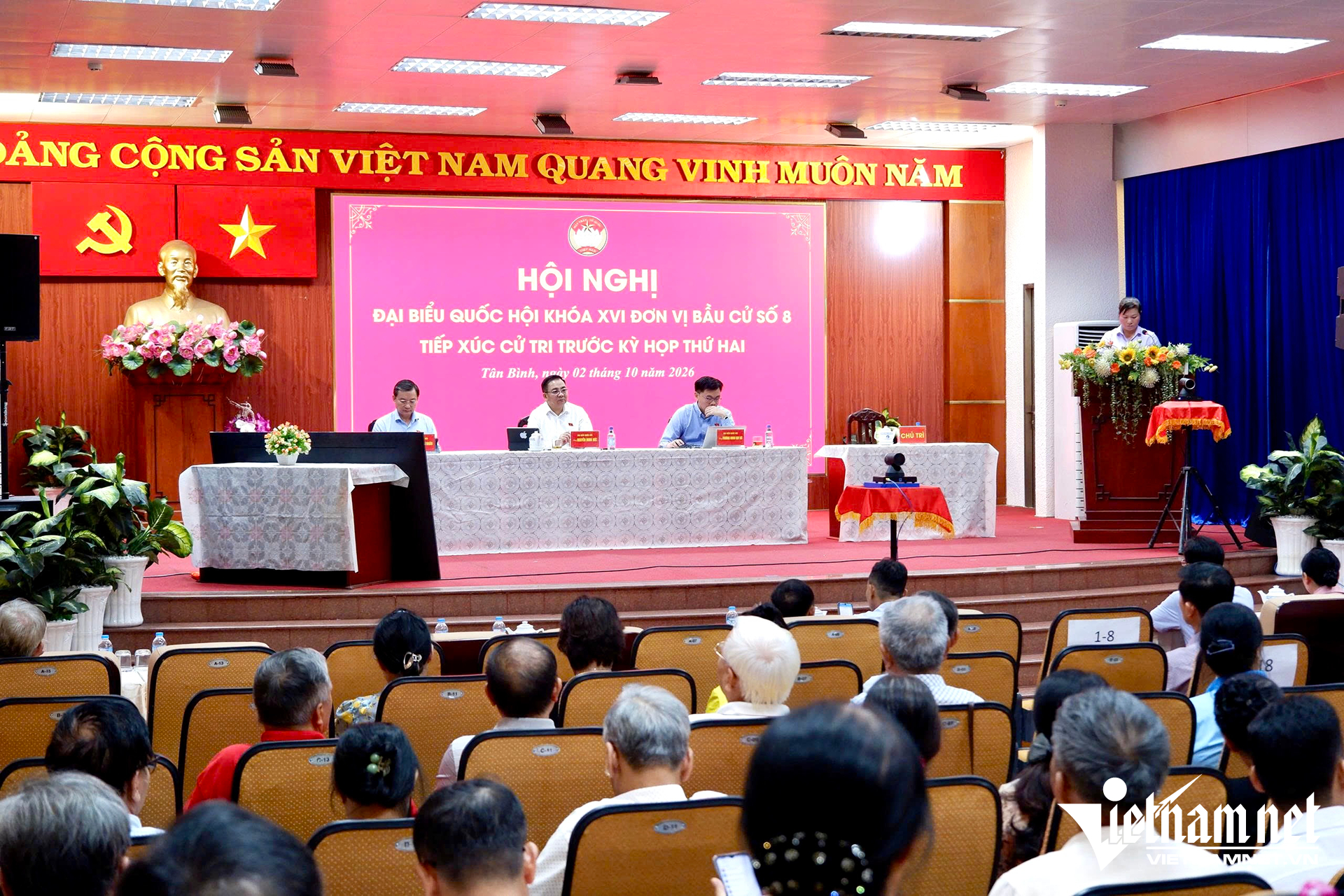
At the meeting, voter Pham Van Them from Tan Binh Ward raised concerns about flooding in many areas, noting that after heavy rain, floodwaters in some parts of Ho Chi Minh City can rise as high as motorcycle seats.
He questioned whether the city's current transport and drainage infrastructure could cope with increasingly extreme weather and urged National Assembly deputies to seek measures to reduce flooding and minimize losses for residents.
Voters from Tay Thanh Ward, meanwhile, called for the effectiveness of flood-control projects to be assessed not only by the amount of capital disbursed or construction work completed, but also by their actual ability to reduce flooding, improve the environment and benefit residents.
They also called for stronger mechanisms to monitor and evaluate the effectiveness of public investment, particularly for large projects that take years to complete.
Flooding no longer a problem confined to isolated hotspots
Responding to voters' concerns, Vice Chairman Truong Minh Huy Vu said flooding was a major source of public frustration and that the city was working to complete a flood-control project worth around VND10 trillion ($380 million) this year.
Over a five-year period, the city has implemented around 100 projects and construction works targeting nearly 50 flood-prone locations.
However, Vu said those figures did not fully reflect the broader approach the city was pursuing. Flooding is no longer viewed as a problem affecting only a handful of locations or occurring only during certain seasons, but as a challenge arising from the urban development process that requires a comprehensive response.
According to Vu, the city is simultaneously facing four factors: extreme rainfall exceeding infrastructure design capacity; high tides and rising sea levels; land subsidence of around two centimeters per year in some areas; and urbanization that has narrowed or filled in many canals and waterways.
These factors have reduced the effectiveness of previously designed systems of dikes, drains, reservoirs, canals and waterways.
To respond, Ho Chi Minh City has been working with the Netherlands, a country experienced in adapting to water-related challenges, to study models including green dikes and sponge cities.
City departments and agencies have held multiple working sessions with the Embassy of the Netherlands to propose adaptation measures.
As part of its long-term strategy, Vu said the city expects to submit its master plan to the Ho Chi Minh City People's Council in November, with flood prevention and climate change adaptation identified as major priorities.
"This includes developing integrated infrastructure for flood prevention and climate change adaptation, building a sponge city model, green corridors and interconnected ecological zones, while also investing in infrastructure flood control," Vu said.
He said that while urban planning previously treated water as a problem and a challenge, the city's future approach would be to adapt to and coexist with water.
Flood control, therefore, would no longer simply involve building individual structures, but would instead require a system-based approach focused on adapting to water and managing risks.
The city plans to combine conventional "gray infrastructure," such as drains and pumping stations, with green infrastructure, including retention ponds, water parks and urban ecological parks.
These spaces would increase the city's capacity to store and regulate water during heavy rainfall.
Large urban developments will also continue to be planned around networks of canals and rivers.
At the same time, the city plans to digitize its drainage system to enable continuous, data-driven management.
Vu compared the approach to traffic management: when roads are congested, traffic-light timings can be adjusted accordingly, while they can be shortened when traffic is light.
Developing smart flood maps and risk maps is also among the measures the city is studying.
Concluding the meeting, Lt. Gen. Nguyen Minh Duc said the delegation had recorded voters' opinions on issues ranging from local concerns to broader national matters.
He described the comments as grounded in practical concerns, noting that many elderly voters remained deeply interested in the country's development.
Duc said the delegation would study the feedback and incorporate voters' views into policymaking and legislation.
For matters under local jurisdiction, the delegation will send written requests for authorities to study and address them, including flood prevention, environmental sanitation, waste management and traffic safety.
He also asked ward leaders to instruct relevant officials to receive information and petitions from residents and address them promptly.
Phuoc Sang
.svg)
