 Vietnamnet.vn

 Podcast



AISVN, which offered elementary through high school programs based on the International Baccalaureate (IB) curriculum, was once regarded as a premier choice for affluent families. But beneath its polished image lay a risky and unsustainable financing model that has now left behind a trail of debt, disrupted lives, and unresolved consequences.
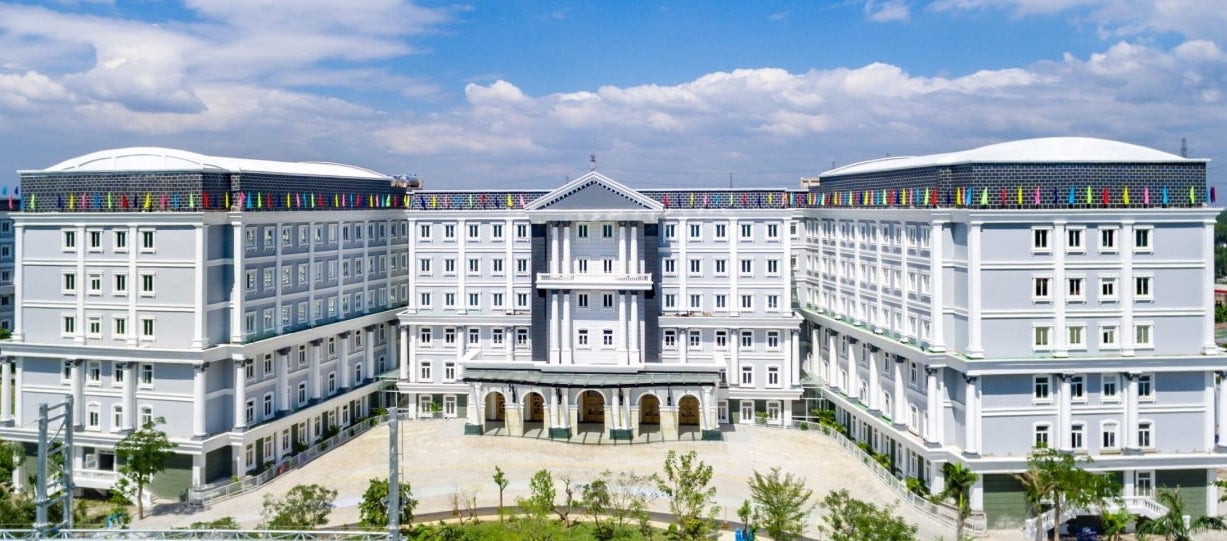
The American International School Vietnam, once a prestigious private school for the wealthy, has officially been dissolved following a massive financial scandal and government intervention. Photo: AISVN
On January 12, the People’s Committee of Ho Chi Minh City issued the official decision to dissolve AISVN, formally erasing it from the city’s roster of licensed educational institutions.
From elite school to financial disaster
AISVN was established by Decision No. 432 on January 30, 2019, and received its license to operate under Decision No. 1473 on June 13, 2019, from the city’s Department of Education and Training. Located in the Nha Be district, the school was heavily marketed as having modern infrastructure and an international-standard learning environment. Annual tuition ranged from 450 to 725 million VND (approximately USD 18,000 to USD 29,000). The school’s legal representative and chairwoman of the board was Nguyen Thi Ut Em.
To many parents, AISVN represented a golden ticket for their children’s education. However, behind the scenes, the school was engaging in high-risk fundraising practices that would eventually bring it to its knees.
The problems began quietly, years before any public protests. A number of parents had already begun privately pursuing the return of funds they had invested in what was described as an “education investment” opportunity.
Parents say they loaned large sums - ranging from billions to tens of billions of VND - to Ms. Ut Em, in exchange for full tuition waivers for their children. In total, the school is reported to owe parents around 3,000 billion VND (roughly USD 122 million), with total funds raised through various agreements estimated at approximately 3,600 billion VND.
According to parents, AISVN offered three types of contracts. In the first, parents paid about 4 billion VND upfront for full tuition from grades 1 to 12, with a promise of full refund upon graduation or transfer. The second model involved a non-refundable package of about 2 billion VND. The third allowed parents to pay tuition according to the academic calendar.
As financial pressure mounted, Ut Em pledged to repay the debts, blaming the school’s struggles on the impact of the COVID-19 pandemic. She claimed that despite cuts to staff compensation, the school had continued to pay salaries and benefits to both local and foreign teachers, including housing and airfare.
She also proposed a five-step financial restructuring plan to stabilize the school’s operations and maintain academic quality. But according to parents, these promises were never fulfilled.
Collapse amid mass staff departures and student upheaval
The crisis peaked when teachers began quitting en masse due to unpaid wages and broken contracts. Many students were left without instructors and reportedly spent school hours unattended in classrooms.
Parents, alarmed by the deteriorating situation, filed complaints with the Department of Education and Training, the city’s police, and other authorities. They accused Ms. Ut Em of being uncooperative and indifferent to the learning disruptions their children were facing.
In response, the Department emphasized that student rights must be protected and clarified that the investment arrangements were civil contracts between parents and the school. An inspection of AISVN’s operations and finances was launched.
With no clear resolution in sight, many families began transferring their children to other schools. The Department instructed public and international schools to accommodate former AISVN students and smooth their transitions.
At the national level, the Prime Minister ordered the Ho Chi Minh City Chairman and the Ministry of Education and Training to urgently ensure students' learning continuity.
Temporary fixes and final collapse
In an effort to keep the school open until the end of the 2023–2024 academic year, authorities organized a tripartite meeting between parents, the school, and government representatives. The school sought further parental contributions - between 10 to 20 million VND (USD 400 to USD 800) per month per student - to cover operational costs.
A tri-party escrow account was established to collect payments and distribute salaries. However, parents raised only around 30 billion VND - far short of the 125 billion VND needed. As a result, the school closed one month early.
While over 70 twelfth-grade students were allowed to complete their studies and take the IB exams, the rest had to find new schools.
On July 1, 2024, the Department officially suspended AISVN for 12 months, citing its inability to meet financial and staffing requirements. Nguyen Thi Ut Em was barred from leaving the country.
Despite the suspension, the school continued to publicize plans for the upcoming school year, including introducing a new investor, a new head of school, and conducting student surveys - actions the Department immediately ordered to stop.
Meanwhile, the district tax office called for the revocation of AISVN’s license due to unpaid taxes. In March 2025, shortly before her arrest, Ms. Ut Em led a group of staff and parents to the campus, where they staged a disruptive protest, damaged property, and defied government orders.
From high hopes to legal consequences
From a modern campus promising top-tier education, AISVN spiraled into a cautionary tale of financial mismanagement. Teachers walked out, students scattered, the school was shut down, and its founder imprisoned.
By mid-2025, the school’s investors requested a one-year extension to the suspension period, hoping to continue operations beyond June 2026. However, the Department rejected the proposal, citing no progress in resolving the issues that led to the suspension.
The extension request, submitted by Ho Quang Trung on behalf of the American International School Education JSC, failed to demonstrate any financial recovery plans or compliance efforts.
Authorities confirmed that the school had not reported its workforce, its headquarters remained closed, and it had defaulted on over 31 billion VND in social, health, and unemployment insurance contributions.
“There is no viable financial plan in place to address the outstanding debts,” the Department stated.
On that basis, the Department recommended - and the People’s Committee of Ho Chi Minh City approved - the formal dissolution of AISVN under the Education Law.
With that decision, the once-celebrated “heaven for the wealthy” has vanished from Vietnam’s education landscape.
Le Huyen
.svg)
