 Vietnamnet.vn

 Podcast



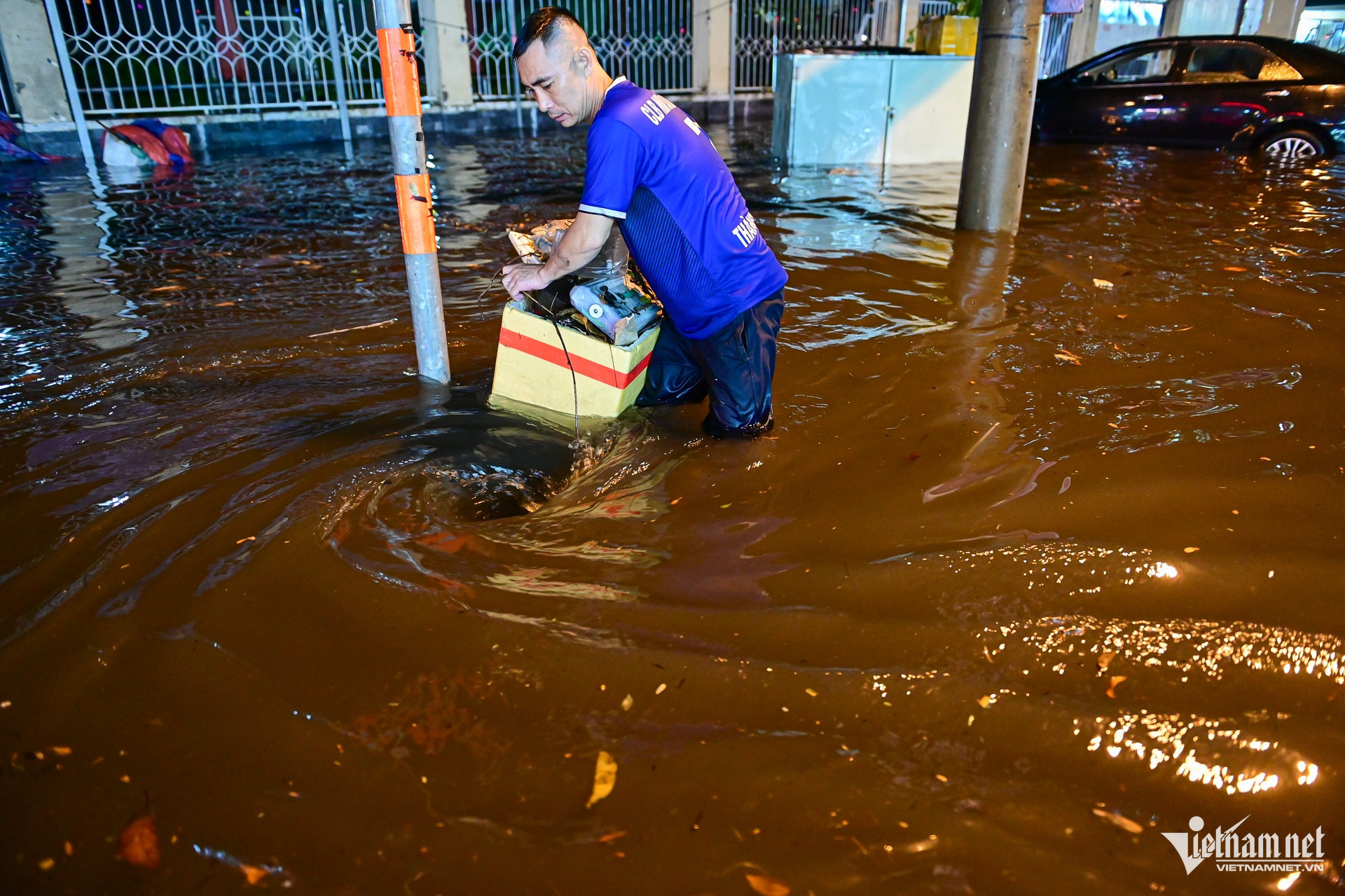
Speaking at an expanded meeting of the municipal People’s Committee Party Executive Board on April 10, Le Ngoc Linh, Deputy Director of the Department of Construction, said the city aims to largely resolve flooding in central areas during 2026-2027. By 2030, flooding across the entire city is expected to be fully addressed.
Statistics show that after administrative restructuring, the city now has 159 flood-prone locations, including 57 severely affected sites where water levels exceed 30cm and persist for more than 1.5 hours, causing traffic disruption and impacting daily life and environmental hygiene.
Among these, the former Ho Chi Minh City area accounts for 34 severe flooding points, former Binh Duong has 9, and former Ba Ria - Vung Tau has 14. The remaining 102 locations experience moderate to minor flooding.
Experts note that the former Binh Duong area has relatively high terrain with fewer flooding issues, while coastal erosion is more prominent in the former Ba Ria - Vung Tau region. The most severe flooding remains concentrated in the former Ho Chi Minh City area.
Regarding causes, Linh pointed to both objective and subjective factors.
On the objective side, extreme climate change has altered rainfall patterns, while tidal surges have become increasingly unpredictable. Notably, the city continues to sink at an average rate of 2cm per year.
“In some high-density construction zones, subsidence reaches 5-7cm annually. Over 20 years since drainage and irrigation planning was implemented, certain areas have sunk by 0.5-0.7 meters,” he said, adding that the city’s average elevation above sea level now ranges from just 0.8 to 1 meter.
When will flooding be resolved?
Subjectively, the city faces several key challenges. According to Linh, planning has not kept pace with changing conditions. Flood control efforts have often been fragmented, implemented by administrative boundaries and handled in a reactive manner - addressing flooding where it occurs, only for it to emerge elsewhere.
In addition, nearly 40,000 houses in the former District 8 have encroached on canals and waterways, with waste dumping causing blockages and hindering drainage. This issue remains unresolved.
Outlining infrastructure solutions, the Department of Construction presented a detailed roadmap:
In 2026, the city will complete 20 projects to address 45 out of 159 flooding points, including 16 severe cases.
In 2027, an additional 54 projects will resolve 56 more locations, including 24 severe ones. By the end of 2026-2027, 40 out of 57 severe flooding points will be handled, effectively alleviating flooding in central areas.
During 2028-2029, 22 projects will tackle 19 additional locations, including 5 severe points.
By 2030, the remaining 58 projects will address the final 39 flooding points, including 12 severe cases.
“Once these flooding points are resolved, the city will no longer face recurring inundation,” Linh concluded.
Tran Chung
.svg)
