 Vietnamnet.vn

 Podcast



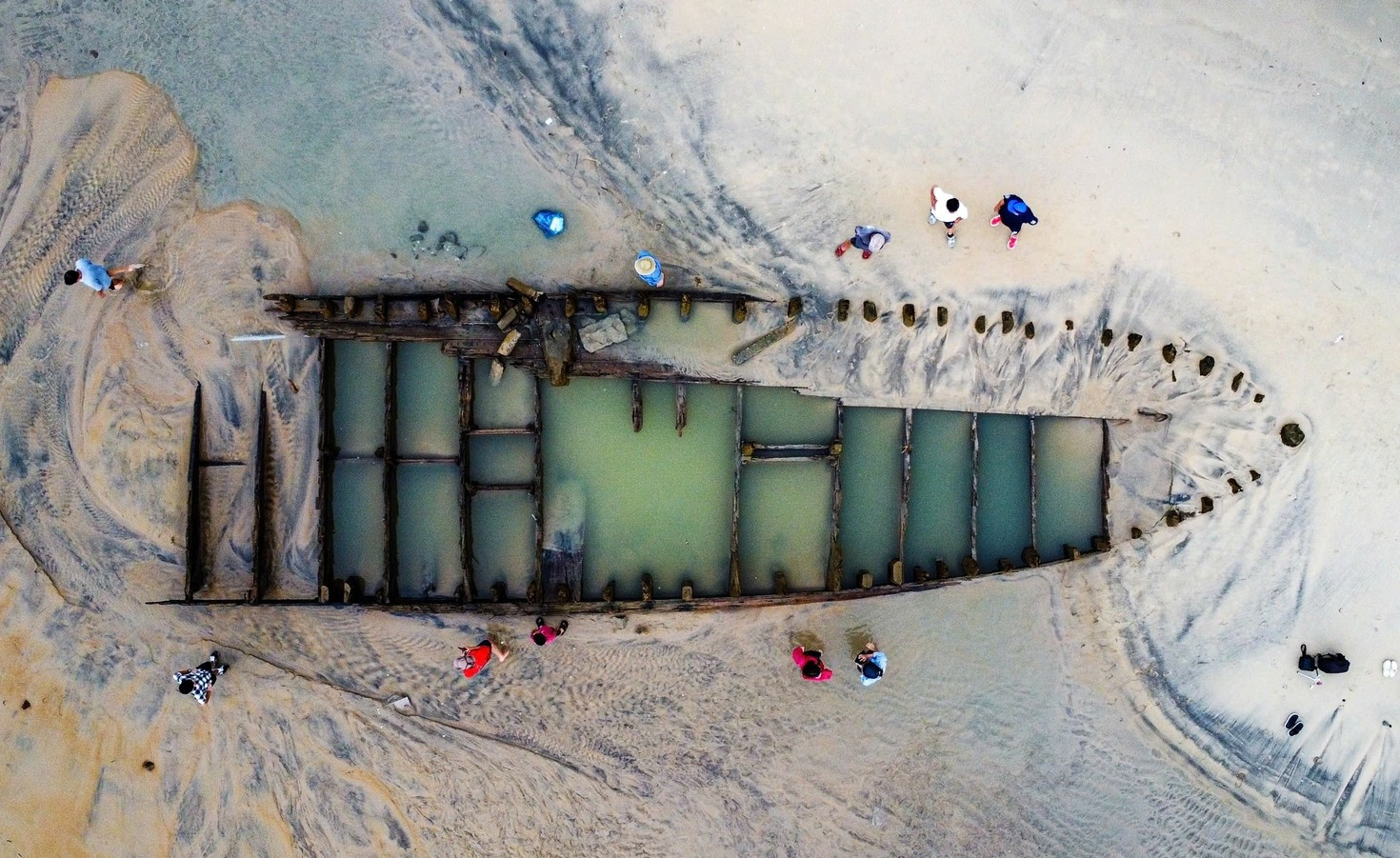
At a press briefing reviewing the first half of the year on July 23, Nguyen Thu Phuong, deputy director of the Da Nang Department of Culture, Sports and Tourism, said excavation of the ancient vessel exposed on Hoi An Tay beach could not begin immediately due to requirements under the Law on Cultural Heritage, which took effect on July 1, 2025, as well as the need to reorganize archaeological planning following administrative boundary changes.
According to Phuong, the department proactively reported the issue and sought professional guidance from the Ministry of Culture, Sports and Tourism to resolve the obstacles.
On July 15, 2026, the ministry issued a document endorsing the proposal to excavate the vessel under an emergency excavation mechanism.
The department’s leadership said the project is technically highly complex, involving multiple stages ranging from archaeological work and excavation to conservation, exhibition and efforts to promote the heritage value of the vessel.
The ship is large, with a wooden structure joined by iron nails. It has remained in a saltwater environment for many years and is directly exposed to waves and weather conditions.
As a result, the excavation will require substantial funding, rigorous investment procedures and a consulting organization with comprehensive professional expertise, meaning the project must be carried out with considerable care.
In the coming period, the Department of Culture, Sports and Tourism will instruct specialized agencies to coordinate with the Hoi An Tay Ward People’s Committee to continue protecting the site while implementing temporary conservation measures for the remains.
At the same time, the department is urgently working with relevant agencies to complete the documentation, plan and project for the emergency excavation and submit them to the Da Nang People’s Committee for approval.
The approval will provide the basis for subsequent steps to be implemented as soon as possible, while ensuring compliance with the law and absolute safety for the archaeological remains.
As VietNamNet previously reported, on November 8, 2025, the Hoi An Center for World Cultural Heritage Preservation said authorities had cordoned off the site where the ancient ship was discovered.
They also raised public awareness of regulations governing the protection of underwater cultural heritage, encouraging local residents to take part in preserving the site.
At the time, large waves were continuously eroding the coastline and washing away the covering layer of sand. Combined with low tides, this exposed more of the wooden hull, which stretches for dozens of meters.
The vessel lies parallel to the shoreline, with many parts of its structure still intact, drawing considerable attention from residents and visitors.
The ship was first discovered in December 2023 in the Tan Thanh beach area of what was then Hoi An City in the former Quang Nam province. At the time, only several sections of timber were visible above the sand.
Local authorities worked with specialized agencies to collect wood samples for radiocarbon dating.
By January 2024, high tides and accumulating sand had once again buried the entire exposed section of the hull deep beneath the beach.
Initial assessments date the vessel to approximately the 14th-16th centuries.
Its structure appears to reflect an intersection of Southeast Asian and East Asian shipbuilding techniques, and it has been assessed as one of the few relatively intact ancient vessels ever exposed in Vietnam.
Ho Giap
.svg)
