 Vietnamnet.vn

 Podcast



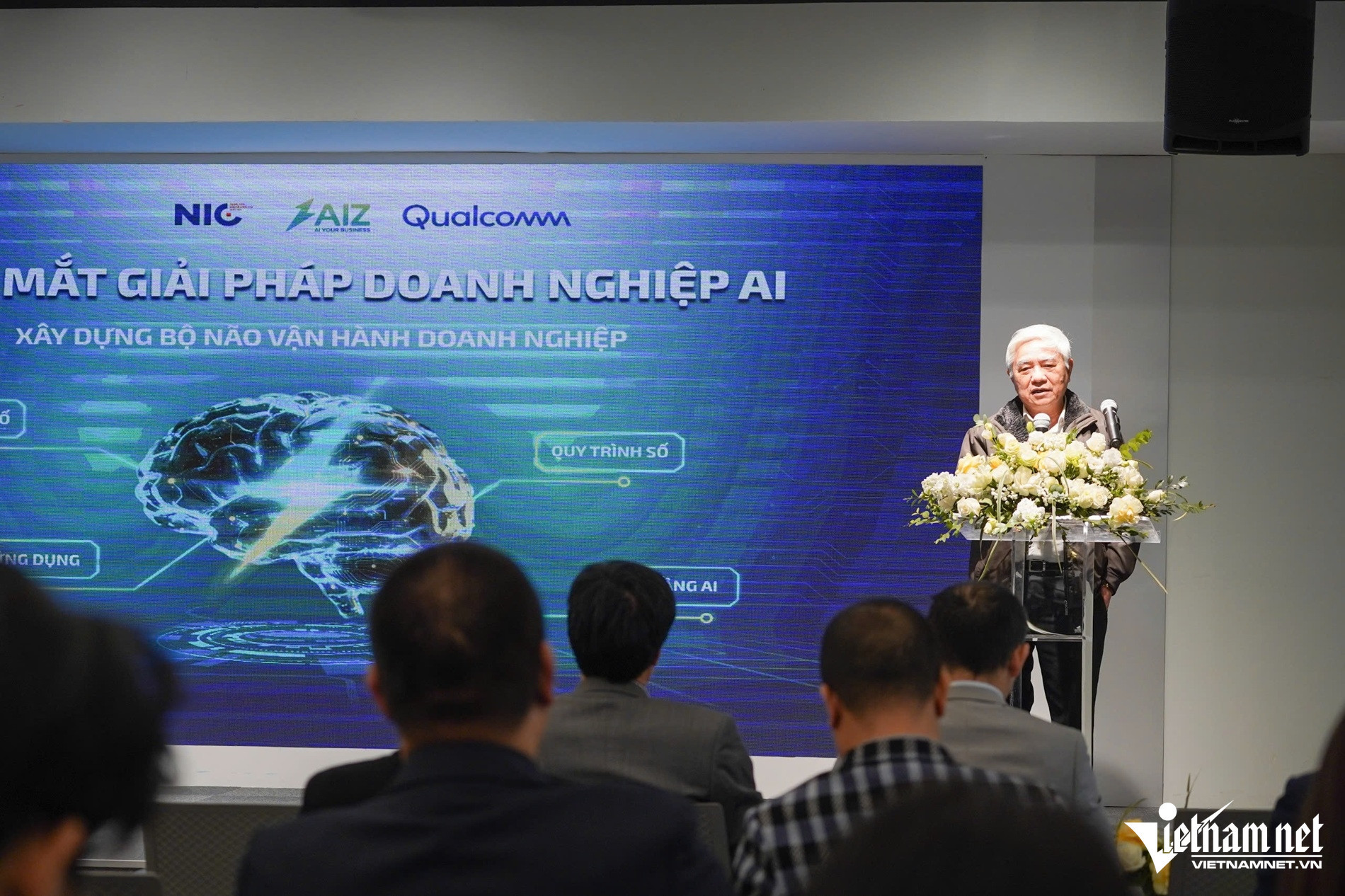
Speaking at the launch of the “AI-powered enterprise” model on January 22, Nguyen Quan noted that automation in Vietnam has traditionally focused on mechanical and electrical systems with basic repetitive tasks. However, in the digital age, automation must integrate artificial intelligence (AI) to interconnect the entire production process.
Citing insights from the CEO of Anthropic, Quan emphasized the rapidly shifting landscape: “Within the next 6 to 12 months, AI platforms will be capable of performing all the tasks a software engineer currently does. Human engineers will be left only to review and edit the code generated by AI.” This, he stressed, adds urgency to Vietnam’s need for rapid technological adaptation.
Domestically, the productivity challenge intensifies that urgency. Vu Thanh Thang, Chairman of AIZ, shared a telling paradox: Vietnamese workers rank high in global math and informatics competitions, yet labor productivity trails behind regional peers like Indonesia and Singapore.
Adding to the pressure, 98% of Vietnam’s nearly 1 million businesses are small- and medium-sized enterprises (SMEs), contributing roughly 65% of GDP. Thang argued that raising SME productivity by just 10% could generate an additional USD 30 billion in economic value. AIZ aims to “AI-empower every Vietnamese SME,” enhancing efficiency and contributing to national growth.
From siloed data to a digital brain
One of the biggest barriers, Thang pointed out, is data fragmentation. While many businesses use various software tools, their data remains isolated, forming silos that prevent holistic decision-making. The solution, he proposed, is a made-in-Vietnam “digital brain” called BrainZ - a platform that not only stores data like traditional ERP systems but also unifies it with business logic and workflows.
From this core, companies can then develop “AgentZ” (digital personnel) and “CollabZ” (digital processes) to collaborate with human teams and optimize resources.
According to Vo Xuan Hoai, Deputy Director of the National Innovation Center (NIC), these are three foundational components for enterprises leveraging AI - enabling them to maximize human potential instead of increasing headcount.
Standing on giants’ shoulders and embracing open data
To ensure technological autonomy without falling behind, experts agreed that Vietnam should not attempt to reinvent the wheel in isolation. “At this stage, we must stand on the shoulders of giants,” Quan emphasized. “We still need partnerships with major tech firms to build truly Vietnamese platforms that are locally owned and globally competitive.”
One example of this approach is Qualcomm’s collaboration with AIZ and others to provide hardware infrastructure and software stacks tailored to hybrid AI - combining on-device and cloud computing. “One of Qualcomm’s three global AI research centers is located in Vietnam,” said Thieu Phuong Nam, General Director of Qualcomm Indochina. These collaborations aim to deliver stable, low-latency, energy-efficient, and cost-effective solutions for Vietnamese businesses.
But Quan stressed that even with advanced platforms, data remains the key. Alongside the typical standards of accuracy, completeness, cleanliness, and real-time availability, he added one more: openness.
“Closed data is useless - it lacks intelligence,” Quan said. “We need to make data open, with maximum access rights, especially market data, so that our producers can fully leverage these platforms.”
Looking ahead, the VAA chairman envisioned Vietnamese solutions becoming a “Google for business” - capable of answering any question about operations and markets, enabling local firms to take charge in the global value chain.
Vo Xuan Hoai echoed the urgency, stating that the question is no longer “whether to use AI” but “how to use it effectively.” The ultimate goal is to reduce cost, time, and redundant tasks. He praised Vietnamese tech companies for proactively offering solutions that shift the focus from labor-intensive to smart, tech-driven workflows.
NIC, he confirmed, will continue to provide maximum support for Vietnamese enterprises, especially in the AI sector, helping “Made-in-Vietnam” technologies go global.
Du Lam
.svg)
