 Vietnamnet.vn

 Podcast



According to Minister Nguyen Kim Son, Vietnam’s education sector has taken pioneering steps in digital transformation, data system development, and the early integration of AI in teaching and learning. These advancements highlight the sector’s leading role in modernizing and enhancing the quality of national education and training.
Speaking during a review of the sector’s progress in implementing the 13th Party Congress Resolution, the Minister offered a comprehensive overview of recent achievements while outlining strategic missions ahead.
Key highlights of the current term
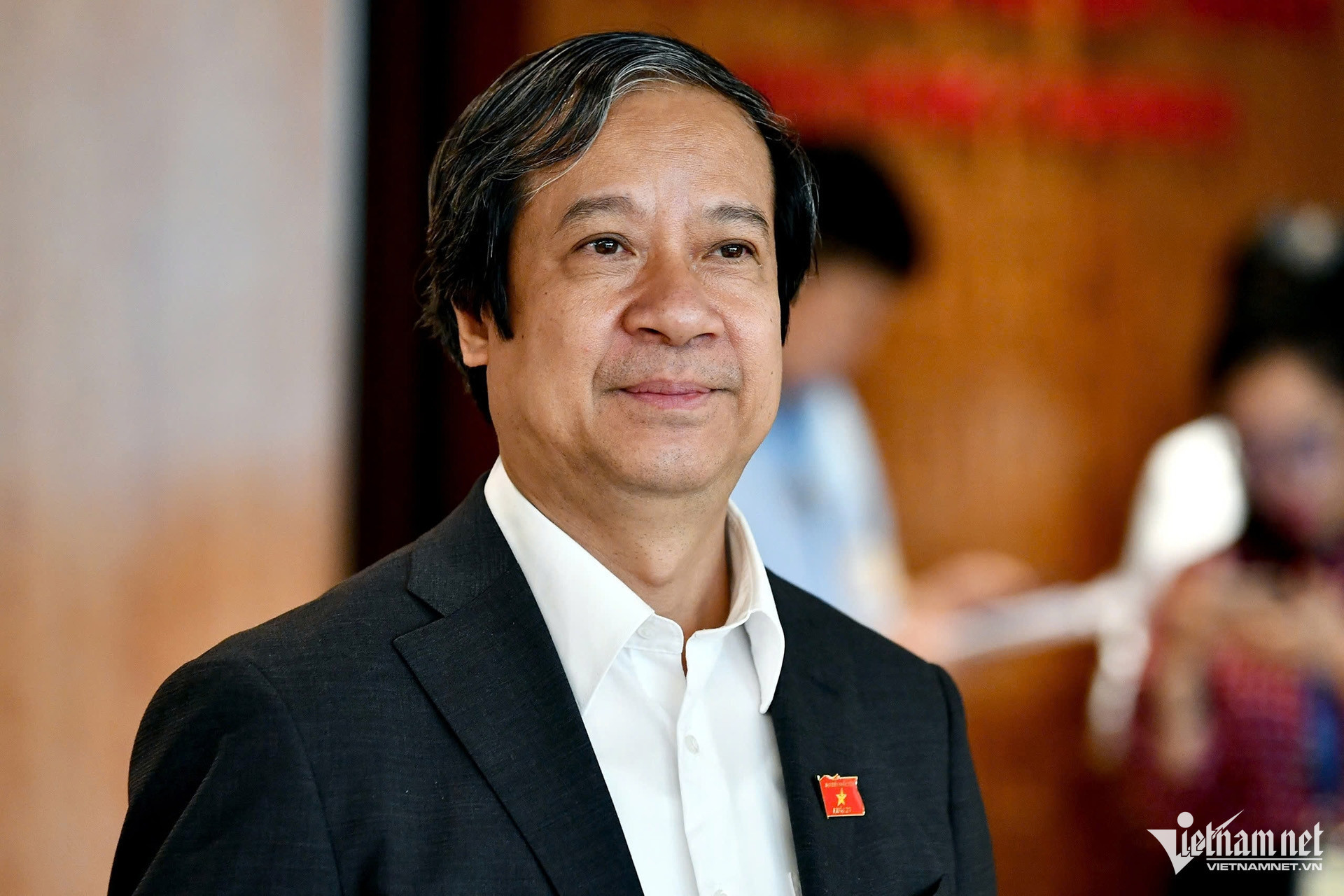
Minister of Education and Training Nguyen Kim Son.
Minister Nguyen Kim Son emphasized that this term has been marked by continued and robust efforts to fundamentally and comprehensively reform Vietnam’s education and training sector.
In higher education and vocational training, the past five years have seen strong implementation of autonomy policies and greater mobilization of social resources, leading to a series of positive outcomes.
Both public and private higher education institutions have shown notable improvements in quality indicators. Several Vietnamese universities now appear on international rankings, including among the top 1,000 and even top 500 globally and in Asia.
Infrastructure across all education levels - from preschool to university - has steadily improved over the past five years, thanks to increased investment. While the pace of improvement remains below expectations, the proportion of schools built to permanent standards has significantly increased compared to the start of the term.
One key milestone, according to the Minister, has been digital transformation. The education sector has taken early initiative in building a national data infrastructure. Since 2022, the national database for high school students has enabled the digitization of processes like registration for graduation exams and university admissions, improving transparency, efficiency, and ease of access for students.
Data systems now cover schools, students, and teaching staff. A lifelong learning record system - including digital transcripts and digital diplomas - has been rolled out and is gradually being connected to the national public service portal. This linkage simplifies administrative procedures related to qualifications, saving time and cost for both citizens and institutions.
Higher education institutions are also applying AI in teaching, management, and building smart school models.
Minister Nguyen Kim Son affirmed that the sector’s push in digital transformation, data development, and AI applications marks a notable bright spot and reflects education’s leading role in national modernization.
He also underscored the focus on developing a strong, committed teaching workforce - a fundamental and decisive factor in improving education quality.
Over the past five years, teaching staff has grown in both number and quality. Key decisions by the Politburo, the Party Secretariat, and the Government have allocated a substantial number of new teaching positions, especially for early childhood and primary education, ensuring the principle that "where there are students, there must be teachers and schools."
Supportive policies have helped expand and retain teaching staff. A positive signal is that teacher training programs have recorded some of the highest university entrance scores in recent years. This rise in admissions quality forms a crucial foundation for improving teacher standards, directly influencing education outcomes.
Vietnam is now entering a new phase of development, with rising demands on economic and social growth. In this context, the Politburo has issued Resolution No. 71, setting strategic goals for breakthrough reform and modernization of education and training. The resolution focuses on holistic human development and supplying high-quality human resources to meet national growth demands.
Resolution No. 71 provides clear direction and serves as a foundation for strategic change in the sector. Its core principles are now embedded in the draft documents for the 14th National Party Congress, paving the way for future implementation.
A sector facing great expectations

Looking ahead, Minister Nguyen Kim Son acknowledged that the education sector still has much work to do, but it is entering this phase with renewed spirit and determination.
A top priority is changing how education is perceived - an essential prerequisite for broader reforms. This shift in mindset involves redefining the role, position, and mission of education, along with a deeper understanding of the state's central responsibility, the core role of public education, and the effective mobilization of all resources.
This includes adopting new thinking around educational autonomy and expanding comprehensive leadership by Party organizations, particularly within universities and vocational institutions.
Another key task is to train and supply high-quality human resources in critical science and technology fields to meet national development demands. This also involves strengthening scientific research, tech transfer, and partnerships with businesses in universities to generate real-world innovation that contributes to socio-economic growth.
In early childhood education, efforts are underway to finalize and implement a new curriculum while expanding universal preschool for children aged 3 to 5. The new curriculum emphasizes children’s physical health, cognitive and social development, and life skills - aligning care and education with modern needs.
In general education, the sector will continue deep reforms based on lessons from the 2018 curriculum rollout. A major focus is to equip students with life skills and foster holistic development, including improving training in newly introduced subjects like visual arts and physical education.
A particularly ambitious goal is to gradually make English the second language in schools. Minister Nguyen Kim Son acknowledged the complexity of this task. But with strong political backing, coordinated local efforts, and sustained commitment, the sector is confident it can deliver on this vision for Vietnamese students in the years ahead.
Tran Thuong
.svg)
